


Happy Halloween! This is the Ride AI newsletter: The most comprehensive weekly digest of news and intelligence at the intersection of technology and transportation.
Top Story
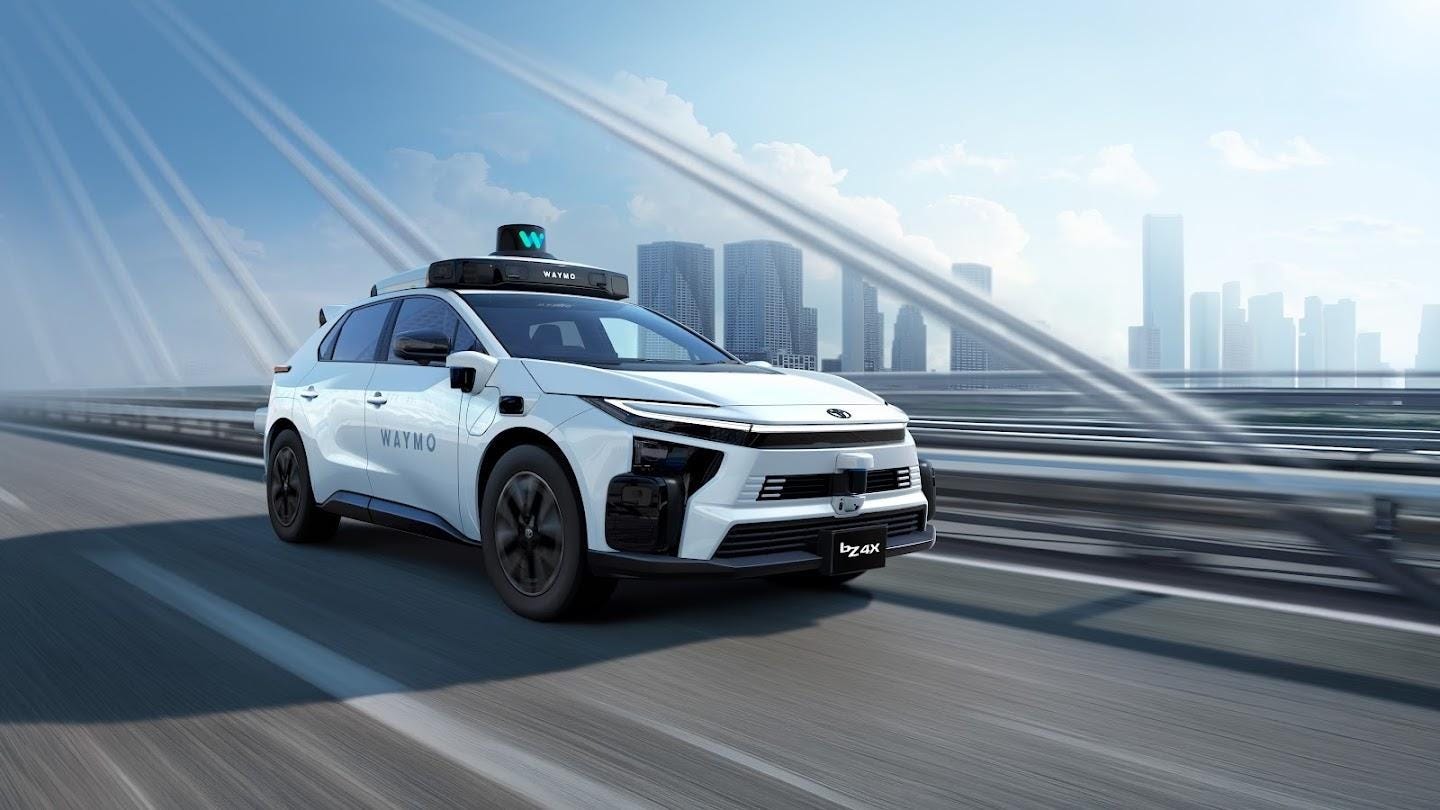
Waymo has picked the Toyota bZ4X as its next robotaxi. Toyota will build them start to finish at its Takaoka plant in Toyota City, Japan, from assembling the base vehicle to installing Waymo’s sensors and computers. The two will start testing and validating a bZ4X fleet in Japan in 2027, then bring it to the UK and other Waymo markets in the years after.
Waymo already plans to open to riders in Tokyo in 2027 with taxi operator Nihon Kotsu and ride-hailing app GO. The bZ4X robotaxi gets extra rear legroom, automatic doors (so no paying the Uber Eats drivers in Japan to close them), a power liftgate, and ambient lighting. The deal moves the two companies past the preliminary agreement they signed in April 2025, though they’ll keep exploring autonomy for personally owned Toyotas, along with Woven by Toyota.
Today, Waymo’s Jaguar I-PACEs and Zeekr-built Ojais get their sensors and computers at Waymo’s own integration plant in Mesa, Arizona. With the bZ4X, that will happen at Toyota’s factory instead, which should make it a lot easier for Waymo to scale outside the US.
Domestic News
DoorDash has agreed to buy Instacart for about $17 billion, or $65 a share, a 26% premium to Instacart’s price before reports of the deal surfaced. At least 75% will be paid in cash, funded with cash on hand and debt backed by a JPMorgan bridge loan. The deal is expected to close at the end of 2027 or in the first half of 2028, pending Instacart shareholder approval and antitrust reviews in the US, Canada, and Israel. DoorDash plans to keep Instacart’s brand, app, and enterprise tech, while letting DashPass and Instacart+ members pay for one membership to access both services instead of two.
DoorDash’s plan for grocery is to manage inventory for grocers in its own DashMart warehouses, which it says hit better than 99% order accuracy and deliver more than 10 minutes faster than picking from a store. Instacart’s nearly 100,000 stores add the scale to spread those fixed costs. In its Q3 results, DoorDash named warehousing and autonomous delivery as the two areas where it’s investing heavily to build for the physical world, so the Instacart deal makes a lot of sense in parallel.
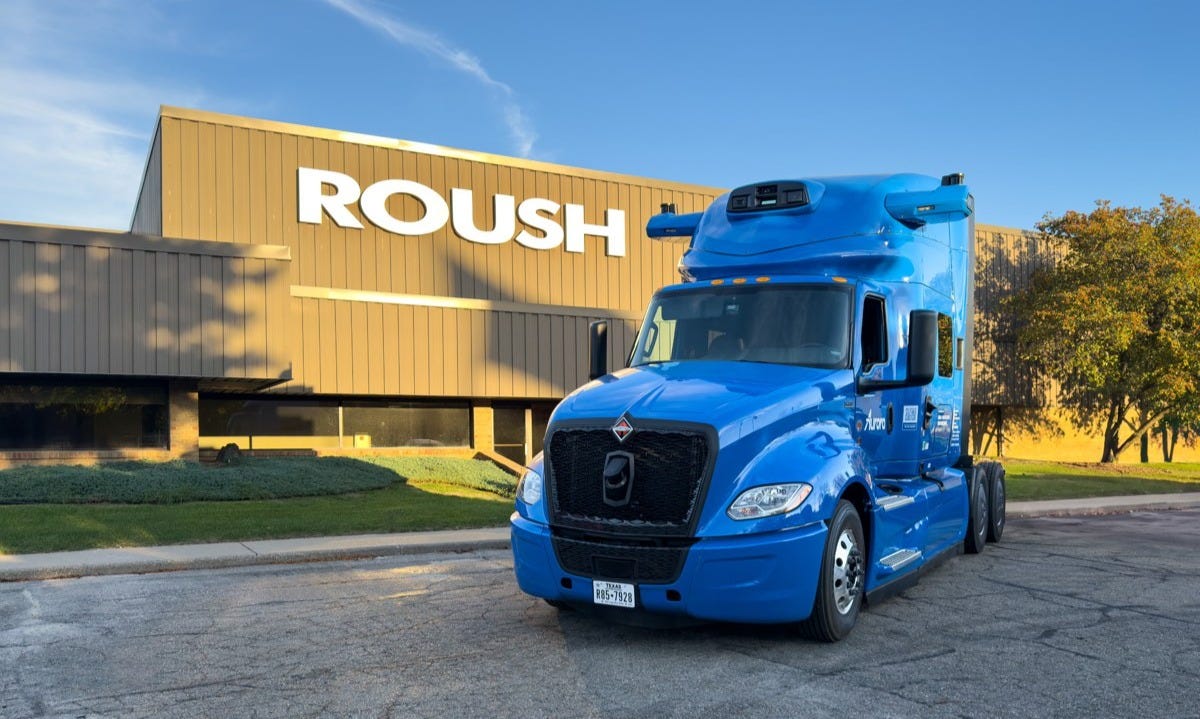
Aurora expects to build 20 driverless trucks a week by early December, about six weeks later than the company had originally planned. Aurora chalked the slow ramp-up at Roush, its upfitting partner, over the past month up to limited materials, part quality, and issues caught during testing. Aurora now expects about $9 million in 2026 revenue (it made $3 million in Q3) and plans to pass 200 trucks by the end of February. It’s still on track to end 2027 with more than 1,000 driverless trucks in operation.
Aurora has more than 20 driverless trucks built and coming into the fleet, and passed 500,000 commercial driverless miles in September. This month, its trucks will start driving directly to some customers’ sites, including getting through security checkpoints on their own, pulling into open weigh stations, and picking a scale lane.
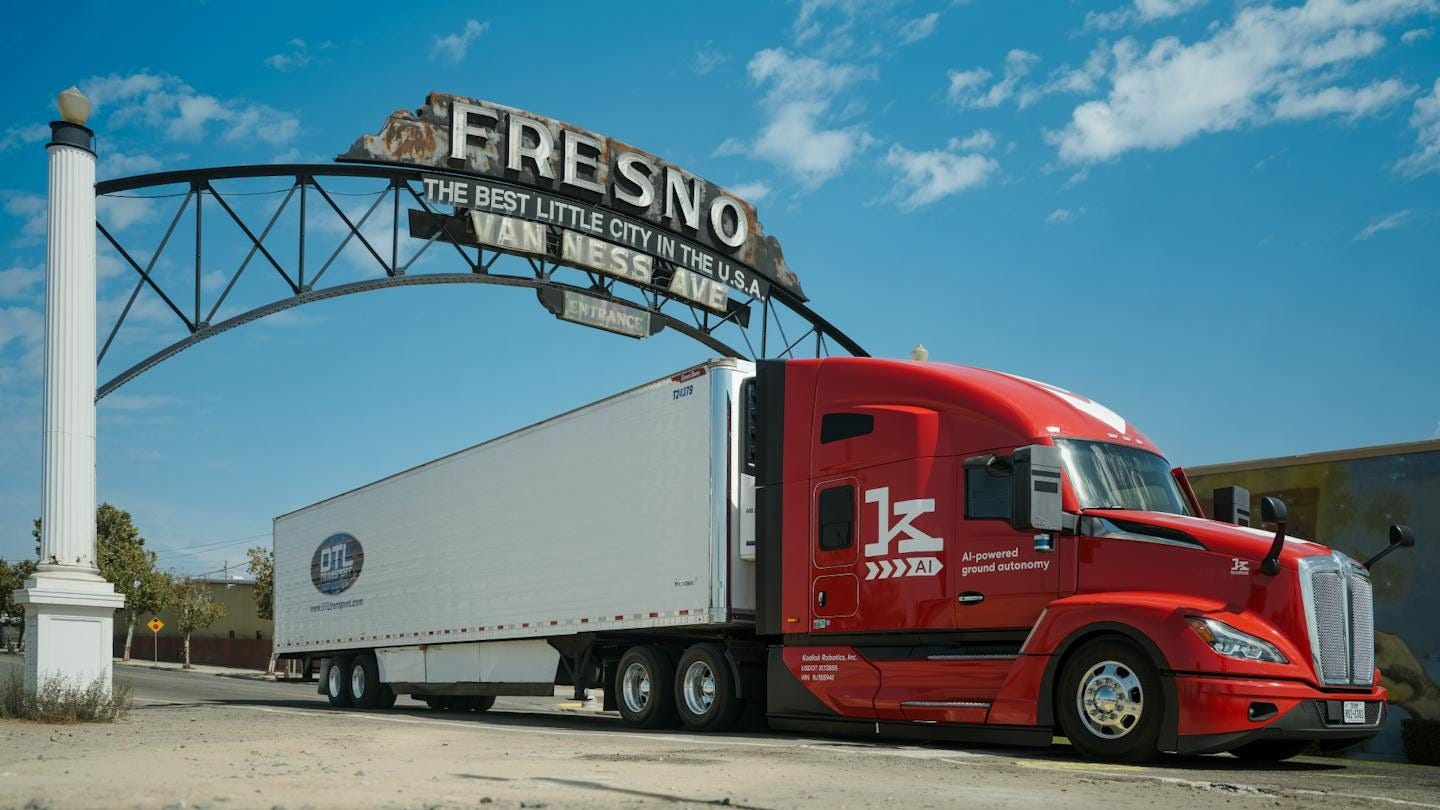
Kodiak has signed its first binding deal for driverless trucks on public highways, with California carrier DTL Transport. DTL, which hauls produce for big grocery chains, will own and run 75 trucks with the Kodiak Driver and pay Kodiak a per-mile fee. They’ll run on I-10 between Dallas and El Paso and on I-20 between Dallas and Atlanta, with deliveries starting in 2028. The deal follows a September pilot where Kodiak hauled perishables 225 miles from Fresno to Los Angeles with a safety operator on board, the first commercial loads moved by an autonomous Class 8 truck in California.
Kodiak’s measure of how complete its long-haul safety case is has reached 99%, up from 96% in September. Once the safety case is completed, Kodiak will launch driverless service for IKEA on a 219-mile stretch of I-45 between Dallas and Houston, which the company is still targeting for the end of the year.
Waymo has added nearly 250 square miles of service area in five cities, rolling out over the past week. In Los Angeles, it now reaches the South Bay, including Torrance. Orlando’s coverage has nearly doubled on the east side, San Diego now stretches north to La Jolla, and Nashville riders can head further south to places like the zoo. In the Bay Area, Waymo now goes further south, including to the Berryessa BART station, which is reeeeaaally down there, and the last BART station on the network.
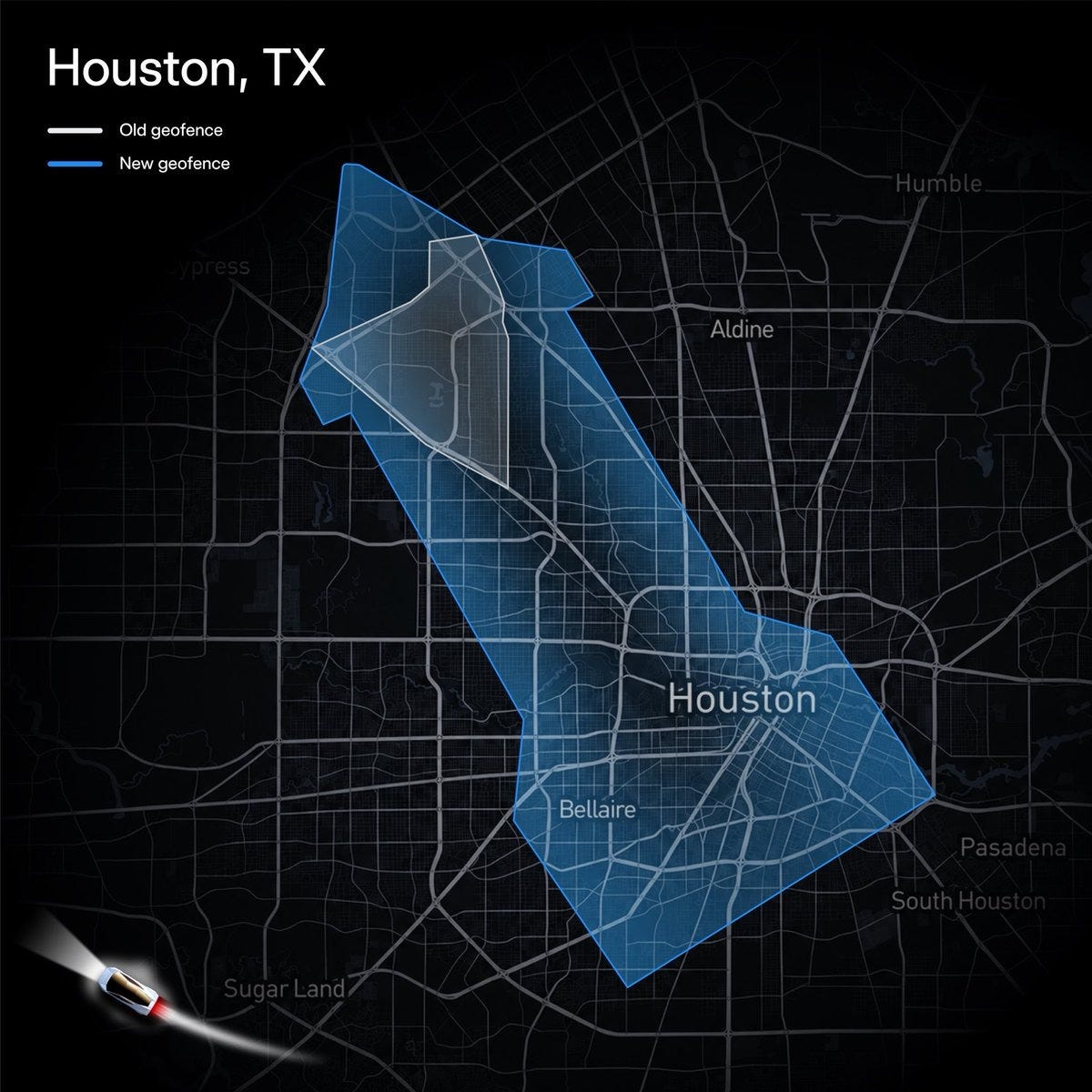
Tesla’s Robotaxi service has launched in Fort Worth, its seventh market with fully driverless rides, joining Austin, Dallas, Houston, Miami, Orlando, and Tampa. The Fort Worth zone covers about 143 square miles. A week earlier, Tesla grew its Houston service area about tenfold to roughly 254 square miles, in the shape of SpaceXAI’s Starship rocket.
In Austin, Tesla’s driverless fleet logged 438,000 miles in the week ending October 18, more than Waymo’s second-quarter average of 406,000 a week there. Most of that jump came from Tesla flooding Austin with Cybercabs, which now make up 463 of the 970 autonomous vehicles Tesla has registered in Texas. That said, across all markets, Waymo still drives about seven times as many driverless miles as Tesla each week.
Turo has started flagging Teslas with FSD (Supervised), and letting eligible hosts get a free month of the ADAS software. Turo integrates with Tesla’s API to check which cars are capable and have it. Renters, upon renting a vehicle with FSD, get a warning that they have to supervise the system and be ready to take over. Tesla has also swapped its US car referral program for an FSD one. Referred drivers get a one-month FSD trial, and the referrer gets a free month, or $99 in credit if they bought FSD outright. Tesla says about 1.7 million customers have paid for FSD, and more than 75% of its North American buyers used it in Q3.
Bedrock Robotics has raised $600 million at a $4.1 billion valuation, bringing the two-year-old startup’s total to nearly $1 billion. Bedrock retrofits excavators to dig on their own, and they’re now working commercially at a Nevada water treatment facility, a Texas earthwork site run by Champion Site Prep, and a 1.2 million-cubic-yard sitework project with Zachry Construction. Arizona contractor Haydon is its newest customer and plans to use Bedrock machines on data centers, factories, and water plants. CEO Boris Sofman previously led Waymo’s trucking program, Via.
A Philadelphia City Council bill would tax delivery robots and robotaxis, to make up for the wage and business taxes the city loses when machines replace workers. Councilmember Jim Harrity’s proposal would charge 5% of a delivery’s cost or 50 cents, whichever is greater, and 5% or $1 per ride for services like robotaxis. Autonomous freight would pay 3%, based on miles driven in the city. The money would fund free SEPTA rides for low-income residents. The rates could still change in committee.
The bill seems to be a response to the news I wrote about a couple weeks ago that a Philadelphia woman was arrested a couple weeks ago for repeatedly blocking Uber delivery robots in an apparently anti-robotics protest. Avride’s robots have delivered Uber Eats orders in Philadelphia since March. Waymo has been testing in the city since July 2025 but isn’t allowed to run driverless there yet.
Amazon has dropped its drone delivery plan in Westborough, Massachusetts, after months of pushback over noise, safety, and privacy from residents, local officials, and state and federal lawmakers. Amazon wanted to fly Prime Air packages under 5 pounds within 7.5 miles of its fulfillment center there. It withdrew the application without prejudice, so the company could apply again in the future.
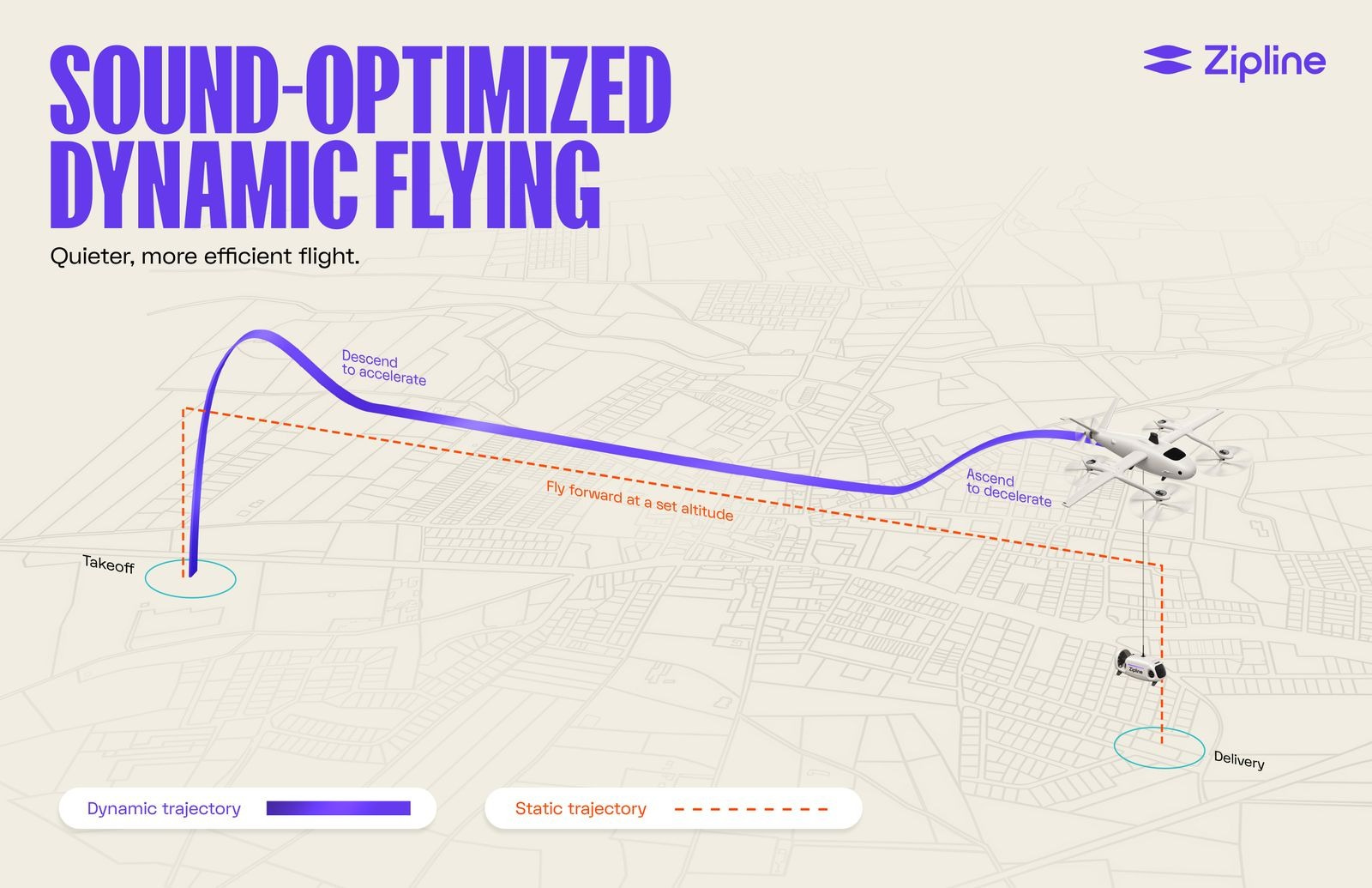
Zipline says its entire fleet now flies using an onboard sound model that reads the wind at takeoff and picks the quietest way to transition into wing-borne flight. Along with other upgrades, Zipline says that the company has cut sound exposure per flight by 68% (!) and peak loudness by 24% compared to its 2025 fleet, based on internal modeling. Flights are also 53 seconds shorter on average and use 21% less energy.
International News
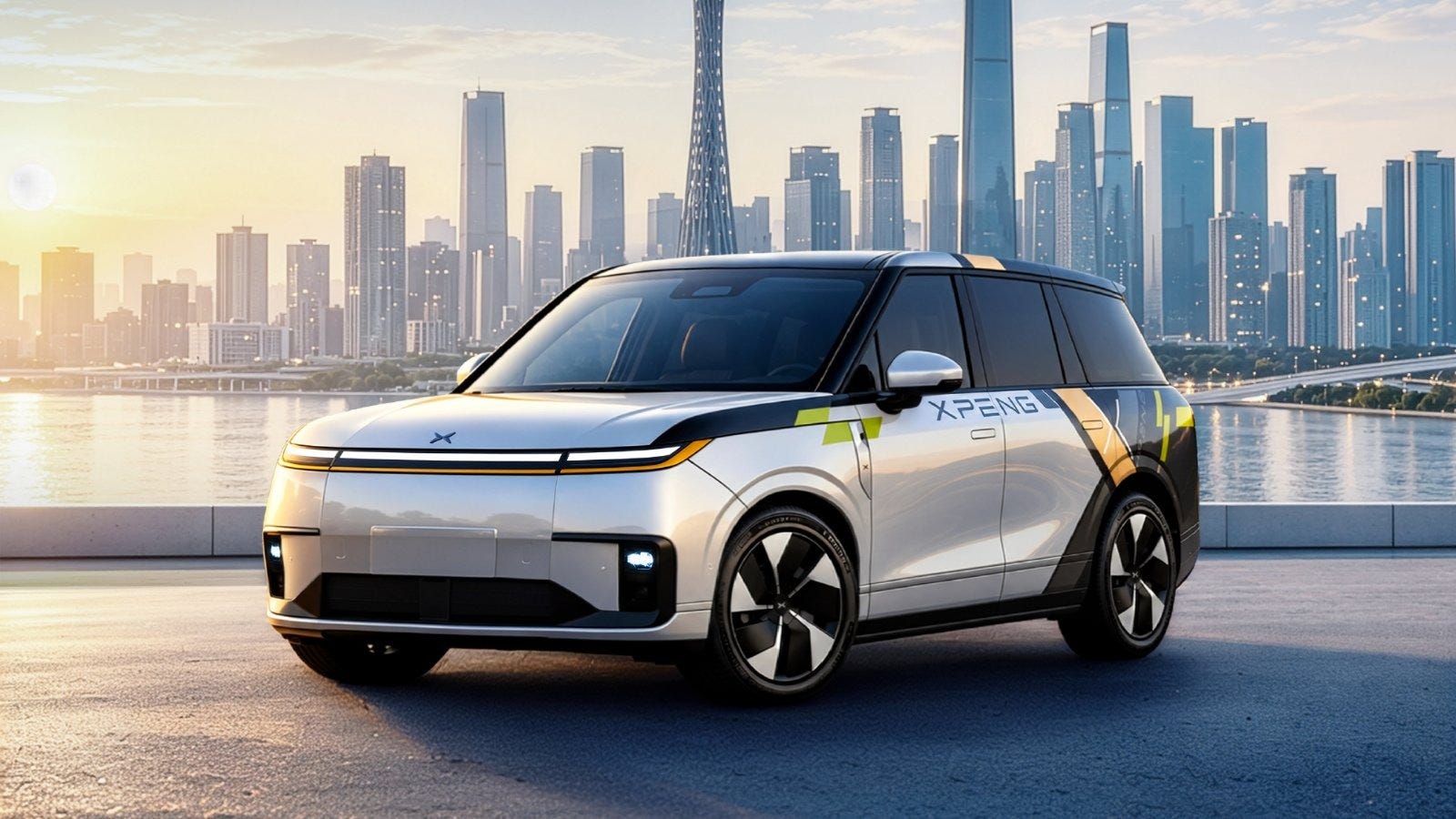
Xpeng has been cleared to run Level 4 robotaxi trials across Guangzhou, moving its Xpeng Yoyo service from internal testing toward public rides. Access will open gradually through invitation codes. The robotaxi is built on Xpeng’s GX SUV and runs on four of its own Turing chips. Xpeng is aiming to drop safety drivers in 2027 and wants to supply its tech to other operators, including ride-hailing platforms in Europe, rather than run big fleets itself. This seems to be the same playbook every other Chinese manufacturer is using when expanding abroad.
The same day, Volkswagen Group China got a Level 3 road test license in Hefei and started collecting data on real roads, with L3 readiness targeted for 2027. China paused new robotaxi licenses in April after a Baidu robotaxi incident in Wuhan, and started approving them again in July.
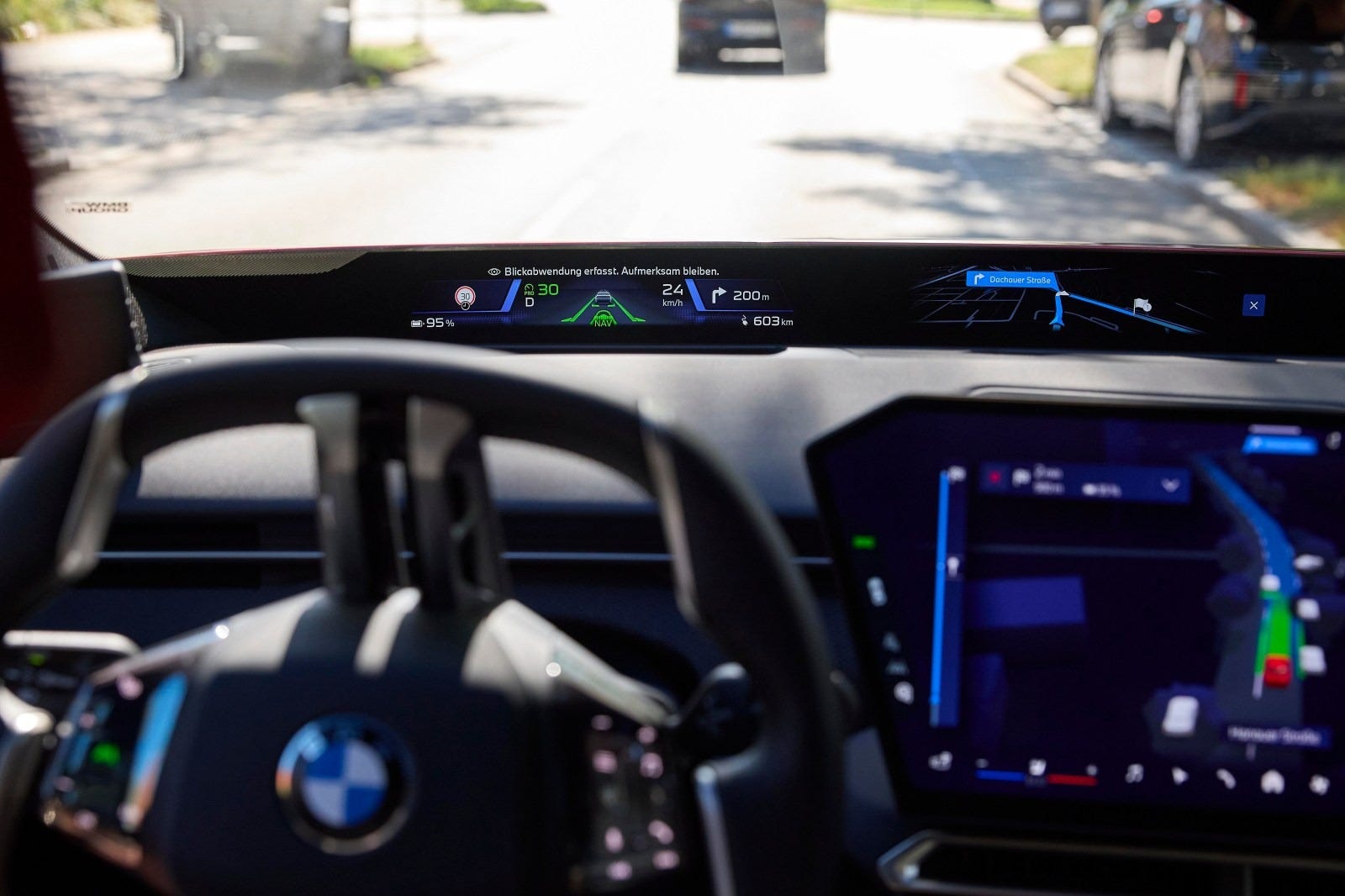
BMW will bring navigation-guided city driving to its cars in 2027, starting in Germany, with other countries to follow. The Level 2 system will handle turns, right-of-way situations, urban lane changes, and roundabouts along a route set in BMW Maps, picking up where its hands-free Motorway Assistant leaves off. Drivers will have to keep their hands on the wheel in the city and stay attentive the whole time, but they can steer, brake, or accelerate without switching the system off, which is even more permissive than a system like FSD, which will turn off when brakes are applied..
The hardware is already standard on the new iX3 and iX4 and every 3 Series, 7 Series, and X5, so owners will get it through an over-the-air update. An independent technical service has finished the real-world tests for approval under the updated UN R171 rules, which, for the first time, let cars suggest and carry out maneuvers on city streets in Europe. BMW expects official approval in early 2027.
WeRide has launched a global insurance program for its autonomous fleet, starting with Allianz Insurance Singapore and Ping An P&C (“Ping An” means “safe” in Chinese). Together they’ll build coverage for driverless operations, including motor liability, product liability, and cybersecurity and privacy, tailored to local rules. Allianz was the first insurer in Singapore to cover a fully driverless vehicle (WeRide’s Robobus on Sentosa) and also covers WeRide’s robotaxis on Grab’s shuttle service in Punggol. Ping An covers WeRide’s robotaxis in Beijing, Guangzhou, Abu Dhabi, and Dubai. WeRide now runs about 3,600 autonomous vehicles, including more than 1,800 robotaxis, in 13 countries.
Mobileye estimates its system is in more than 60% of Germany’s Level 4 test vehicles, based on federal data as of August. In its Q3 results, the company also said that Deutsche Bahn has picked the HOLON Urban shuttle, which runs Mobileye Drive, for public transit routes in several German regions, and that Holo now has a permit to deploy publicly in Norway. Mobileye is building its own robotaxi service alongside selling its system to others, and it’s now lining up partners for vehicles, upfitting, and fleet support.
A South Korean court has rejected a Tesla FSD refund lawsuit, brought by 88 owners, ruling that Tesla never promised fully autonomous driving and had already delivered some of the package’s features. The owners argued Tesla hadn’t delivered FSD in Korea in more than eight years of selling it. However, the court said that delays caused by regulations weren’t Tesla’s fault, and noted that a recent update added traffic light and sign recognition and city driving to older HW3 cars. Ten owners have filed a similar suit in China, but the Chinese courts have not reached a verdict.
Turkish ride-hailing platform Marti has partnered with China’s CalmCar to test autonomous rides in Turkey, its second autonomy partner after Tensor in July. The first CalmCar vehicle has arrived, and closed-area testing in Istanbul will start once permits are granted, followed by rides for Marti app users. CalmCar, based in Suzhou, says its Level 4 software already runs robobus services in Chongqing and Chengdu. Marti’s ride-hailing service in China covers 40 cities.
Ghost Drivers
Well, it’s that time of year again. Let’s see who had the best autonomy related costumes, shall we?
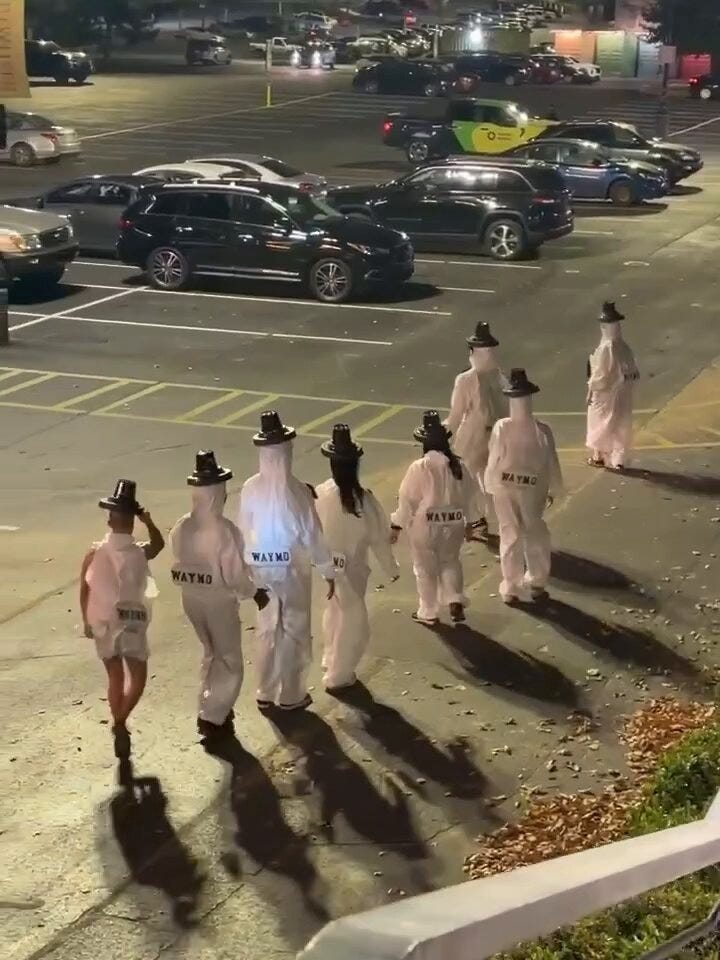
A group of friends in Atlanta went as a fleet of Waymos for Halloween and wandered a parking lot together while the cops stopped to watch. One of them got stuck in a hedge. This one’s pretty good. Somebody file the SGO report.
There were many various levels of Waymo costume, such as this rider in San Francisco. I’ve had many people inquire about renting my Waymo lidar hat as well.
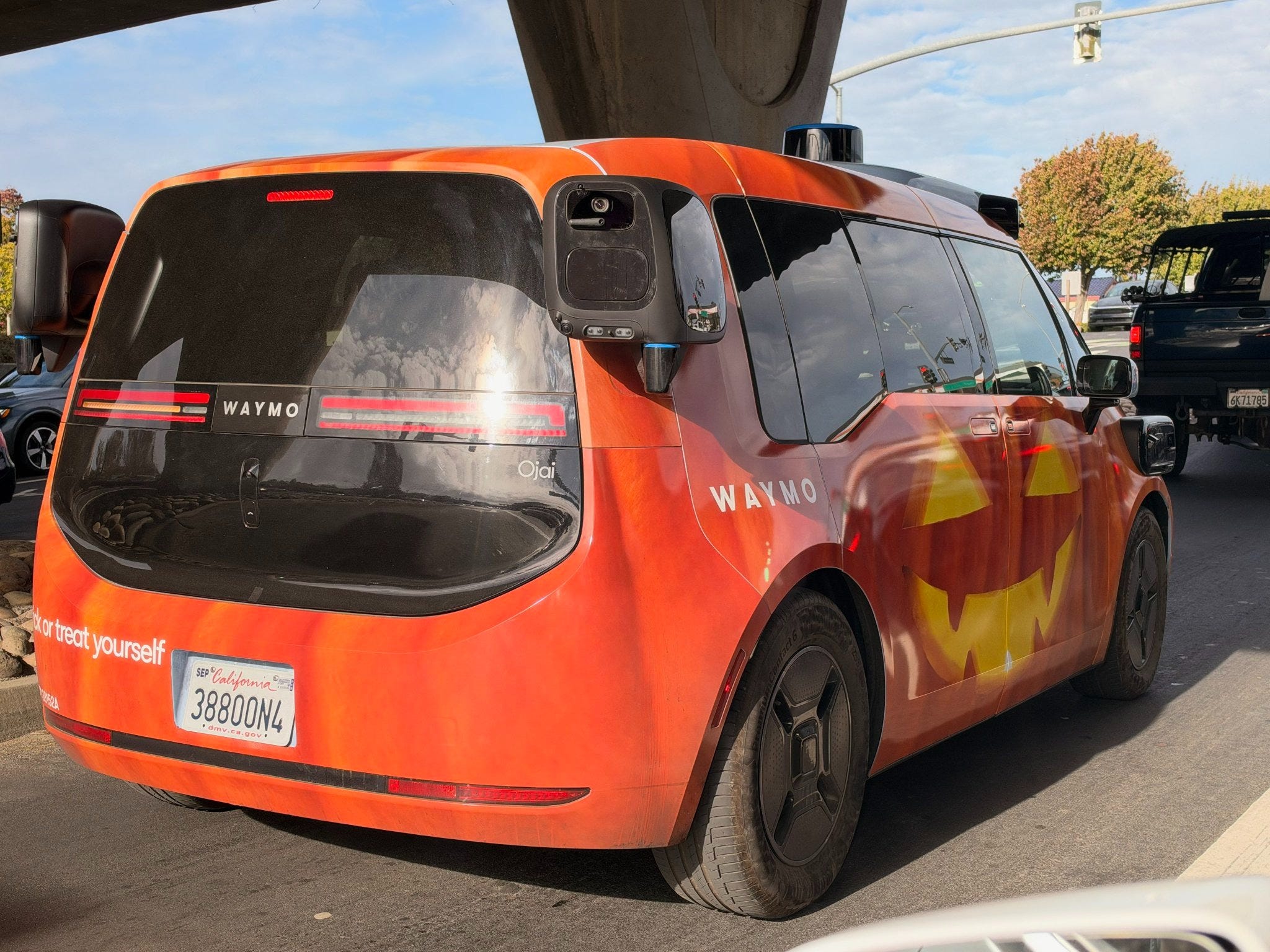
Waymo dressed up its own fleet too, wrapping some Ojais as jack-o’-lanterns. The in-car map got a makeover as well, with the car icon wearing a witch hat as it drives past pumpkins and black cats.
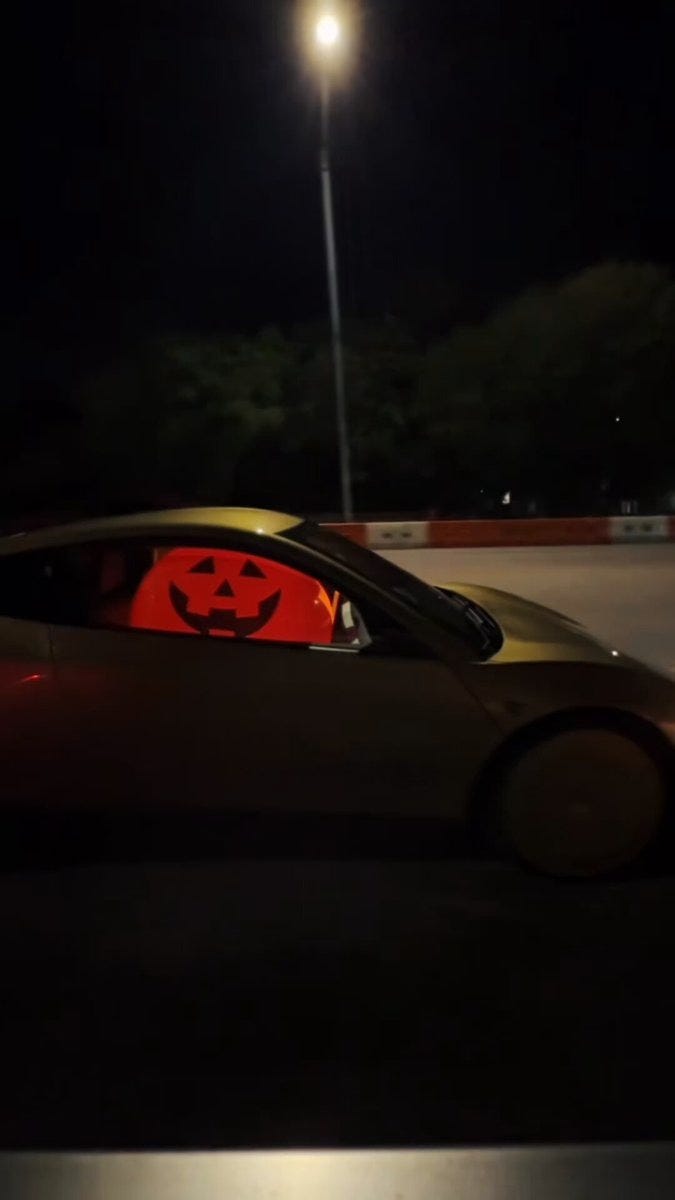
Tesla put skeletons in its Cybercabs in Austin on Halloween night, after teasing spooky riders earlier in the day, then followed up with a pumpkin-headed passenger. Do skeleton miles count as rider-only?
Alright, that’s it from me… until next week. If you enjoy this newsletter, share it with your friend, colleague, or boss. Thank you for reading, Sophia out!