


This is the Ride AI newsletter: The most comprehensive weekly digest of news and intelligence at the intersection of technology and transportation.
Top Story
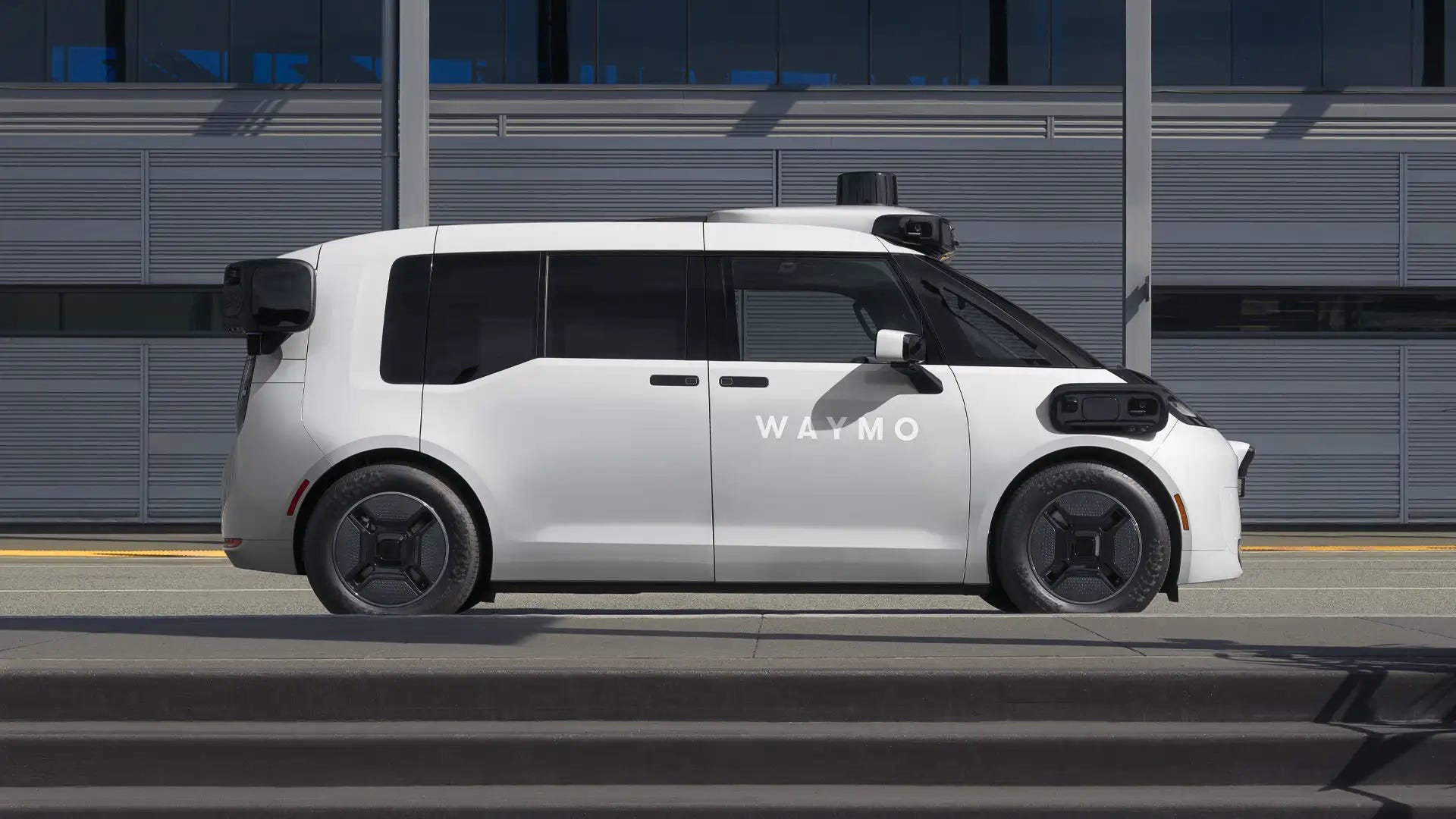
Waymo has introduced a new silver version of the Ojai, with leatherette seats, carpeted floors, a wireless phone charger, and rear armrests. Sources tell me the hardware upgrades also include better speakers, a welcome update since the original Ojai’s speakers have been widely panned online. Production is ramping up at Waymo’s integration plant in Mesa, Arizona. The silver Ojai will start serving riders in San Francisco, Los Angeles, and Las Vegas in the coming weeks, then expand to more cities.
To pay for this fleet expansion, Waymo has closed a $5 billion term loan, its first-ever debt financing, led by PIMCO, Blackstone, and Sixth Street. The loan comes on top of the $16 billion equity round Waymo closed earlier this year at a $126 billion valuation. Waymo is now in 15 US cities and has international launches lined up in London, Munich, Tokyo, and Singapore.
Private credit lenders like PIMCO and Blackstone lend against assets and cash flow. A deal this size suggests to me that they’re comfortable with the economics of Waymo’s fleet. Borrowing also lets Waymo buy a lot more cars without giving up more of the company. Robotaxis are capital intensive, after all, and the operators that scale will be the ones that can finance vehicles like any other fleet business.
Domestic News
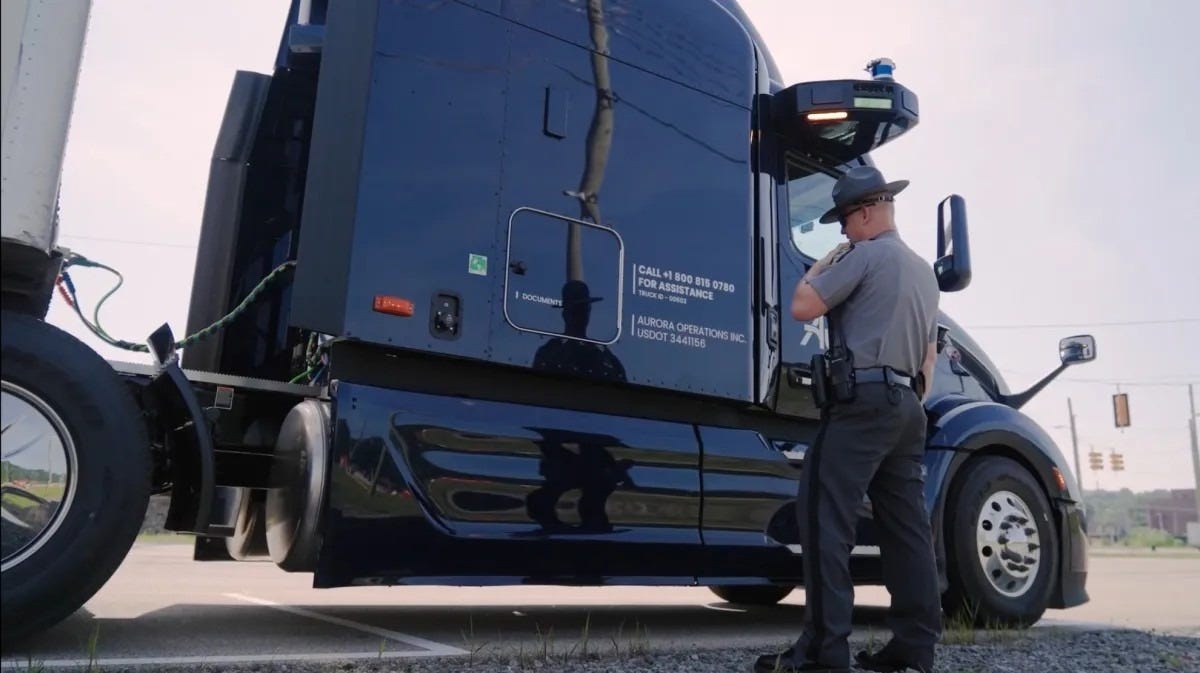
Driverless trucks have been granted a five-year federal exemption, letting Aurora, Kodiak, and any other carrier that runs Level 4 trucks use cab-mounted warning beacons. The beacons replace the reflective triangles a human driver would set out after a breakdown. Without the exemption, driverless trucks would have needed someone riding along just to put out the triangles. The exemption took effect October 7 and runs through October 2031.
Like I wrote last week, the temporary waiver was set to expire on October 9. FMCSA had been reissuing it every three months, and the new exemption ends that cycle. A cargo van operator’s court challenge targeted the waiver and any successor, though, so trucking companies aren’t completely in the clear yet.
Kodiak has also opened a 435-mile lane between Dallas and Laredo, hauling refrigerated and dry freight for cross-border carrier Charger USA. A safety driver stays on board until Kodiak finishes its safety case. Laredo is the busiest commercial land port in the US and handles nearly 40% of US trade with Mexico. Kodiak’s long-haul safety case readiness hit 96% at the end of September, up from 93% in August. It’s still targeting driverless long-haul service by the end of this year.
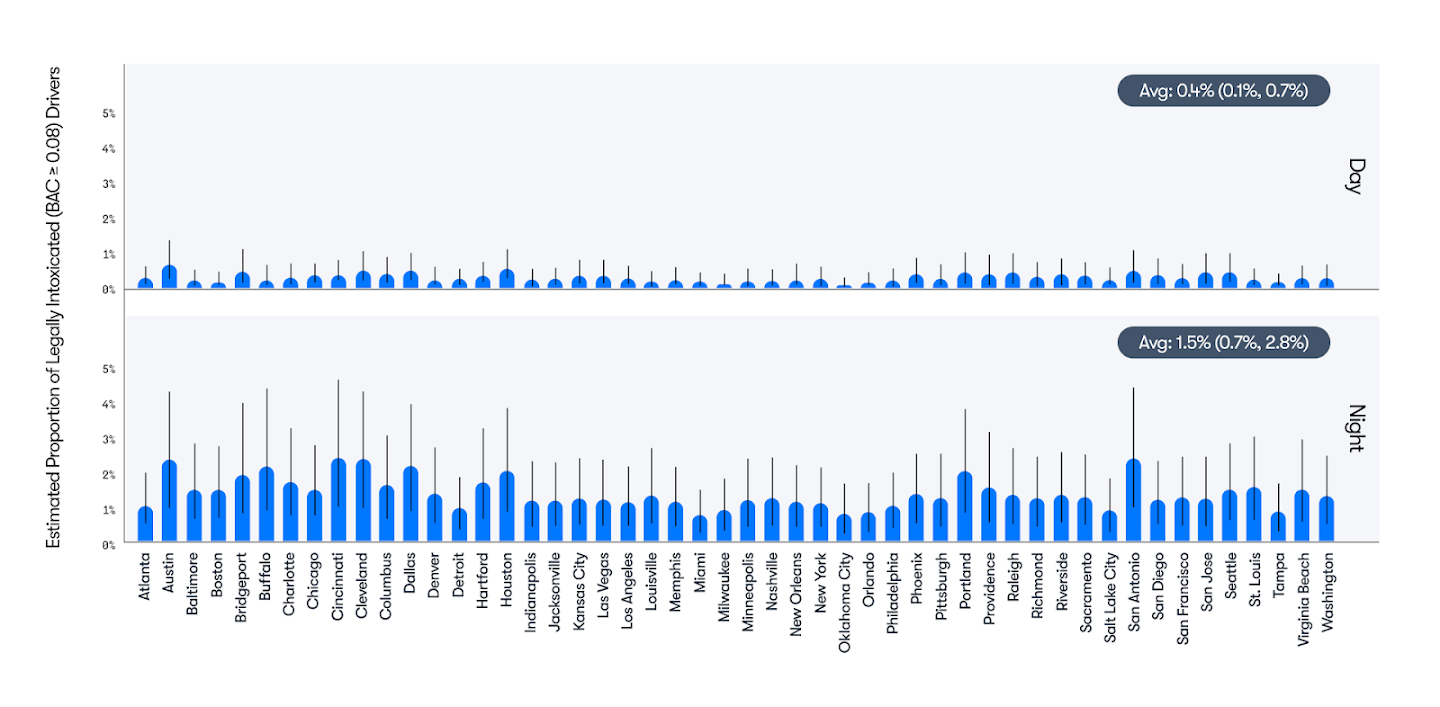
Sober drivers still face a much higher fatal crash risk at night, 3.1 to 3.9 timeshigher than during the day, according to new peer-reviewed research from Waymo. The study covers the 50 most populous US urban areas. Waymo estimated how many miles sober and impaired drivers cover in each city using toxicology data from federal fatal crash records and real-world telematics.
Removing alcohol-involved drivers lowers the average urban fatal crash rate by 23%, from 1.42 to 1.10 per 100 million miles. The drop varies a lot by city, from 31% in Houston to just 13% in Minneapolis.
A second paper looked at 37,654 fatal crashes from 2023. Over 77% involved impairment, speeding, or a missing seatbelt or helmet. Only 8.2% came down to human behavior alone. The rest involved a mix of other factors like poor lighting, high speeds, and big mismatches in vehicle size.
The sober benchmark is the more interesting part to me. Waymo’s safety comparisons so far have been against the average human driver, drunk or not. Critics have long argued that’s too low a bar. I’ve always been of the opinion that while measuring AV performance against the entire driving population is useful, it’s not quite an apples-to-apples comparison. For a true comparison, an AV system performing at its best on the road should be measured against a human driver performing at their best, and this new benchmark does just that.
Waymo has also started fully driverless operations in Detroit, with rides limited to employees for now. The cars cover downtown and nearby neighborhoods like Corktown, Midtown, Hamtramck, and Indian Village. Waymo hasn’t given a date for public rides. Detroit’s winters should be a real test of how the Waymo Driver handles snow.
Tesla has added 150 Cybercabs to its Texas registry in a single day, its largest batch yet. That brings Tesla to 319 Cybercabs, up from 169 when I wrote about it last week, and 739 registered vehicles overall. Every vehicle Tesla has added since September 23 has been a Cybercab. A registration only means Tesla can operate that car as an automated vehicle in Texas. It doesn’t say how many are actually carrying riders.
NHTSA has also given Tesla until October 30 to explain how it self-certified the Cybercab as meeting federal safety standards. Tesla had asked for an extension to November 20, but NHTSA only granted 30 days. One question is how a car with no brake pedal meets a standard that requires the brakes to be activated by foot.
Rideshare drivers and unions have rallied against a DC robotaxi bill, which would let the District’s Department of Transportation permit commercial driverless vehicles. The bill would cap each operator at 200 vehicles and require service in all eight wards. It would also charge a per-mile fee to fund Metro and help workers displaced by autonomous vehicles. The Council hasn’t voted on it yet. Waymo has been testing and mapping in DC with safety drivers for more than two years.
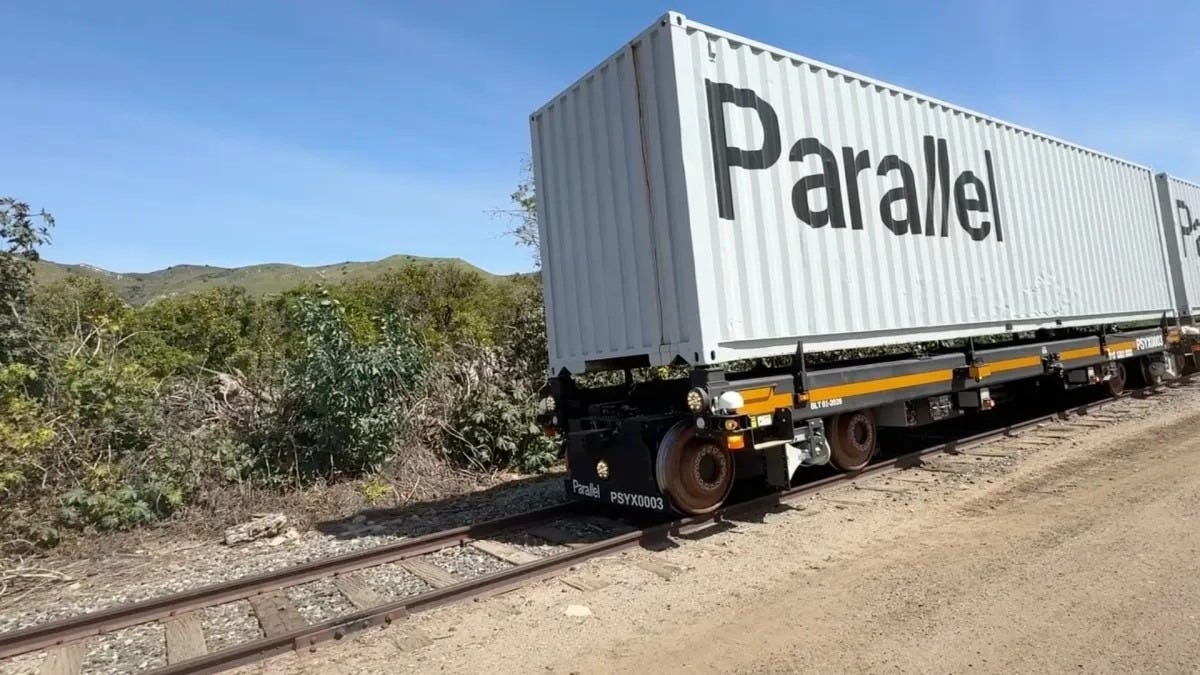
Parallel Systems has raised a $100 million Series C for its autonomous, battery-powered rail vehicles. The round, led by AVP, will help scale production of the third-generation Panther. Each vehicle can carry several tons of freight up to 500 miles without an operator. They can travel alone or in uncoupled platoons that split up at rail yards without human help. Parallel has been testing on 160 miles of track near the Port of Savannah with Federal Railroad Administration approval, and its first commercial payload is expected soon.
International News
Germany has thrown its support behind EU approval of Tesla’s FSD Supervised,after Tesla agreed to rename it Tesla Assisted Driving in Europe. Germany’s transport ministry had objected to the old name because the system doesn’t do all of the driving. Tesla offered the new name during talks in September.
The two sides also settled the speeding issue, which I wrote last week was the main sticking point. The system can now exceed the posted limit by no more than 10%. The driver stays fully responsible for the car at all times.
Germany will now push for approval across the EU. It’s a potentially consequential move, as Germany, France, Italy, and Spain together hold 58% of the EU’s population, and none of them had signed on. Approval still needs 15 states representing 65% of the population, and a vote isn’t expected before December.
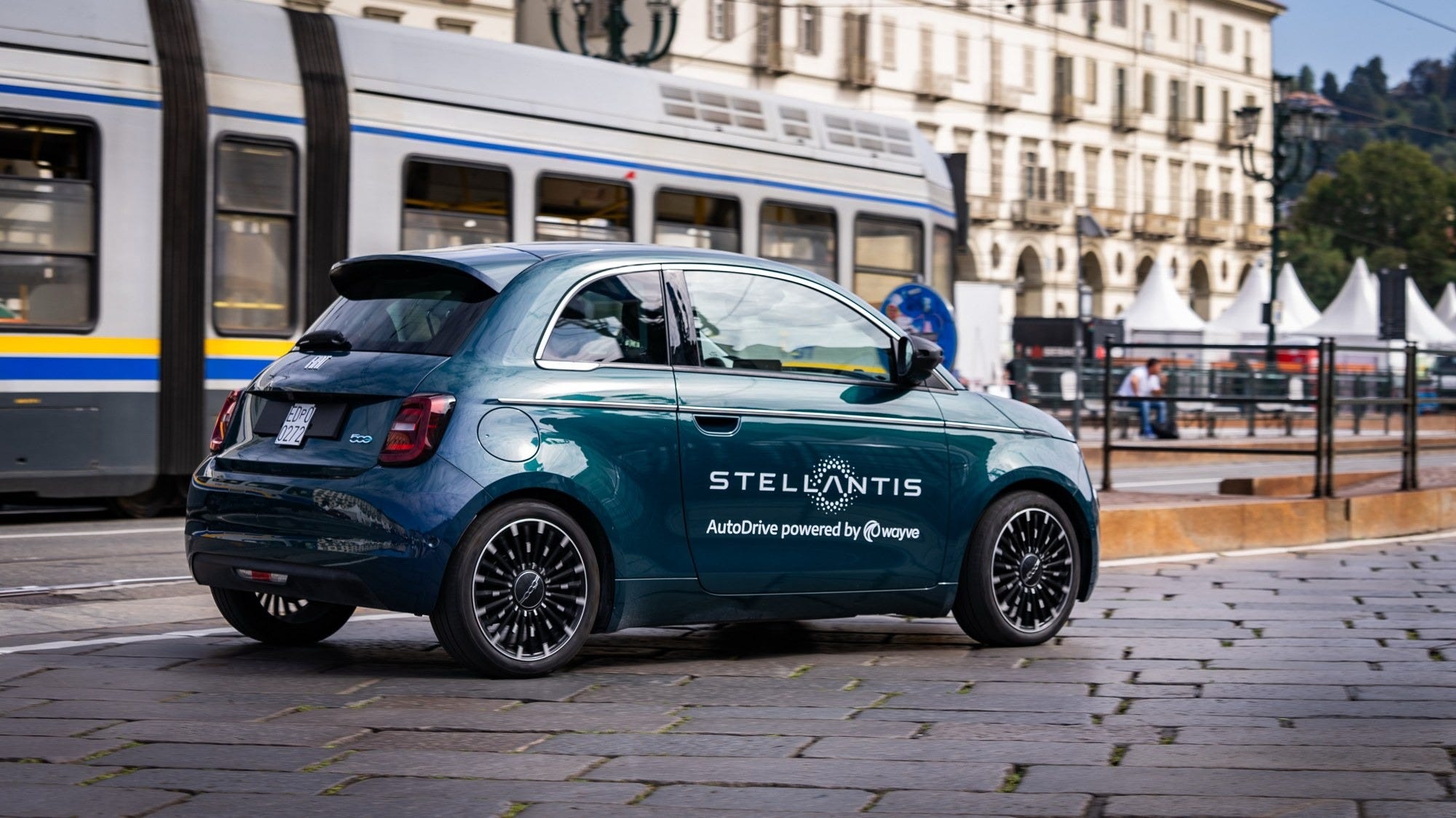
Wayve’s AI Driver is now running in a Fiat 500e and a Maserati Grecale, which Stellantis and Wayve took from integration to road testing in less than four weeks. Both L2++ development cars gave hands-free, door-to-door supervised demo rides around Turin at the Wave by Vento tech event last week. Wayve’s AI had never driven in Turin before. Wayve has posted videos of the rides if you want to see it handle Turin’s roundabouts and trams.
The two cars follow the Jeep Grand Cherokee integration from earlier this year. That’s three very different vehicles, with different sizes, dynamics, and sensor placements. It’s a decent proof point for Wayve’s pitch that one AI driver can be ported across brands quickly. Stellantis is betting the partnership will cut its development costs and timelines, which currently run about two years per cycle. The production system is still targeted for 2028, starting in North America.
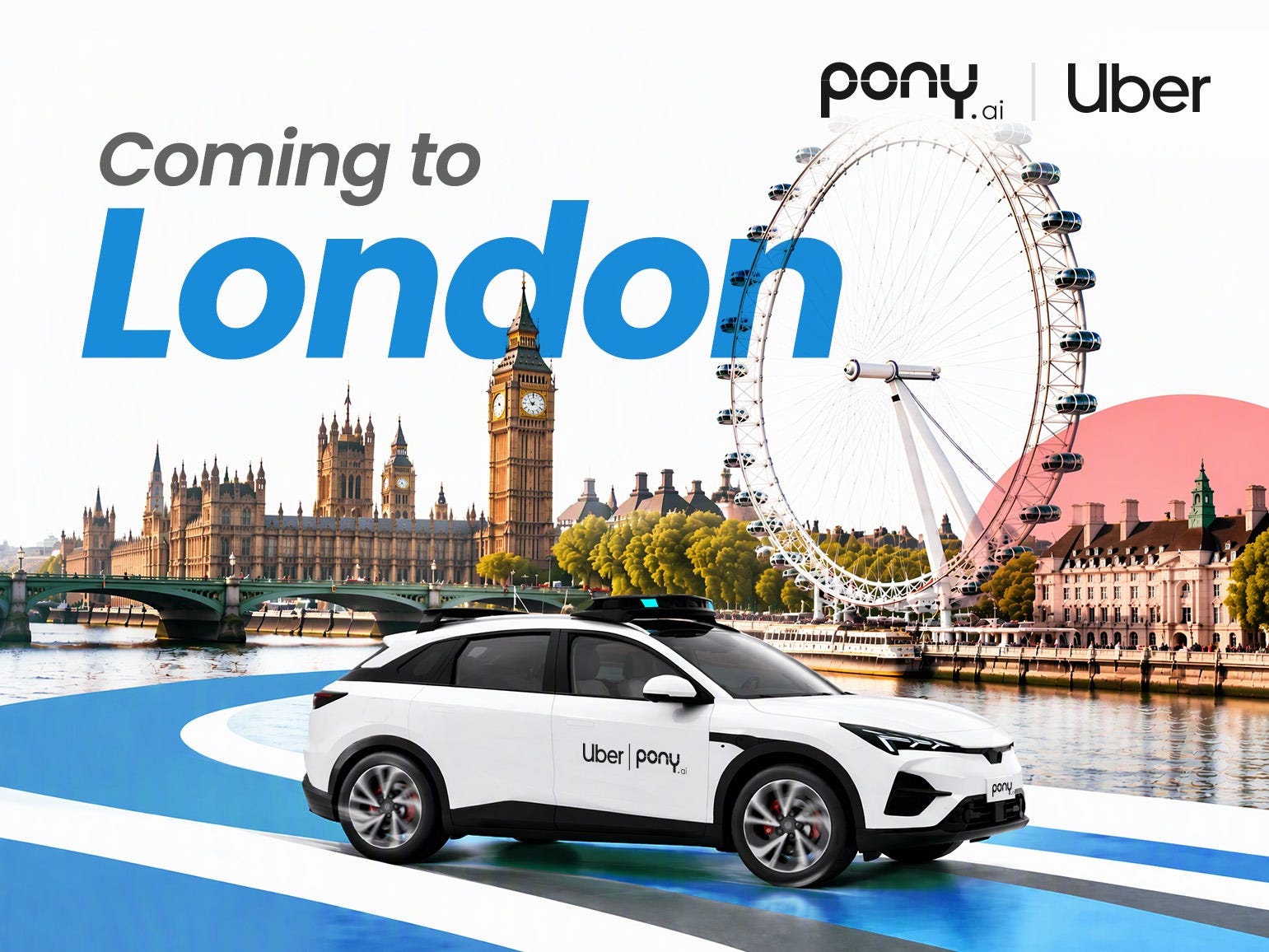
Pony.ai is bringing its Gen-7 robotaxis to London with Uber, with testing expected to start in the coming weeks under the UK’s self-driving pilot program. The two companies already run a live service in Zagreb. There, Pony supplies the driving system and vehicle, Verne owns and operates the fleet, and Uber brings the riders.
Neither company has said who will own and operate the London fleet. Pony will be Uber’s second robotaxi partner in London after Wayve, which has been running supervised rides on Uber there since September.
In my conversation with Dr. Leo Wang, CFO of Pony.ai, he alluded to this further expansion into Europe. Listen to that below.
Dubai has started a four-week trial of Glydways’ autonomous transit pods on Bluewaters Island. Dubai’s Roads and Transport Authority (RTA) is running the trial, hosted by Dubai Holding, as a first and last-mile option. Glydways, a Bay Area startup, designs its small electric pods to run on narrow lanes separated from regular traffic. That makes the system work more like lightweight transit than a robotaxi service.
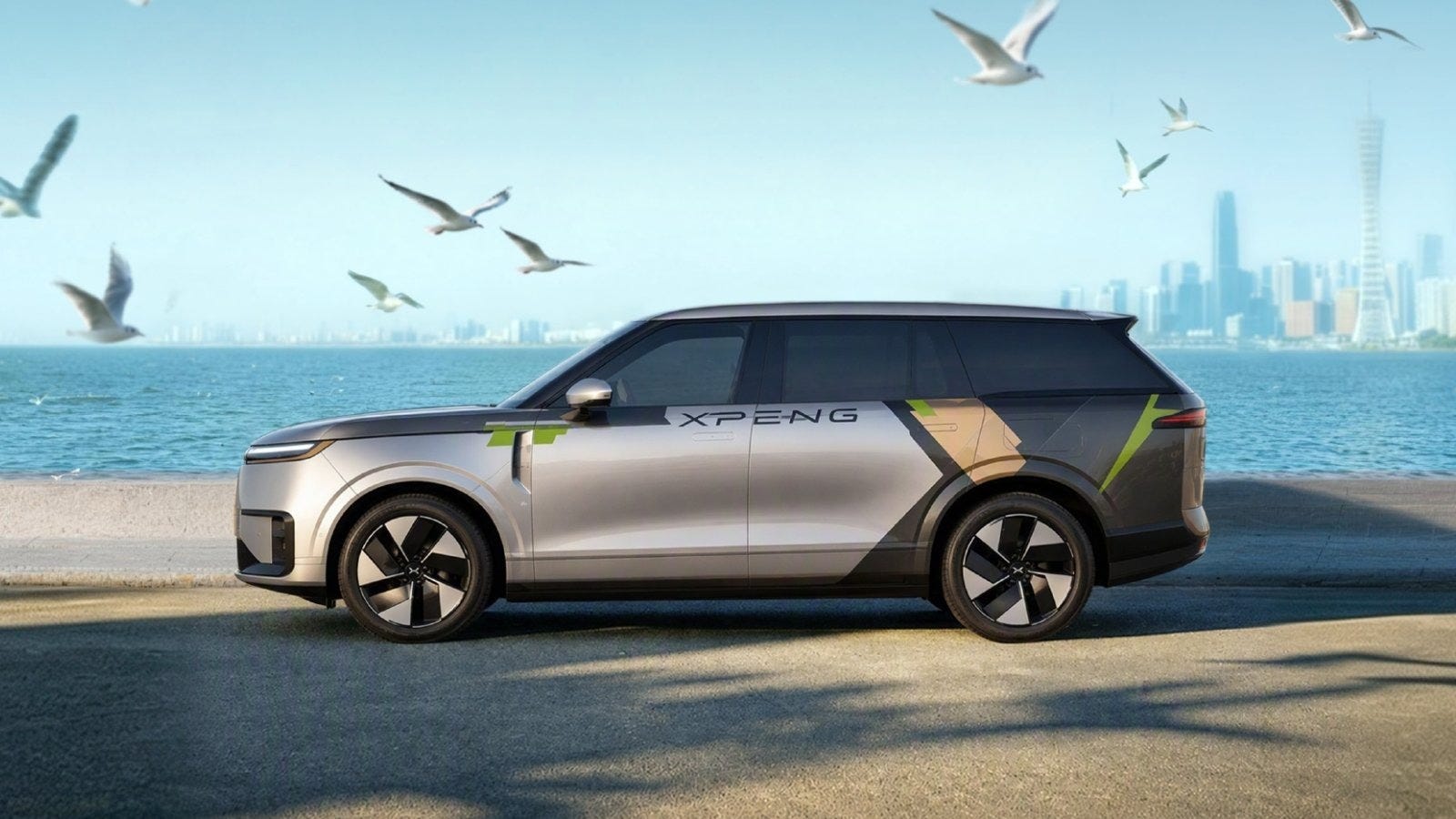
Xpeng has named its robotaxi Xpeng Yoyo, after completing more than 2,000 internal test rides in Guangzhou. The robotaxi is based on Xpeng’s GX SUV. It runs a camera-only system on four in-house Turing chips, with no lidar or HD maps. Xpeng hasn’t said when it’ll open to the public. It’s aiming to run without safety drivers in 2027 and to partner with ride-hailing platforms in China and abroad.
Quick Note:
I’ve been traveling in China for the last couple of weeks, attempting to explore every type of robotic and AI-based automation the country has to offer. Not just robotaxis, but deliveries, utilities, and everyday services as well. I plan to write up a retrospective about the experience, including pictures and videos. Let me know what you’d like to see, and I’ll include it in the retro.
Alright, that’s it from me… until next week. If you enjoy this newsletter, share it with your friend, colleague, or boss. Thank you for reading, Sophia out!
Bonus points for keeping us current while you travel!
I visited China once. Beijing, and a short flight to see the terracotta soldiers.
From what I saw during that one visit, things were done differently there. For example, while our tour bus waited for a green traffic light at a city street intersection, a large crane at an active building construction site raised and slewed a large bundle of long re-bar up and over the vehicles (and our bus) at the intersection.
You asked us to let you know what we’d like to see in your visit write-up. Regarding robotaxis: if you were in one in Beijing and saw that you were approaching a hazard in the road, would you be able to command / ask the vehicle to stop and wait til the road was clear before proceeding?
Since ‘utilities and everyday services’ also most likely occur differently in China vs here in the US, I’m not sure what to ask you to share. Sorry Sophia-- I’ll take the cheap way out here and just rely on your capable expertise to give us the rundown.
Wishing you safe travels returning home.