

Uber, WeRide Take On Madrid
Plus, make sure to join the Wayve London interest list, and are Waymos actually a great getaway vehicle?

This is the Ride AI newsletter: The most comprehensive weekly digest of news and intelligence at the intersection of technology and transportation.
ICYMI, early bird tickets for Ride AI 2027 are available. If you’d like to apply for an early spot, please do so here.
Top Story
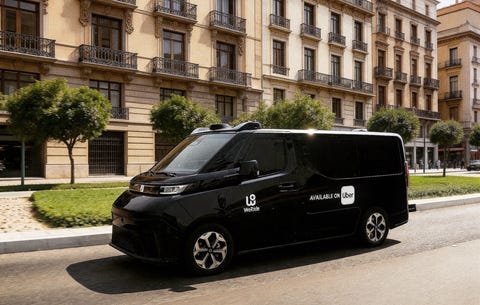
WeRide, Uber, and AVOMO will launch Spain’s first commercial robotaxi pilot in Madrid, marking the trio’s first joint entry into the European market. Service is expected to start later this year via the Uber app, in collaboration with Madrid’s regional government, running through the usual gamut of safety operators before scaling to fully driverless service across “core urban areas”. WeRide supplies the autonomy (the WeRide One platform on its GXR vehicle), while AVOMO (a Moove Cars Group company that already runs Uber’s AV fleet operations in Austin and Atlanta, managing around 400 vehicles) handles operations on the ground.
If you’re keeping count, this is the fourth of 15 cities under the existing WeRide-Uber agreement, with 11 more planned by 2030 and a stated goal of deploying tens of thousands of robotaxis globally. WeRide already runs fully driverless commercial service in Abu Dhabi and Dubai (Riyadh is next), and it favors an asset-light model where local partners put up the fleet investment.
Spain is WeRide’s fifth European market. The company holds AV permits in eight countries and operates in 40+ cities across 12 countries.
Domestic News
Motional released the nuReasoning dataset, what it calls the world’s first and largest reasoning-centric, long-tail open dataset for autonomous driving, unveiled at CVPR in Denver. The dataset targets edge cases such as occluded pedestrians, sudden cut-ins, road debris, and bad weather, that every AV company needs to solve. Here’s an example with a cat crossing the road.
Included are 20,000 human- and model-verified long-tail clips, about 105 hours selected from 10,000 hours of driving logs from Motional’s cars in Pittsburgh, Las Vegas, LA, and Singapore, plus 247,000 reasoning annotations spanning spatial, decision, and counterfactual reasoning. It was built with UCLA’s Mobility Lab.
But why? Motional’s CEO Laura Majors says that end-to-end models can get to a good 80-95% solution, but lack the introspection to safely handle the long tail or explain their decisions, which is the bar for SAE Level 4.
Motional has a track record of open datasets (nuScenes, nuPlan, nuImages). The first part is out now, the full set arrives in August, and a public challenge runs September through December. It’s the same long-tail problem Mobileye (Meteor and Genario) and NVIDIA (Cosmos) are chasing, which I wrote about last week.
You can download the dataset here.
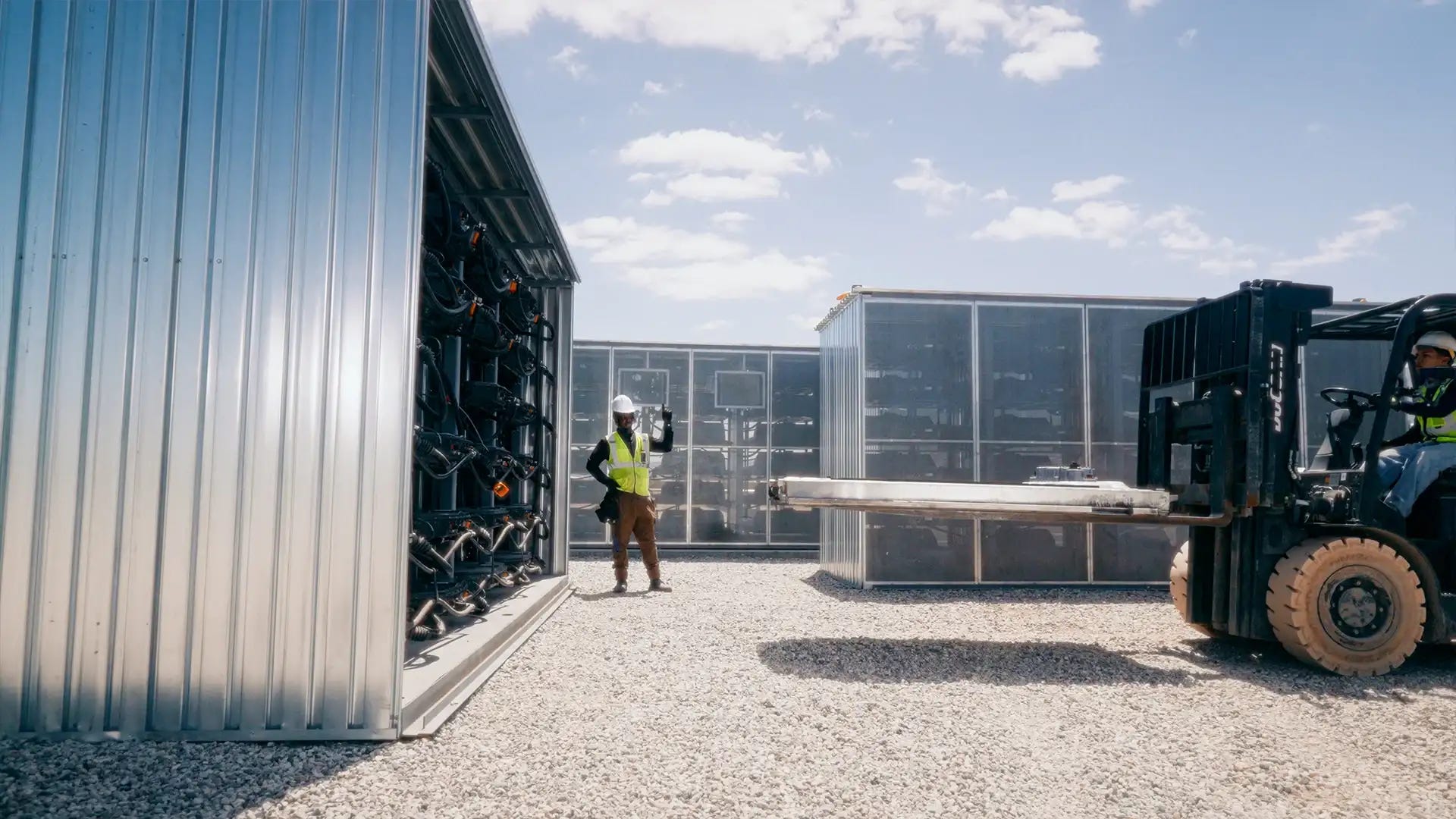
What happens when EV batteries reach the ends of their lifespans? For Waymo, repurposing its retired robotaxi batteries as grid storage is the solution, through a new partnership with B2U Storage Solutions. Rather than going straight to recycling, the spent packs from Waymo’s Jaguar I-Pace fleet get a second life feeding local electricity grids, absorbing midday solar surplus and dispatching it back at peak demand. First deployments are in Texas and California, where Waymo says the partnership will deploy “hundreds of megawatts” of storage capacity, without offering further specifics.
B2U is one of several firms focused on repurposing rather than recycling EV batteries, alongside Redwood Materials (founded by former Tesla CTO JB Straubel and backed in part by Waymo parent Alphabet), which recently spun up its own second-life storage business.
Robotaxis don’t cut traffic any more than Uber or Lyft do, a new MIT study found, but don’t make it any worse either. The analysis (MIT Transit Lab, published in Transport Findings) covered roughly 1,000 days of Waymo’s public California data, equating to roughly 13.8 million trips over 86.3 million miles. “Deadheading”, or passengerless miles fell from about 64% early on to around 44% and then plateaued, which puts Waymo’s cars empty for about 44% of the miles they drive, roughly the same ~40% deadhead rate as human ride-hail drivers. The same traffic-reduction promises were made for Uber and Lyft a decade ago, and later studies found ride-hailing actually increased vehicle miles and congestion (cheap rides induce trips people wouldn’t otherwise take).
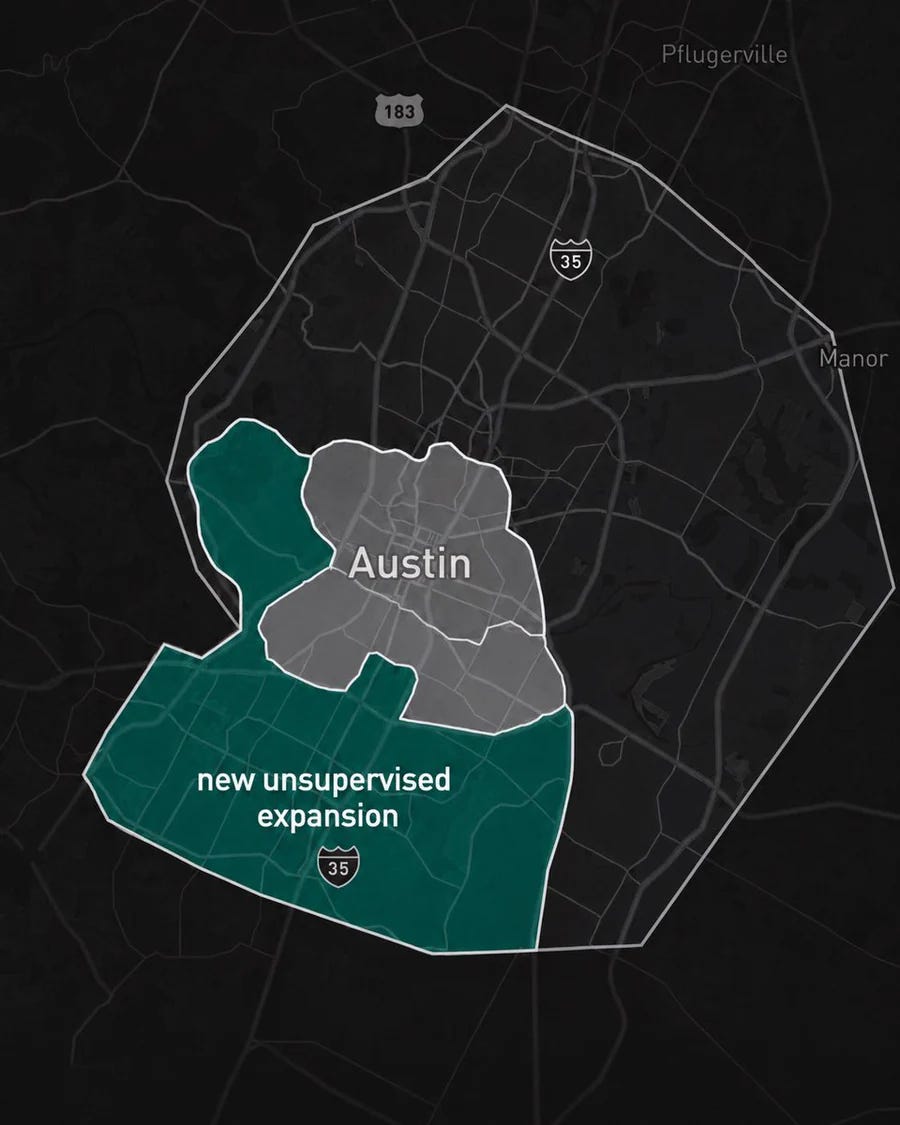
Tesla expanded its unsupervised robotaxi service to cover the entire Austin metro area, roughly 245 square miles, its largest service-area expansion yet. The new zone roughly doubles the prior unsupervised area and is more than 12 times the original June 2025 launch footprint (about 20 square miles).
Only about 20 active driverless vehicles are covering those 245 square miles, however, down from a late-April peak near 25, so a bigger map could mean longer waits.
International News
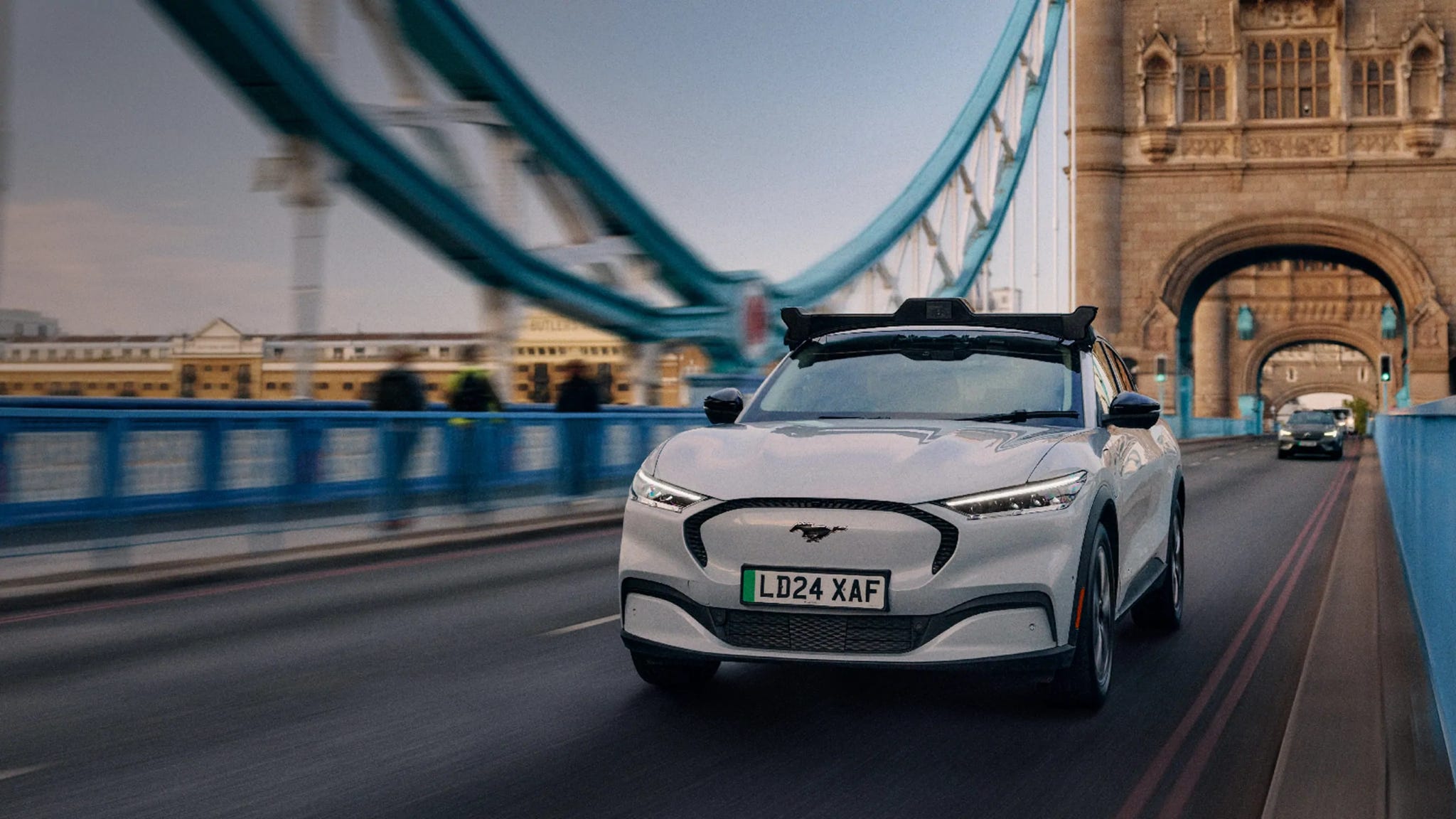
Uber has opened an interest list for Londoners who want to be among the first to hail a Wayve robotaxi, with the cobranded service set to go live in the coming months. The launch would be a milestone in one of Uber’s largest markets and an early test of whether driverless ride-hail has an appetite beyond the US and China. While neither company has given a firm date on when exactly service will launch, joining the list is meant to boost the chance of being matched with a Wayve car at launch.
I wasn’t able to get the settings to work, but if you’re a Londoner, make sure to sign up here.
Estonia approved Tesla’s FSD Supervised for public roads, becoming the third EU country to clear the feature. Like Lithuania before it, Estonia recognized the Dutch RDW type approval through EU mutual recognition (Regulation 2018/858) rather than running its own testing. Authorities have classified it as a Level 2 driver-assistance system, and Tesla says the over-the-air rollout will begin soon. Estonia follows the Netherlands (April) and Lithuania (May) in approving FSD, but EU-wide approval is still the bigger prize as it continues to face resistance from Scandinavian regulators.
RoboSense has won another mass-production lidar contract from FAW Toyota, a deal expected to exceed 500,000 units. It follows a string of wins in late 2025 that together top a million units. RoboSense’s Q1 revenue rose 39.9% to about 459 million yuan, with shipments up 204% to 330,300 units, though robotics (not cars) now drives more than half its volume.
As of March, RoboSense has mass-production nominations across 177 models from 36 automakers and an ADAS order backlog north of 9 million units.
First Time?
Lots of ridiculous firsts this week.
Somebody backed up into a Waymo while parallel parking on a slope in SF, and somebody else caught it on camera from inside a Zoox. It’s robot city over here.
A burglar used a Waymo as a getaway car to steal yoga clothes from a San Francisco studio, and months later police still haven’t caught them.

Per the SF Chronicle, the suspect took a Waymo to a Hot 8 Yoga studio back in January, went in, grabbed merchandise, and climbed back into the waiting robotaxi, all in a three minute time frame. However, by the time a search warrant was filed in April, the ride footage was already gone (Waymo doesn’t disclose how long it retains data), the exterior camera footage had been blurred for privacy, and the account information didn’t identify the suspect.
It’s a first-of-its-kind case, and certainly won’t be the last. I’m going to lose it if you tell me the burglar’s name was Quaid…
Alright, that’s it from me… until next week. If you enjoy this newsletter, share it with your friend, colleague, or boss. Thank you for reading; Sophia out!