

Uber vs. Waymo: Fight.
Plus, forget autonomous parking, agentic parking is the new hotness.

This is the Ride AI newsletter: The most comprehensive weekly digest of news and intelligence at the intersection of technology and transportation.
Early Access for Ride AI 2027 Now Available.
$750 Early Access tickets for Ride AI 2027 are now available until July 31st. Starting tomorrow, pricing climbs month by month toward $1,500 general admission.
If you’re considering joining us next April at SF JAZZ, please apply for early access today. Tickets won’t ever be at this price again.
Top Story
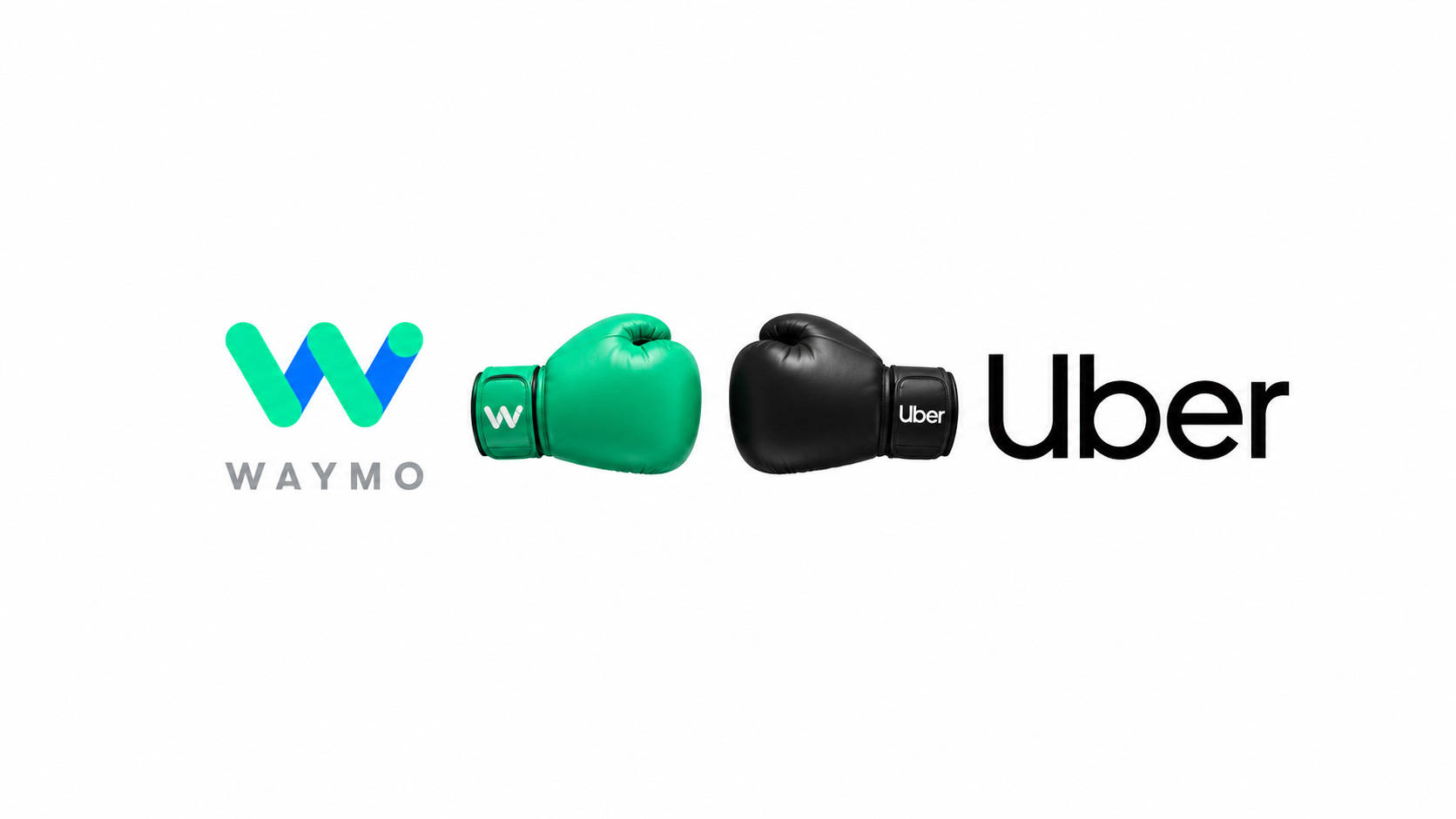
Uber has lobbied against a Washington, D.C. bill that would let Waymo run fully driverless robotaxis without pairing them with human drivers, putting Uber in direct opposition to its own business partner. Uber argues the bill would hand Waymo a de facto monopoly and wants any AV law to require a “hybrid” network instead, one where robotaxis and human drivers share the same app and riders can choose either. Javi Correoso, who leads Uber’s U.S. policy team, told a D.C. Council roundtable in May that one robotaxi displaces roughly four human drivers and that AVs can’t offer the physical assistance older or disabled riders sometimes need. Waymo, which backs the bill, says it doesn’t oppose hybrid networks in principle, just rules that would lock in any single network model as a legal requirement.
The bill itself, introduced by Councilmember Charles Allen in May, would update D.C.’s 2012 Autonomous Vehicle Act to allow driverless testing and commercial service without a safety operator behind the wheel, something Waymo and Zoox can’t currently do in the district. It would also charge robotaxi operators 15 cents a mile, split between public transit and worker retraining funds, a tax robotaxi advocates call too steep. Uber, Waymo, Lyft, Tesla, the Teamsters, and disability advocates all testified at a day-long hearing Monday.
Waymo is making its own case directly to Washingtonians. Co-CEO Tekedra Mawakana posted Monday that Waymo has autonomously driven more than 300,000 miles in D.C., including through emergency scenes, and that the company is ready to invest tens of millions of dollars and hire hundreds of local workers to launch service in the capital.
However, the fight extends well past D.C. Uber and Waymo sued each other over trade secrets back in 2017, before teaming up in 2023 to put Waymo cars on Uber’s app in Phoenix, a partnership that quietly ended in May. Their cars still run exclusively through Uber in Austin and Atlanta, but both companies are also gearing up to compete head-to-head once Waymo launches its own service in London later this year. Uber’s own executives have taken public shots at Waymo’s driving in recent months, and its CTO Praveen Neppalli called out a Waymo robotaxi’s behavior on X earlier this year. However the D.C. bill shakes out, it seems the two companies aren’t set to get back into each other’s graces anytime soon.
Domestic News
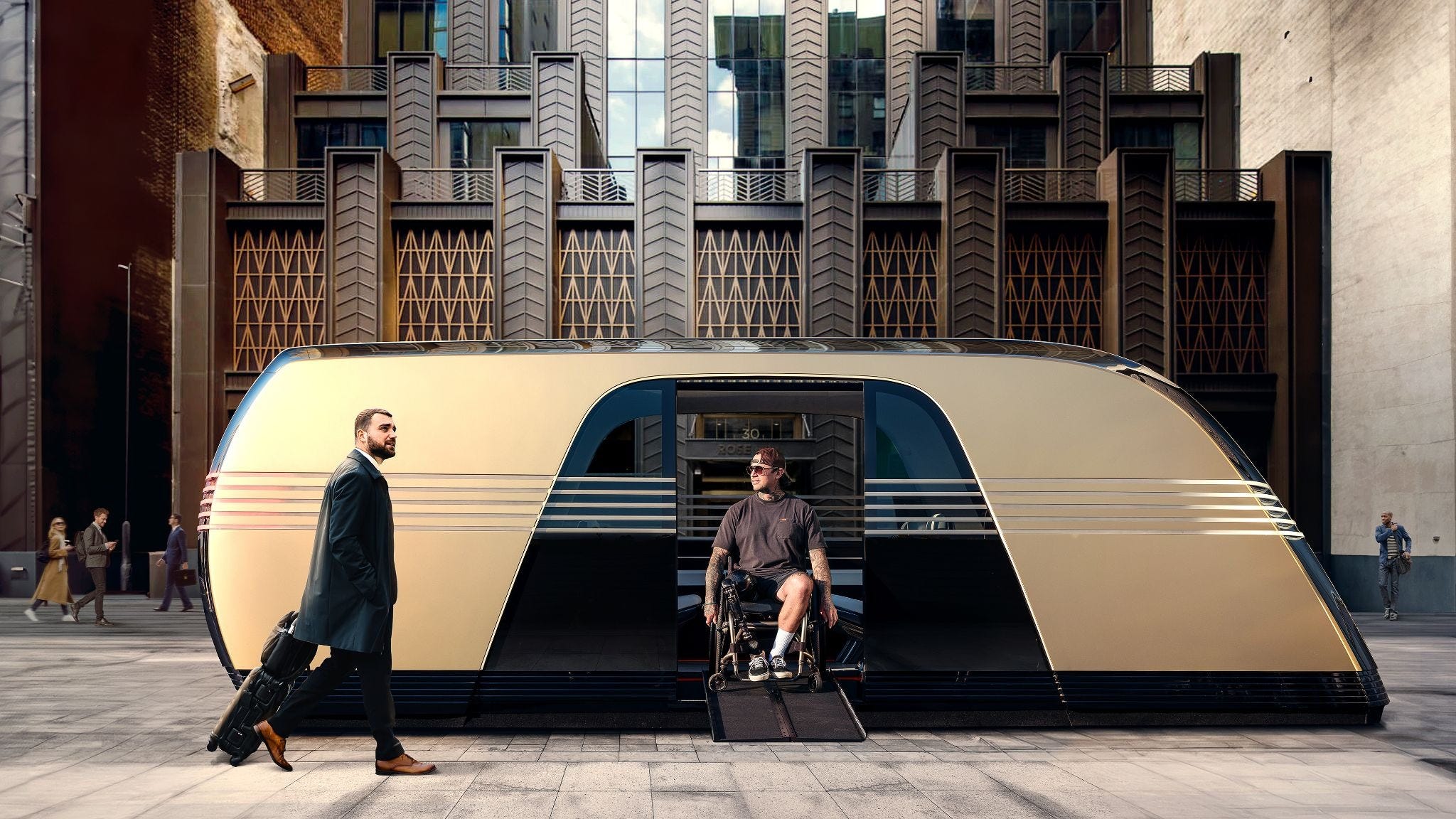
Tesla told the same D.C. Council hearing that it’s building a “purpose-built, wheelchair-accessible” autonomous vehicle in Texas, though it gave no timeline, spec, or vehicle name. Senior policy advisor India Herdman called it “an active product being built by Tesla in Texas,” but there is really one obvious candidate: the 20-seat Robovan Tesla unveiled back in 2024, which has gone without a price, launch date, or update since. Tesla’s only current robotaxi rides run on the Model Y, and the two-seat Cybercab it’s now testing isn’t wheelchair accessible either, despite the braille controls and lower seating Tesla has highlighted.
At the same hearing, Waymo’s own policy lead admitted the company hasn’t found a vehicle platform that’s both wheelchair-accessible and compatible with its sensor suite, calling it something they’re still “trying to find.” Of the current major robotaxi players, only May Mobility offers wheelchair-accessible rides, and only with a human operator on board to help deploy the ramp. You might remember GM’s Cruise built a prototype accessible robotaxi back in 2023. But that was before GM axed the whole self-driving program the following year.
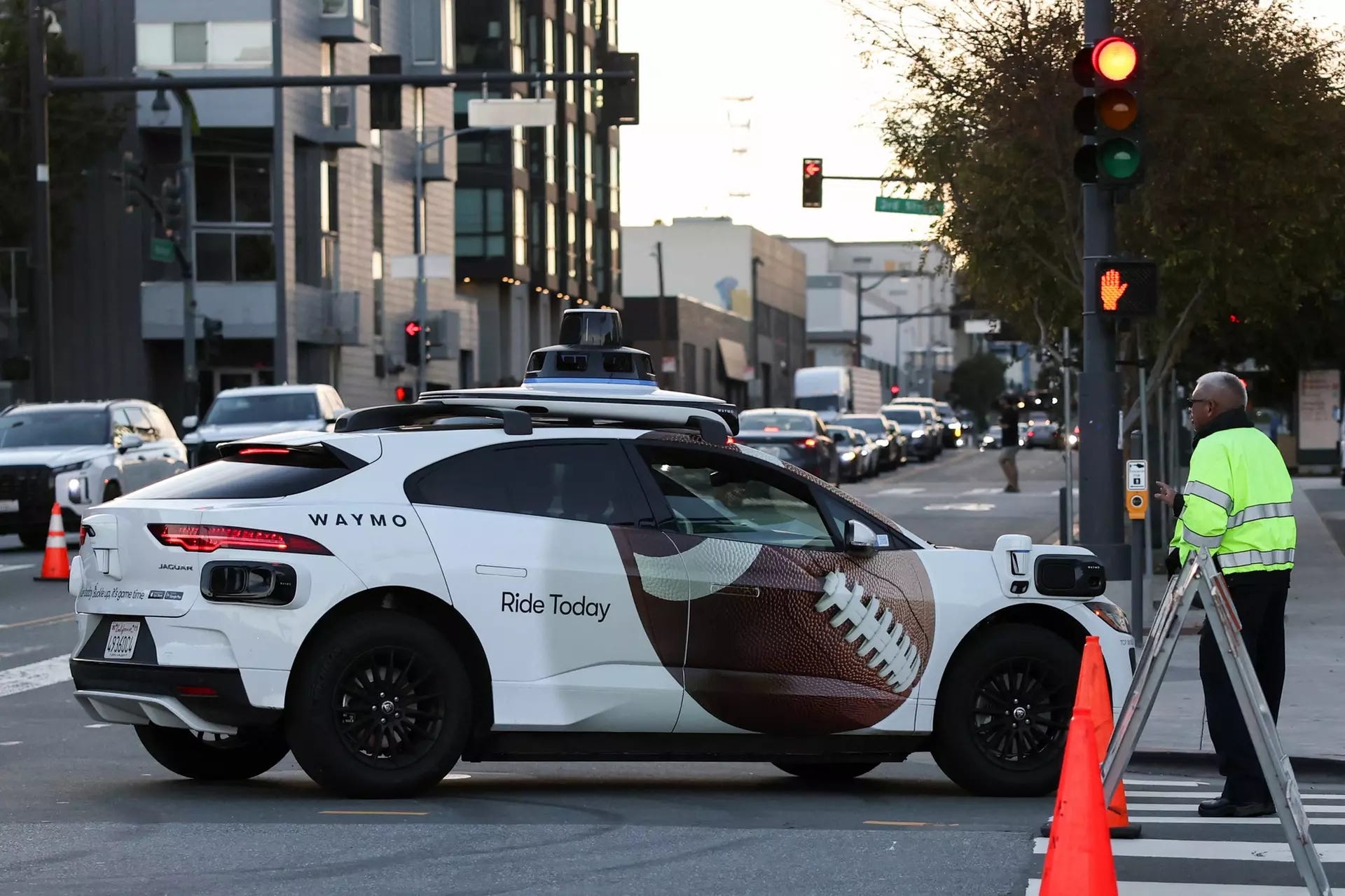
NHTSA has demanded that autonomous vehicle companies fix a “clear pattern” of driverless cars interfering with first responders, giving developers until the end of the month to show how they’ll fix it. Administrator Jonathan Morrison’s letter cites vehicles driving into active emergency scenes, blocking ambulances and fire trucks, and failing to recognize flashing lights, flares, and traffic cones. “Emergency scenes are not rare or extreme edge cases,” Morrison wrote, adding that human drivers who impede first responders face fines and jail time. The agency doesn’t name any company, but a TechCrunch investigation earlier this year found at least six incidents where officers had to physically move Waymo vehicles out of traffic, including one during a mass shooting response and another after a gas explosion in Dallas.
Separately, Morrison said NHTSA will “absolutely” consider dropping the requirement that driverless cars include a steering wheel at all. “If you’re developing a vehicle that is designed never to be driven by a human operator, it doesn’t make any sense to require manual controls,” Morrison said. The comment follows NHTSA’s move last month to drop the mandate for manual brake pedals in fully driverless cars, part of a broader rulemaking push that’s also rethinking windshield wipers, mirrors, and transmission-shift rules. Losing the steering-wheel requirement would be a big deal for purpose-built vehicles like Tesla’s Cybercab and Zoox’s robotaxi, both of which currently operate on a limited exemption basis.
New Jersey has advanced a bill that would require any fully driverless car to use cameras plus two other sensing technologies, most commonly lidar and radar, effectively excluding Tesla’s camera-only Robotaxi unless it changes hardware. The bill, S1677, would also require 50,000 miles of in-state supervised testing before any company can run driverless commercial service, and it’s expected to come up for a vote later this year. If it becomes law, New Jersey would be the first state to write a hardware mandate like this directly into statute, ahead of a similar proposal pending in New York.
"This is not anti-Tesla," Sen. Andrew Zwicker, the bill's sponsor, told The Verge. "I'm pro-New Jersey safety." However, it is awfully hard to see it any other way. Zwicker says he became convinced of the technology's potential after riding in a Waymo robotaxi in Phoenix, and the bill's redundant-sensor requirement lines up with how Waymo, Zoox, and most other commercial AV developers already build their cars, and against the camera-only approach Tesla has bet on.
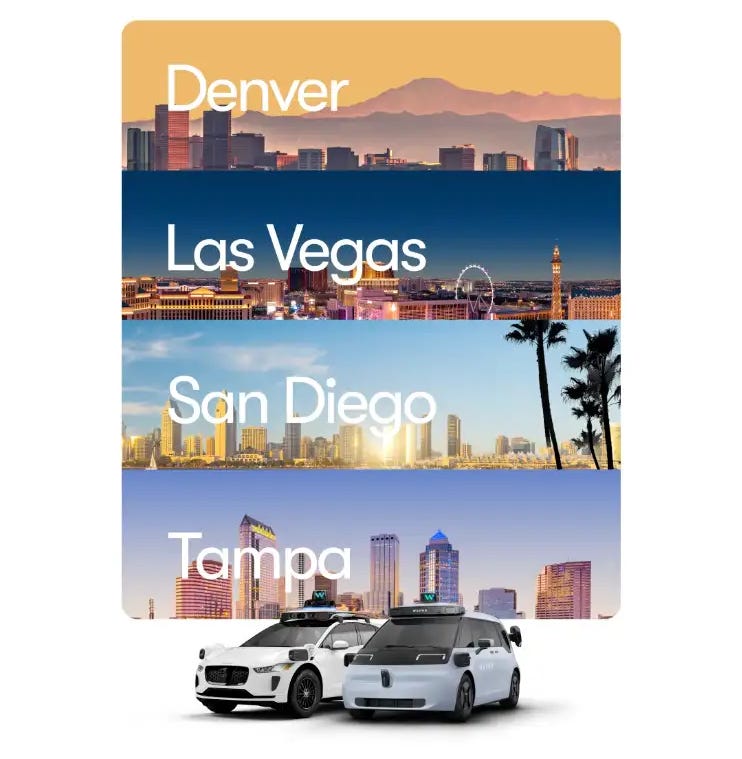
Waymo has kicked off driverless testing in four more cities: Las Vegas, Denver, San Diego, and Tampa. For now only Waymo employees can ride in the rider-only vehicles, but the company says public trips should follow soon. Waymo is also testing its newest vehicle, a Hyundai Ioniq 5, with a safety driver on board, though there’s no timeline yet for when the Hyundais join the fleet as full robotaxis. The expansion pushes Waymo’s active footprint past a dozen metro areas
Location, Location, Location
Speaking of testing, Waymo has published two new peer-reviewed studies arguing that crash-risk benchmarks need to account for exactly when and where people drive, not just how many miles they log. Human drivers in Memphis were involved in fatal crashes at 8.4 times the rate of drivers in Boston on surface streets, and driving on surface streets overall carries a 2.3 times higher fatal crash rate than freeways across the 50 largest U.S. metro areas. A single national average, Waymo argues, overstates the danger of driving in a safe city like Boston by threefold while understating it just as badly in a place like Memphis.
Time matters just as much. On the topic of Las Vegas, a city where nighttime activities oftentimes outnumber daytime ones, testing during nighttime instead of daytime can have very different results. Waymo’s data says human crash rates spike 2 to 6 times higher between midnight and 4 a.m., especially on weekends, but that window makes up just 1.5% of total human driving miles, so it barely shows up in aggregate safety stats. Waymo’s fleet, by contrast, drives four times more of its miles overnight than the average human driver… because that’s when nightlife riders need a ride home most. Despite that, Waymo logged a lower crash rate than matched human drivers in every single time window the study measured. Comparing 127 million autonomous miles against human drivers navigating the same locations, days, and times, Waymo says it avoided 359 crashes with injuries, and 53% of those avoided crashes would have happened overnight.
What I find interesting here is that Waymo’s most convincing safety case might be concentrated in the precise hours that are hardest to surface in a simple crash-rate average. If a fleet’s overnight miles are where human risk spikes hardest, that’s also where a matched comparison should show the biggest gap. So while “X million miles driven safely” sounds great and impressive, time and place-matched benchmarks are probably the direction the entire industry’s safety reporting needs to head.
International News
ByteDance is reportedly weighing a push into autonomous driving, according to 36Kr, a Chinese outlet well known for accurately leaking information. The project reportedly sits under the world-model team inside ByteDance’s Seed research group, whose work already overlaps with the environmental understanding and planning autonomous driving requires. 36Kr reports ByteDance has held talks with leading AV teams and is recruiting autonomous driving talent. In response, ByteDance said its “physical AI” research includes early-stage explorations but that it has “no plan to build a smart driving business” which is exactly what you’d say if you were secretly trying to build a smart driving business.
It would be a notable (but not entirely surprising) expansion for a company best known in the West for TikTok. ByteDance already supplies cockpit AI through its Doubao model and cloud unit Volcengine, most recently in Seres-backed EV brand Aiva. If ByteDance does move into autonomous driving, according to the leaks, the strategy could look a lot like Tesla’s and Nvidia’s. After all, vehicle data and world models are also training grounds for the embodied intelligence and robotics bets ByteDance’s Seed team is already making.
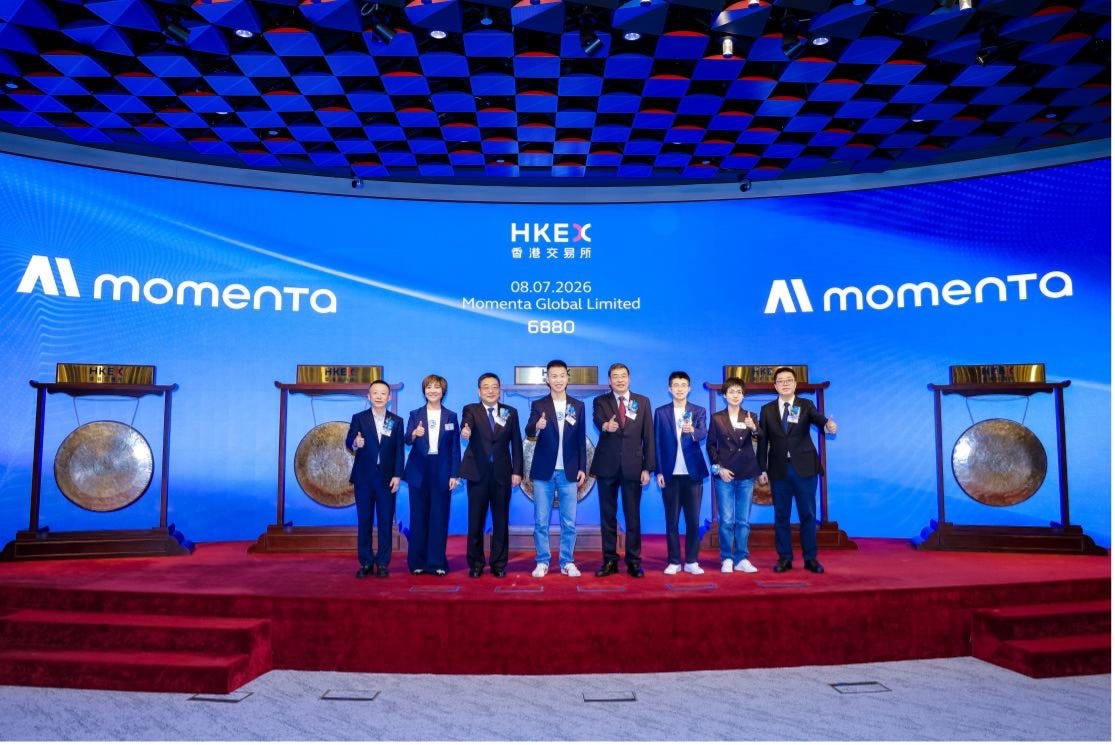
Two more Chinese autonomous-driving companies went public in Hong Kong this week, and both popped on debut. Momenta, which supplies driving software to Mercedes, Toyota, BYD, and GM, climbed as much as 6% on a single trading day, valuing the company near $9 billion. Its IPO drew more than HK$100 billion ($12 billion USD) in institutional demand and was oversubscribed 413 times on the retail side. Eacon, a CATL-backed autonomous mining-truck operator with 2,580 trucks deployed across China, jumped as much as 14% for a roughly HK$14.8 billion market cap after its own offering was oversubscribed nearly 158 times.
The Hong Kong Exchange listing of Momenta and Eacon, following WeRide and Pony.ai, is part of a broader wave of Chinese AV companies racing to list there before Beijing shuts the capital-raising window. Expect to see more smart driving companies list in the coming months.
Lidar maker Seyond’s second-quarter shipments surged 385% year-on-year to about 271,100 units. Growth came almost entirely from the Robin series, aimed at mass-market vehicles, which jumped more than 32-fold year-on-year and now makes up 71% of Seyond’s shipments; the pricier Falcon long-range unit grew a more modest 55%. Seyond primarily supplies Nio and its Onvo sub-brand, but has added mass-production orders from SAIC Volkswagen, GAC, and Leapmotor. The broader China ADAS lidar market grew 87% year-on-year in May alone as falling prices push front-facing lidar into cheaper cars. We’re seeing lidar sensors in the $25k USD BYD Seal, for example.
Park Yourself
Autonomous parking is old news, agentic parking is the new hotness.
Li Auto recently showed off the agentic parking capabilities of its new L9 Livis, including its ability to combine a multimodal LLM with its self driving stack to interact with people around it, particularly security guards banging on the car’s window to tell it to not park wherever it was going to park. The feature isn’t shipping yet, but man is it so sick.
Alright, that’s it from me… until next week. If you enjoy this newsletter, share it with your friend, colleague, or boss. Thank you for reading; Sophia out!