


This is the Ride AI newsletter: The most comprehensive weekly digest of news and intelligence at the intersection of technology and transportation.
Top Story (AKA Big Tesla Moves)

Tesla’s Cybercab has passed 1 million unsupervised miles, up from the 380,000 miles it disclosed on its last earnings call, a roughly 17% week-over-week growth rate. The company is targeting 24/7 availability in Austin as soon as next month, with the fleet projected to reach 2,000 to 3,000 vehicles by the end of the year.
Tesla’s driver-assist software is having a strong week as well. FSD Supervised recorded nearly 10 times fewer crashes than manual driving in Belgium this summer, according to collision data Tesla submitted to regulators there covering June through August and presented to the Flemish Parliament ahead of the EU’s October 6 vote on approving the technology bloc-wide. Off-highway crashes fell to roughly 1 per 9.5 million kilometers versus about 1 per 980,000 kilometers under human driving, though the highway improvement was smaller, around 30%.
If you’re keeping count on the EU front, Czechia became the seventh EU country to approve FSD Supervised this week, which is a reversal from June, when the Czech transport ministry said it would wait for the EU-wide review instead of approving unilaterally. The ministry cited liability and speed-limit concerns at the time, but hasn’t explained what changed now. The seven approved countries, which also include the Netherlands, Lithuania, Estonia, Denmark, Belgium, and Slovenia, now represent about 12% of the EU’s population, well short of the 65% threshold needed for the October 6 vote.
That regulatory momentum doesn't extend to the Cybercab, though. As I wrote a couple weeks ago, US regulators still aren't sold on it. NHTSA has ordered Tesla to prove its steering-wheel-less Cybercab complies with federal safety standards, issuing a formal Special Order that requires answers under oath by September 30. Tesla certified the vehicle itself, the standard process for new cars, but NHTSA says it has reason to question that certification and can fine Tesla up to $139 million for false or incomplete answers.
So what exactly does NHTSA take issue with? Federal safety standard 135 requires that the service brakes be activated by a foot control, and the Cybercab has none. NHTSA also wants to know whether Tesla used temporary controls during certification testing and then stripped them before delivery, which would violate federal law as well. Tesla has never obtained the Part 555 exemption that NHTSA’s own 2022 rule said would likely be necessary for a vehicle built with no driver controls at all. Zoox got that exemption in July.
Wall Street, however, is bullish regardless. JPMorgan projects Tesla’s robotaxi business could generate $320 billion in revenue by 2035, with nearly all of it coming from vehicles Tesla owns outright instead of fleet-owned vehicles like Musk had previously proposed. The bank raised its price target on Tesla to $475 a share from $145, and expects robotaxi and Optimus together to drive half of Tesla’s revenue growth to $203 billion by 2030.
Domestic News
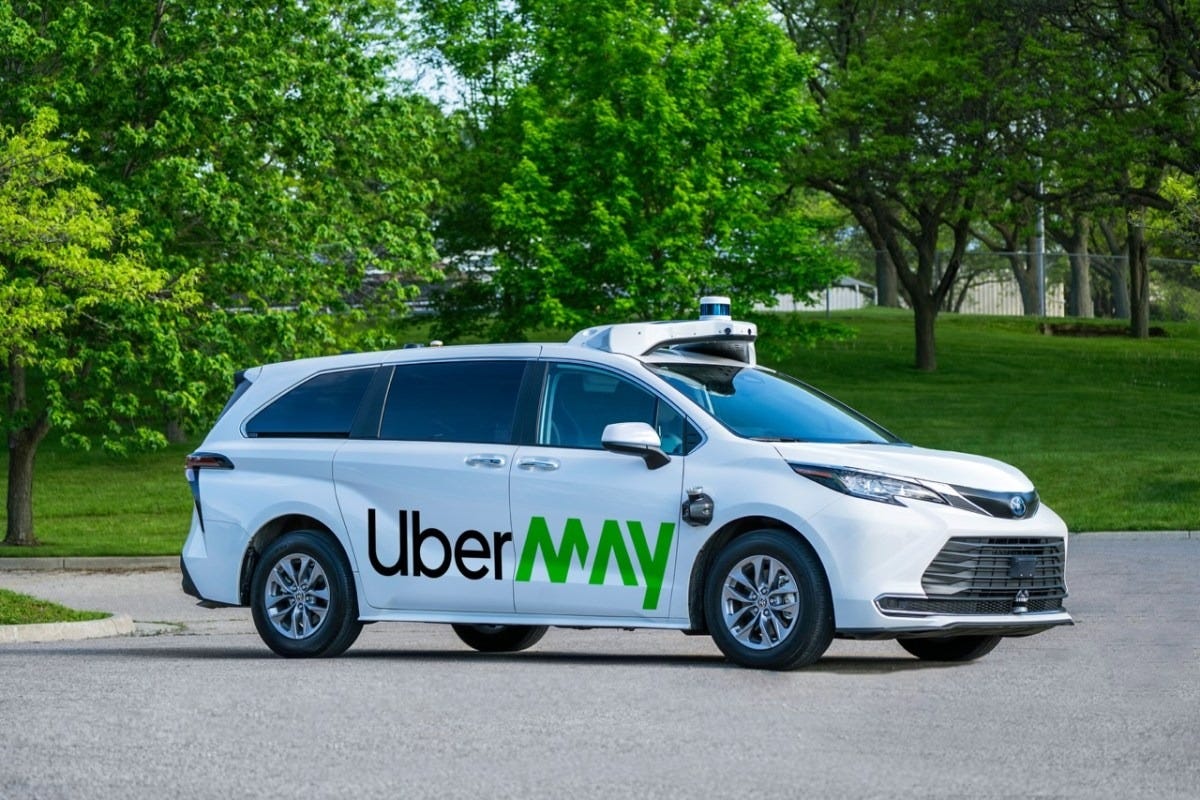
May Mobility has agreed to go public through a SPAC merger, combining with ACP Holdings Acquisition Corp. in a deal that values the company at $1.4 billion and would make it the first pure-play autonomous ride-hail company listed on a U.S. exchange. The combination is expected to close by year’s end, after which the company will trade on Nasdaq as May Mobility, Inc. under the ticker MAY.
The deal delivers up to $337 million in gross proceeds, $217 million from ACP’s trust account (assuming no shareholder redemptions) plus a fully committed $120 million private placement. May runs an asset-light Autonomy-as-a-Service model, licensing its self-driving technology to fleet partners who own and operate the vehicles themselves, and it’s targeting long-term gross margins as high as 70% and EBIT margins up to 30%. It’s nowhere close to that yet, however, as May Mobility brought in about $10 million in revenue last year against roughly $93 million in cash burn.
This listing gives me some pause, though. SPACs are faster, but are less scrutinized than a traditional IPO, and May is taking it while burning nearly ten times what it earns in revenue. That means the company is making an aggressive bet on future revenue that might be very far in the future indeed. To me, this feels like a bet that public markets will fund the runway that venture capital might not.
NHTSA has signed a deal with SAE International to write the first federal performance standard for self-driving systems, launching a three-year, $5 million consortium called A2SCEND. The goal is to establish a measurable set of driving competencies and testing methods for autonomous vehicles, with the aim to replace the patchwork of state and local rules companies currently navigate.
NHTSA administrator Jonathan Morrison announced the agreement this week at a Pittsburgh AI summit, but it’s important to note that it is not enforceable yet. The process calls for three years of data-gathering before rulemaking and public comment even start, so we’re not going to see any results from this effort before 2030. At the pace AI is progressing, that period may as well be a decade long.
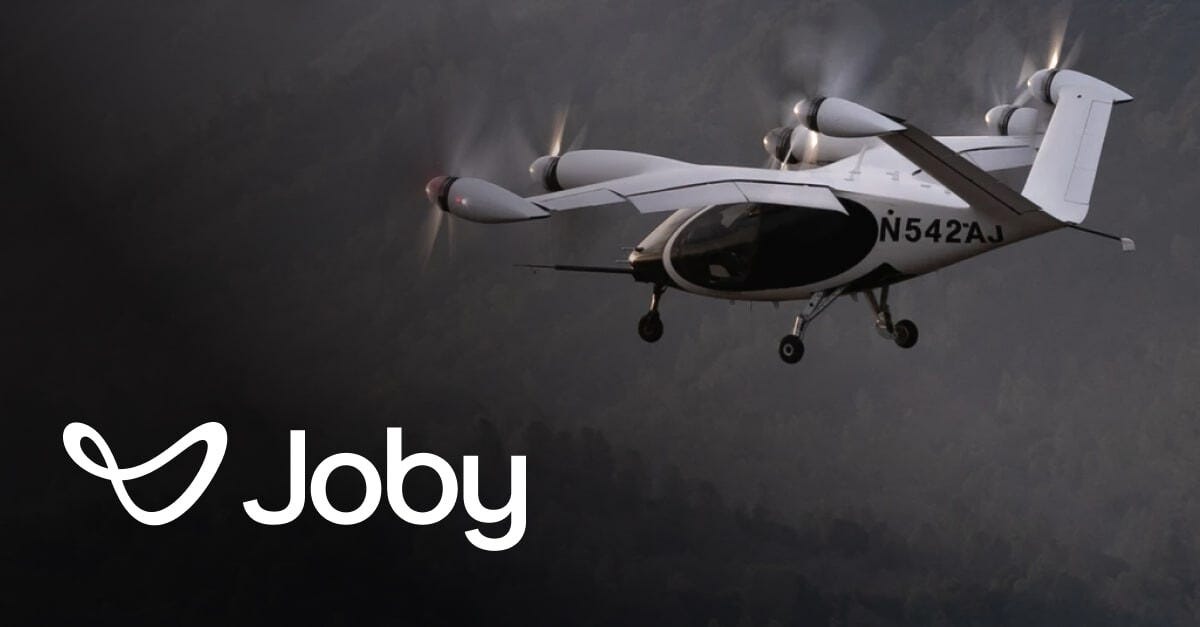
Joby Aviation has completed the first fully autonomous flight across the United States, a 3,199-mile trip from Concord, California to the Outer Banks of North Carolina with zero control inputs from the onboard safety pilot. The aircraft, a converted Cessna Caravan, handled its own taxiing, takeoff, cruising, and landing along the entire route.
Human operators monitored the flight remotely from Joby’s autonomy headquarters in California and from Shaw Air Force Base in South Carolina, up to 2,323 miles away. Along the way, the aircraft worked through high-density airspace near Phoenix Deer Valley and rerouted around severe weather in real time, at airports it had never flown into before. Joby says the autonomy system behind the flight is built on more than 400 flights and 800 automated flight hours, including trials in U.S. military exercises.
Hyundai plans to begin mass-producing the IONIQ 5 robotaxi for Waymo at its Georgia plant as early as next month, the result of a deal that has Hyundai supplying Waymo with tens of thousands of IONIQ 5 bodies primed for autonomous retrofitting. The Metaplant America facility becomes the newest link in Waymo’s vehicle supply chain, alongside Zeekr. Jaguar stopped producing the i-Pace base that Waymo previously used back in 2025.
A Nevada regulatory cap limiting Zoox to 100 robotaxis is about to expire, clearing the way for the Amazon-owned company to grow its Las Vegas fleet beyond the roughly 30 vehicles it currently runs there. The state cap, set by the Nevada Transportation Authority, expires September 25. Zoox already holds a federal exemption from NHTSA allowing up to 2,500 vehicles a year for two years, well beyond what Nevada alone was allowing.
Zoox operates around 100 custom-built robotaxis total across four U.S. cities and says it plans to steadily grow the Las Vegas fleet over the next several months, though it hasn’t given a specific target.
Waymo has resumed robotaxi service in San Antonio, five months after pulling vehicles off the road when several got stuck in flash flooding. During the April flooding, the cars slowed but didn’t stop as they approached waterlogged streets, and Waymo pulled back operations and issued a recall while it worked on the problem. The company says it’s made software changes to better detect and avoid standing water ahead of this week’s restart.
The restarted service covers a 60-mile area including downtown San Antonio and the airport, and for those keeping track, it brings Waymo’s paid-ride footprint back up to 15 U.S. cities.
Wayve has named Elisa de Martel as its new chief financial officer, poaching her from Waymo, where she led financial strategy and capital planning and helped take the company from pre-revenue to hundreds of thousands of weekly trips across five U.S. cities, including leading its $5.6 billion Series C round. She’ll be overseeing Wayve’s finance organization as the company pushes further into its automotive and robotaxi businesses.
Wayve hiring this specific profile, right as it says it’s entering a new growth phase across automotive and robotaxi, indicates to me that the company expects real scaling costs ahead as it goes live in London. De Martel will no doubt bring over the connections she made at Waymo, which will be key to Wayve’s success in the business. Up until now, Wayve had been mostly announcing more pilot programs and partnership, so this is really encouraging news.
International News
Lucid and Bolt plan to deploy at least 25,000 robotaxis across Europe, with Bolt owning and operating the fleet while the two companies co-develop an autonomous-ready vehicle platform built on Lucid’s upcoming mid-size EV architecture. Bolt wants 100,000 autonomous vehicles on the road by 2035, though no firm deployment date has been set and the mid-size Lucid platform itself isn’t due until the second half of 2027.
The vehicles will run on Nvidia’s DRIVE Hyperion compute and sensing hardware, though the companies haven’t named a specific technology partner for implementation yet. Interesting, because Lucid already has a separate US robotaxi deal with Nuro to integrate self-driving hardware. Does this mean that Lucid and Bolt aren’t confident that Nuro can satisfy the partnership’s autonomy needs?
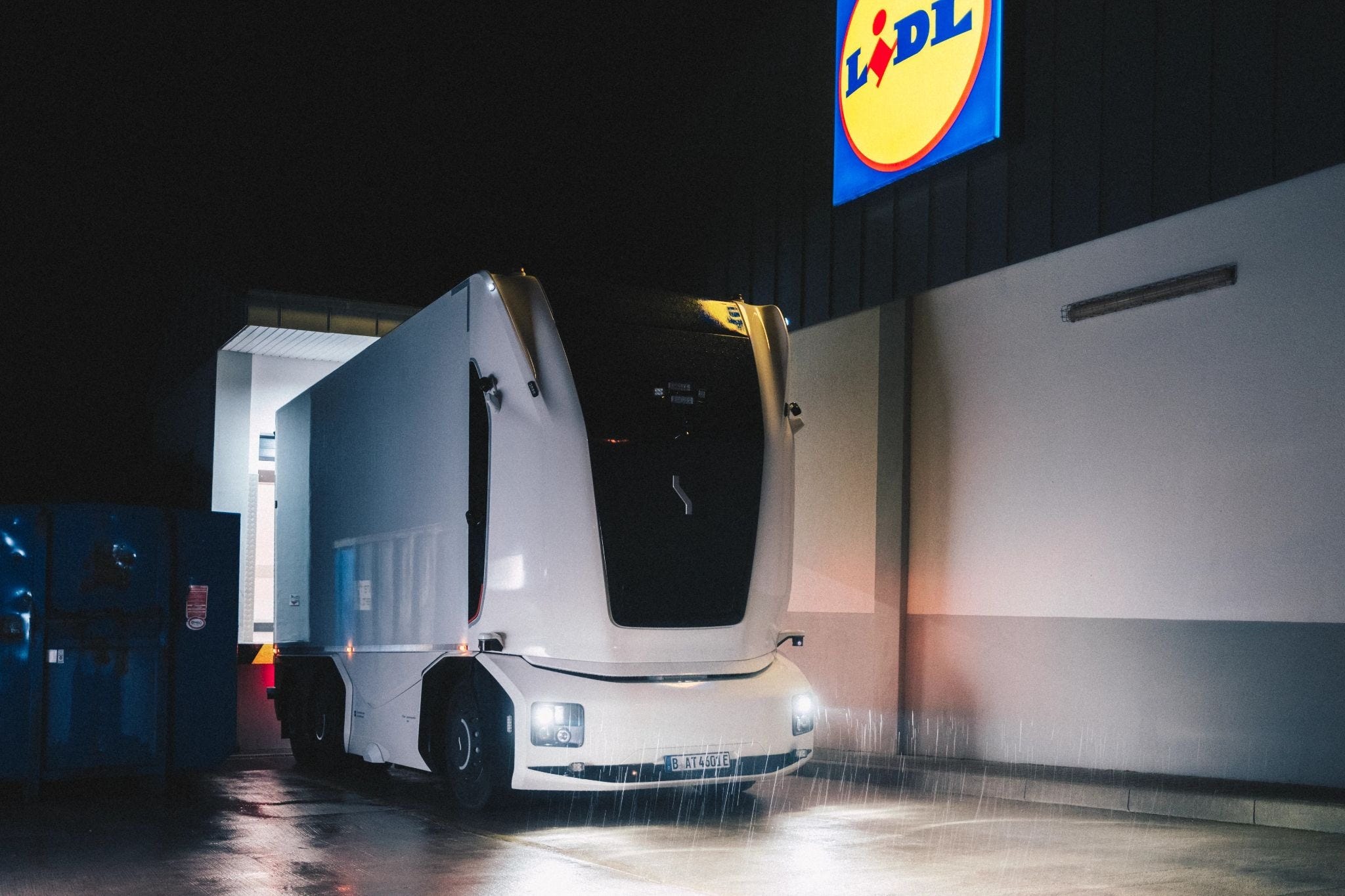
Einride and Lidl have put the first cab-less truck on a public road in Germany. The truck is a fully driverless Einride Pod hauling goods between a Lidl warehouse and a store in Edermünde with no driver or safety operator on board. It’s the first permit of its kind granted by Germany’s KBA, the federal motor transport authority, following an extensive safety validation process.
The truck currently runs a single fixed route, and the companies plan to expand it into a full multi-stop delivery run, with more deployments across other Schwarz Group companies (Lidl’s parent) under discussion. Einride operates one of the world’s largest electric heavy-duty truck fleets, and the system behind this run is the same platform the company’s been building out across its broader freight network.
Einride is also lining up the compute to scale that autonomy further. The company entered a strategic collaboration with Nvidia this week, adapting the same Nvidia DRIVE Hyperion compute and sensor platform Lucid is using for heavy-duty trucking. Einride expects to scale to 1,500 to 2,000 autonomous vehicles by 2028.
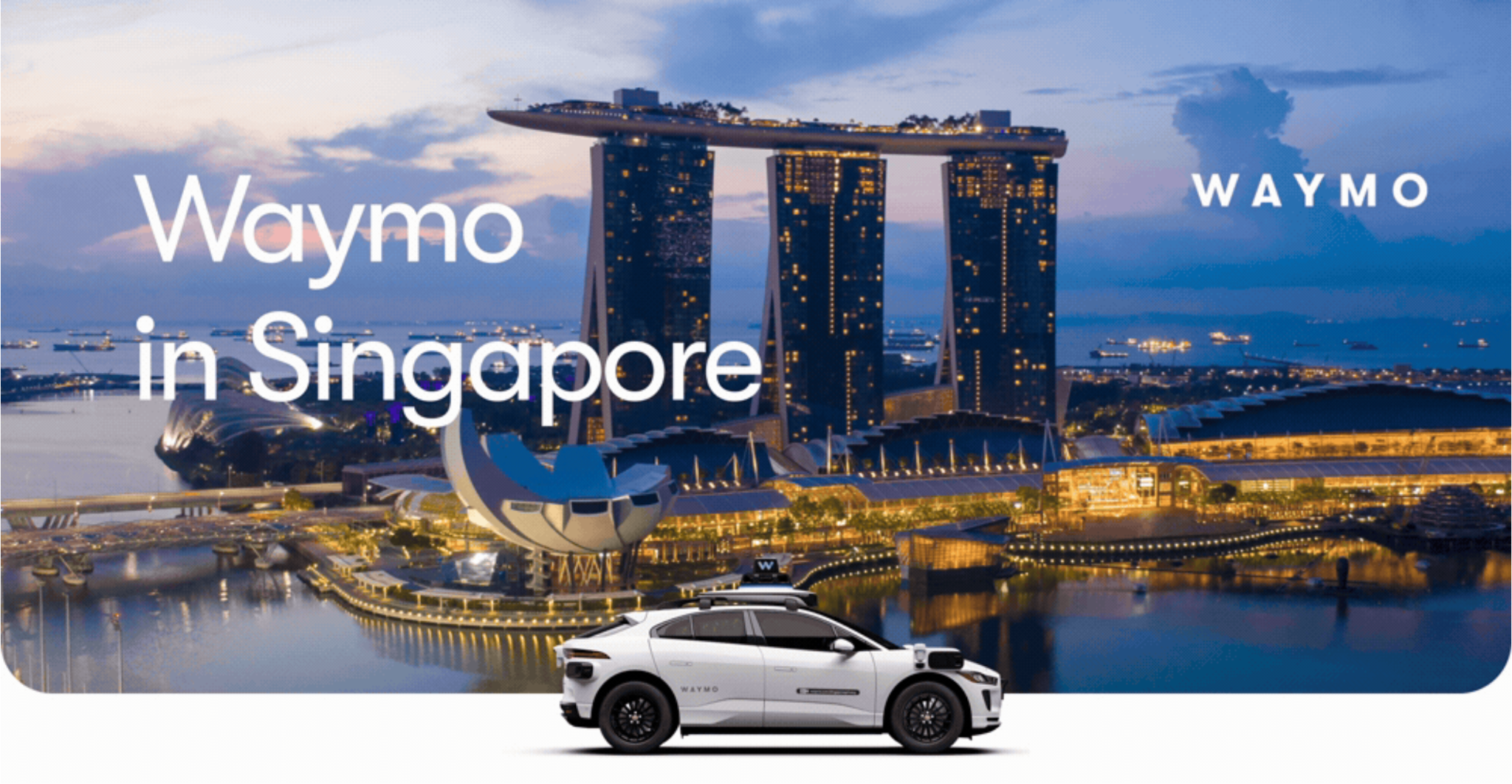
Waymo has named Singapore as its next international robotaxi market, targeting a 2028 commercial launch after a 2027 readiness phase, in partnership with the city’s Ministry of Transport and Land Transport Authority. Singapore would be Waymo’s first Southeast Asian market, extending a global push that already spans Tokyo, London, and Munich.
Waymo also signed a European insurance and risk-sharing partnership with Allianz this week, covering fleet insurance, claims handling, and joint safety research ahead of its upcoming London and Munich launches.
XPeng is trying to turn its self-driving and smart-cockpit software into a licensing business, building out a dedicated commercialization team over the past six months to pitch the tech, along with its Turing AI chips, to other automakers and suppliers. The push is already paying off, as high-margin service revenue jumped 93.9% YoY to about $400 million in the second quarter. No new licensing customers have been named yet, though XPeng says it’s in talks with other carmakers, suppliers, and software developers.
Bathroom Break
We talk about edge cases all the time here, but I think Waymo might have a very human case to solve here: bathroom breaks. People have been leaving poop stains on the seats, and even getting out of the car mid-ride to take a bathroom break on the side of the road, holding up traffic behind. Just… come on, people…
Alright, that’s it from me… until next week. If you enjoy this newsletter, share it with your friend, colleague, or boss. Thank you for reading, Sophia out!
Well, I guess there is an advertising slogan in there somewhere: "When ya gotta go, go Waymo!" ???
“Weekly newscasts like this take a while to put together. If you like my work,...”
I love your work and am starting to need two hands to read it.
I’m also starting to wonder how close you are to needing two hands to carry the stress of meeting the weekly deadlines. Pretending to know what researching and compiling the information is like, on top of including opinions and customized content, I’m willing to wait two weeks, on my side of the copy presses, to read and enjoy the next issue: I’d rather see you publish a less stressful bi-weekly newscast than a stressful weekly one.
Anyway, til next time...