

So Long, Steering Wheel
Plus: BYD will use Nvidia chips for its autonomy systems.

Welcome to the Ride AI newsletter: The most comprehensive weekly digest of news and intelligence at the intersection of technology and transportation.
The steering wheel is out, but the Ride AI 2026 Agenda is in.
The Ride AI 2026 agenda is officially live and we’re excited to share what’s in store.
This year’s program brings together the leaders, builders, and operators shaping the future of mobility and AI. You can now explore the full lineup of sessions, panels, and keynotes on our website.
Tickets are available at $1,050 through March 20. This is the best price we’ll offer, so if you’re planning to join us, now is the time to lock in your spot.
Interested in speaking? We have a limited number of speaker slots still open. If you or someone on your team has a story worth sharing with this community, we’d love to hear from you:
We’ll have more announcements in the coming weeks. In the meantime, take a look at the agenda and start planning your Ride AI 2026 experience.
Now, Here’s What You Need To Know Today.
Top Story
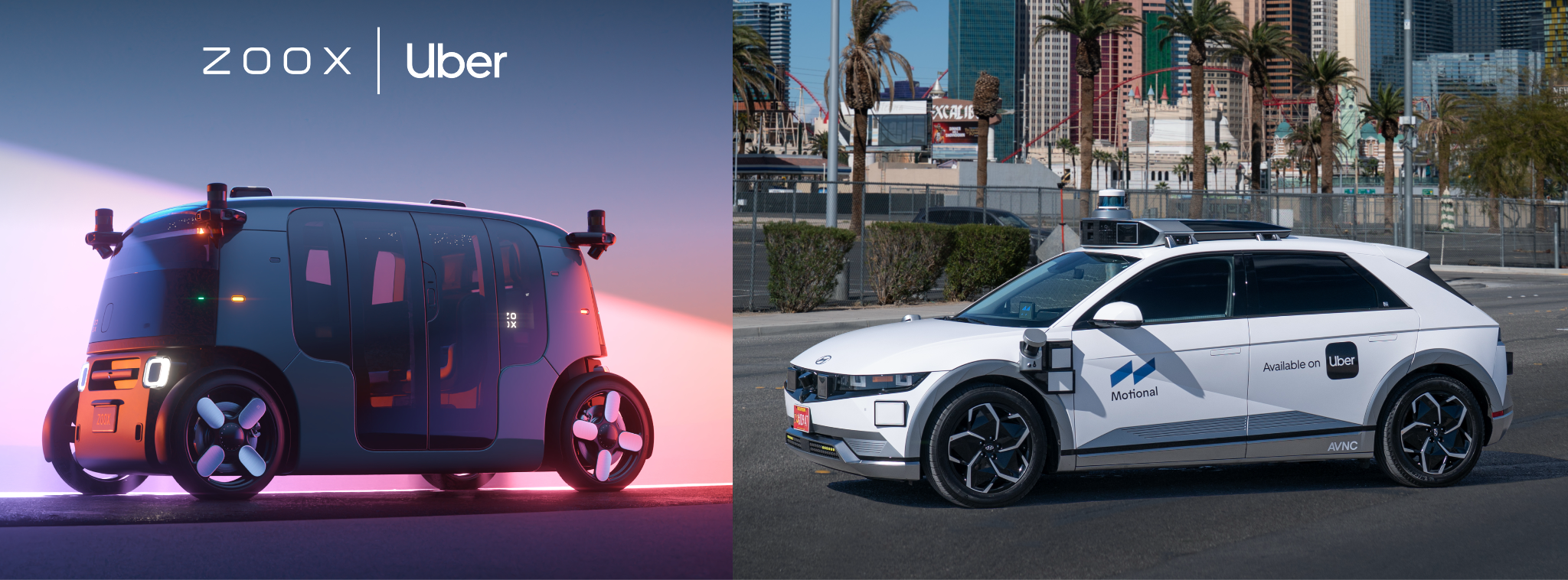
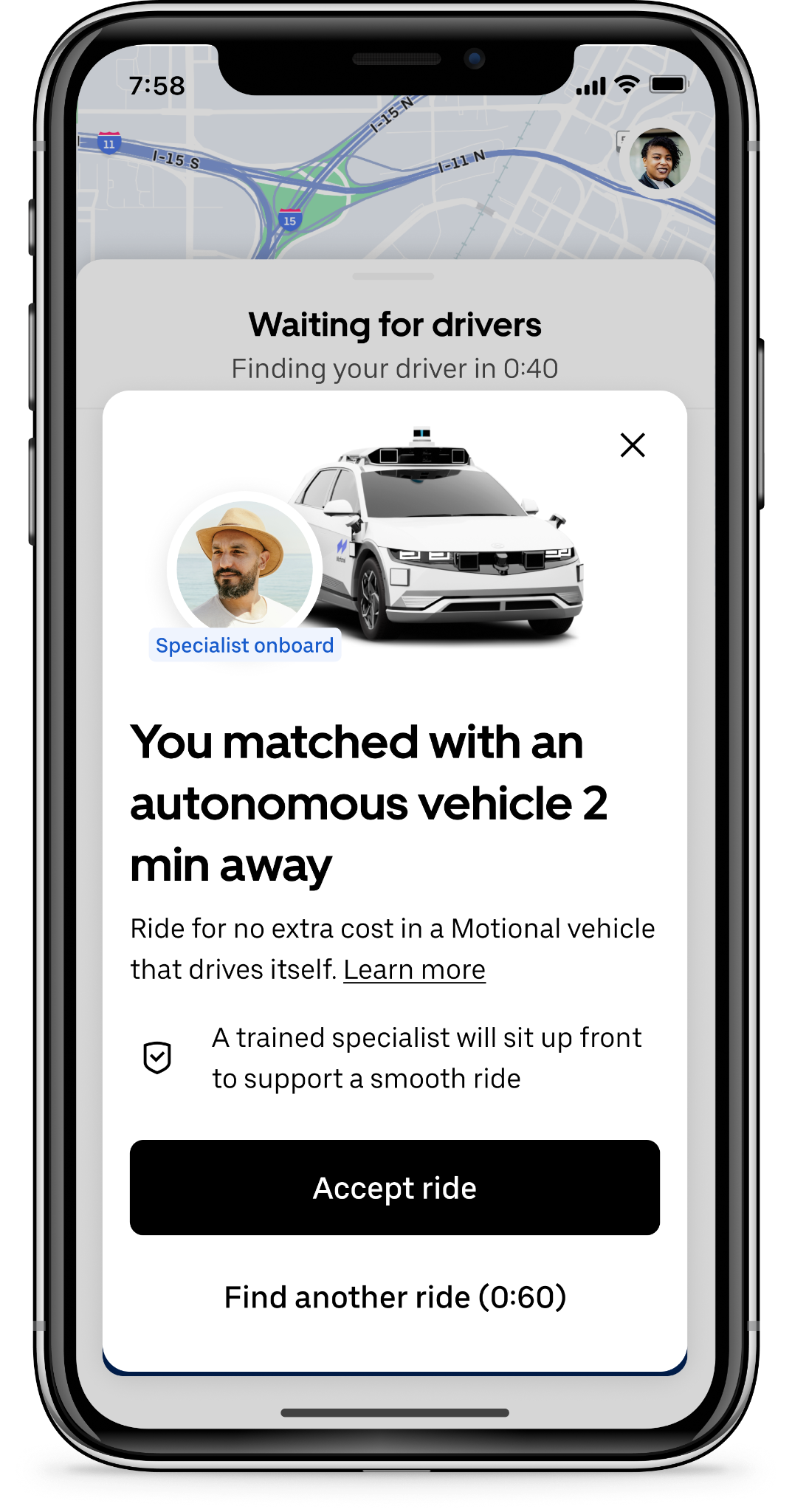
Uber is making a serious play to become the platform layer for autonomy. Last week, the company launched two major robotaxi partnerships simultaneously. Motional’s Hyundai Ioniq 5 robotaxis are now live on the Uber app in Las Vegas, with riders requesting UberX or Uber Comfort able to be matched with a robotaxi at no extra cost. The vehicles currently have a safety operator behind the wheel (even though the company had previously announced it had moved the monitors to the front passenger seat), with fully driverless service expected by year-end. Pickup spots include Resorts World, Encore at the Wynn, Westgate, Downtown Las Vegas, and Town Square.
Separately, Zoox and Uber announced a multi-year strategic partnership to deploy Zoox’s purpose-built robotaxis on the Uber platform in Las Vegas this summer, with Los Angeles targeted for mid-2027. This is Zoox’s first third-party platform partnership. Zoox will continue operating its own app alongside the Uber integration.
For those of you keeping track, Uber now has deals with Motional, Zoox, Wayve, May Mobility, and Waymo, amongst other international players.
Domestic News
NHTSA hosted its inaugural National AV Safety Forum in Washington, D.C., with Transportation Secretary Sean Duffy signaling a push to overhaul Federal Motor Vehicle Safety Standards for autonomous vehicles. The big item this time was exempting purpose-built AVs from legacy hardware requirements like steering wheels, mirrors, and pedals. Tesla, Waymo, Zoox, and Aurora executives were all in the room. The goal is a unified federal framework that eliminates state-by-state regulatory fragmentation, though no implementation timeline was given.
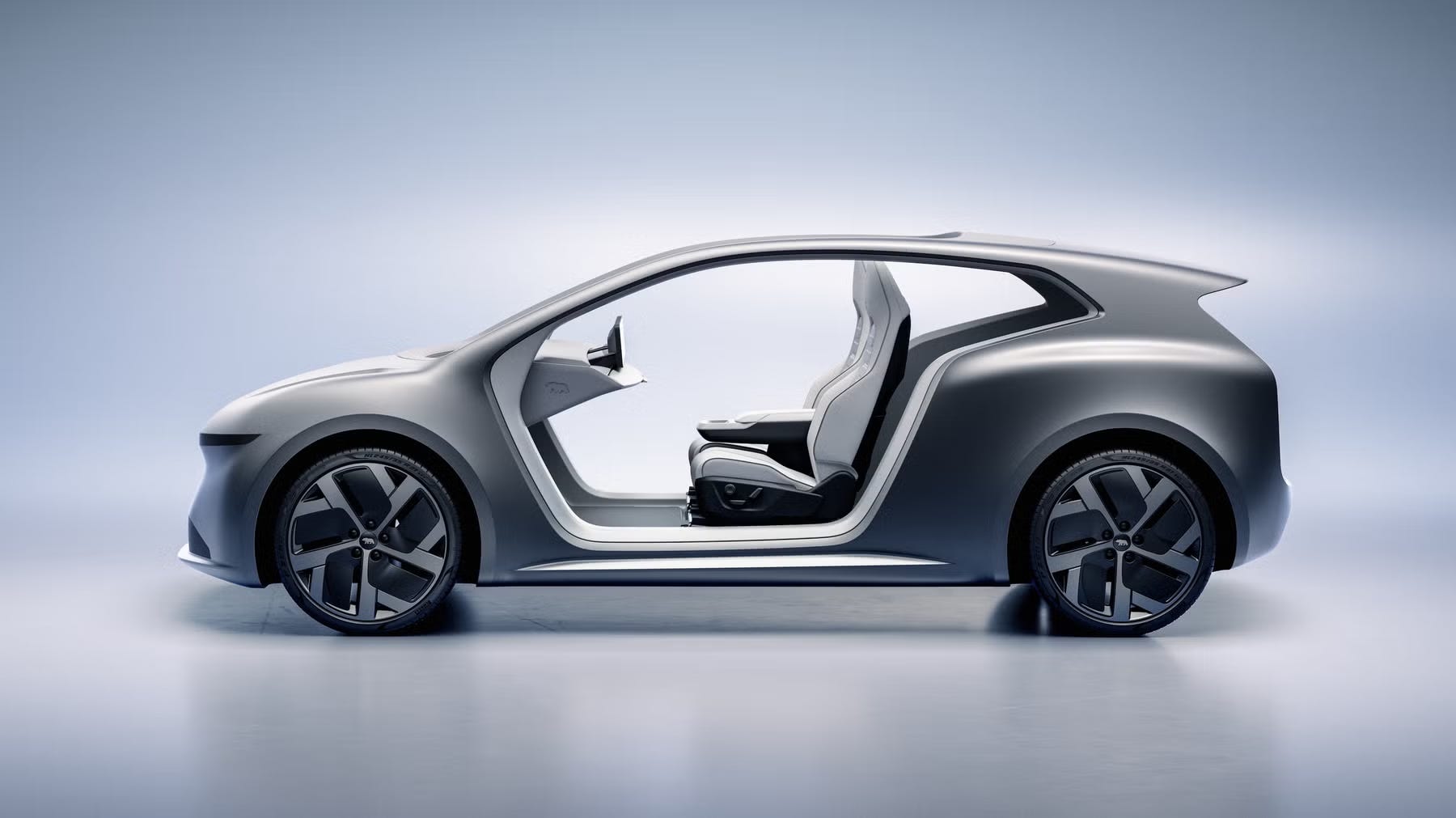
Lucid unveiled a purpose-built robotaxi concept called Lunar at its investor day. The two-seater has no steering wheel or pedals and is built on Lucid’s upcoming midsize platform. The company claims it would achieve 5.5 to 6.0 miles per kilowatt-hour and reduce operating costs by 40% compared with current robotaxi fleets. Lucid is in advanced discussions with Uber about deploying vehicles from the midsize platform. No production timeline or cost was disclosed for the Lunar itself.
Nvidia’s head of autonomous driving Xinzhou Wu takes Nvidia CEO Jensen Huang on an autonomous drive through San Francisco in a Mercedes running Nvidia’s Alpamayo via MB.Drive Assist Pro.
Rivian CEO RJ Scaringe says Rivian will have the “second largest” self-driving fleet after Tesla. Rivian’s training fleet would still represent less than 10% of Tesla’s. Tesla disclosed nearly 1.1 million paid FSD customers globally during its Q4 earnings call. Rivian only overhauled its approach to autonomy in mid-2024 with the second-gen R1 models, and Scaringe says point-to-point automated driving will come to Rivians sometime this year. To note: none of these numbers represent a dedicated training fleet, just customer units shipped.
International News
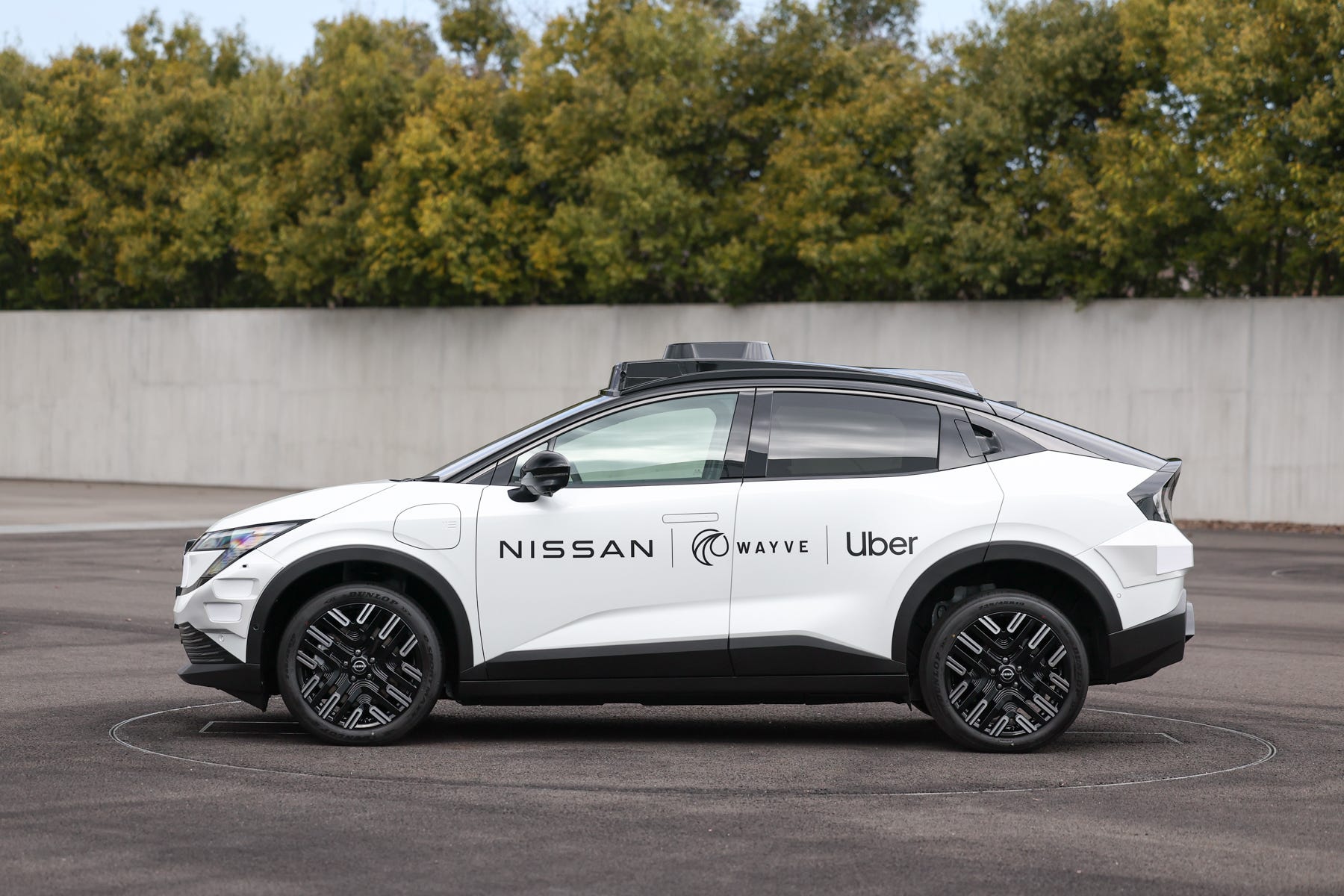
Wayve, Nissan, and Uber have signed a memorandum of understanding to develop and deploy robotaxi services in Tokyo. This is Uber’s first autonomous vehicle partnership for Japan. The collaboration will use the Nissan LEAF equipped with Wayve’s AI Driver technology, which is designed to generalize across new roads and cities without HD maps. A pilot is targeted for late 2026 with a trained safety operator on board. Tokyo was selected for its dense traffic patterns, complex road layouts, and high safety standards.
Nvidia made a splash at GTC this week. BYD, Geely, Isuzu, and Nissan are all building L4-ready vehicles on Nvidia’s DRIVE Hyperion platform, and Nvidia announced that its full-stack robotaxis will launch on Uber across 28 markets by 2028, starting with Los Angeles and San Francisco in the first half of 2027. Bolt, Grab, Lyft, and TIER IV are also scaling robotaxi development on DRIVE Hyperion. Nvidia also introduced Halos OS, a unified safety architecture for L4 autonomy that provides a production-ready safety foundation across the platform. If Qualcomm and Wayve are partnering on the software-chip stack (see M&A Below), Nvidia is trying to own the entire thing.
An interesting trend is emerging in China: automakers are adding lidar across the pricing range, not just on flagships. Leapmotor is preparing a lidar-equipped version of its compact A05, a budget EV that competes with the BYD Dolphin. The A05 will offer optional front binocular cameras and a roof-mounted lidar. Meanwhile, NIO’s budget brand Onvo is adding a lidar variant to its L60 SUV, a reversal from the brand’s original vision-only approach. Onvo originally positioned itself differently from parent brand NIO, which equips all models with roof-mounted lidar as standard. Could this be because lidar costs are coming down so significantly?
M&A and Deals
Travis Kalanick is back. The former Uber CEO is remaking his real estate company City Storage Systems into a robotics and self-driving venture called Atoms, and is on the verge of acquiring Pronto, a self-driving startup focused on industrial and mining sites founded by none other than Anthony Levandowski. Yes, that Anthony Levandowski. Kalanick has told people he wants to be more aggressive in the rollout of self-driving technology than Waymo, whose approach he views as cautious. Uber is reportedly considering funding the venture. Atoms has apparently been operating in stealth for eight years and has thousands of employees.
Qualcomm and Wayve have announced a technical collaboration that combines Wayve’s AI Driver software with Qualcomm’s Snapdragon Ride automotive chips and active safety software. The goal is to support everything from hands-off highway assistance to “eyes-off” driving as regulations allow. The two companies intend to explore using Qualcomm’s chips in future L4 robotaxi applications as well.
How Do Drivers Transition from ADAS to Manual?
A new study out of the University of South Florida presents ADAS-TO, the first large-scale naturalistic dataset dedicated to how drivers take over from ADAS systems. The dataset contains 15,659 takeover clips from 327 drivers across 22 vehicle brands, with synchronized dashcam video and CAN bus logs. Some highlights: the most common takeover action is brake override (39.6%), followed by steering (25.3%) and gas (13.5%). The mean vehicle speed at takeover is about 55 km/h. The study also found a long tail of285 safety-critical cases, and in 59.3% of those, actionable visual cues appeared at least 3 seconds before the takeover, suggesting there is real potential for earlier warning systems. The dataset is publicly available on HuggingFace.
Robot Oopsies
Many positive things have been said about Xiaomi’s SU7 and YU7 EVs in the West. Even Jim Farley, CEO of Ford, had something to say. The same things are not being said by Chinese netizens about Xiaomi’s Xiaomi Pilot ADAS system, however. In the video below, Xiaomi Pilot apparently tried to send a car owner to the afterlife. To be fair, there was some quite impressive maneuvering also on display.
If you’re curious about what the driver is yelling the entire time, “Màn diǎn” means “slow down”, and “Sòng zǒu” means “to send away (to the afterlife)”.
Alright, that’s it from me… until next week. If you enjoy this newsletter, share it with your friend, colleague, or boss. Thank you for reading; Sophia out!