


Today’s Ride AI newsletter is a special firsthand report from friend of Ride AI David Moss (of 12,000 straight FSD miles fame) who was on the ground with his dad at Tesla’s exclusive Cybercab unveiling in Austin. You can watch his full ride on Youtube here and embedded at the bottom of this post. David, the floor is yours.
Inside Tesla’s Cybercab Launch
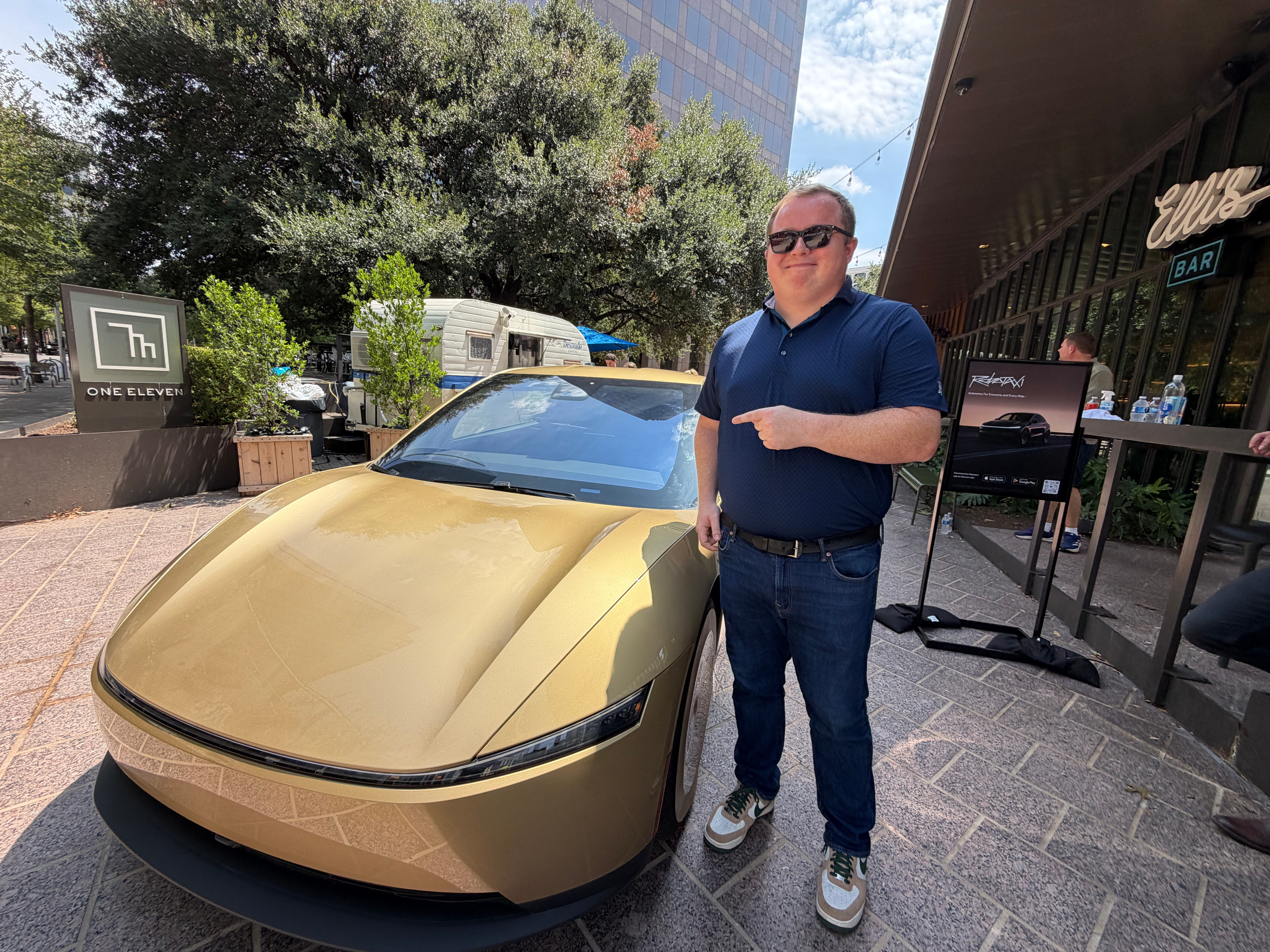
The day started with a public pop-up at Fareground in downtown Austin, at Congress Avenue and 2nd Street, where a Tesla Cybercab was on display for anyone to see and sit inside. This was the same location Tesla used earlier this year during SXSW in February, although at that time the Cybercab was display-only and was not giving rides.
The main event was held at Austin City Limits Live at The Moody Theater in downtown Austin, less than a mile from the pop-up.
The event was originally reported to begin at 4:45 PM based on this post from Cybercab Engineering Lead Eric Earley:

That schedule ultimately changed. Guests and their plus-ones received their official ticket information the night before at approximately 8:30 PM Central Time, which listed doors opening at 5:00 PM and the event beginning at 5:30 PM.
The presentation ended up starting at around 6:00 PM. It was a relatively short event featuring Eric Earley, Ashok Elluswamy, Tesla’s Head of AI, and two other Tesla employees in a fireside-chat-style discussion. A slideshow presentation played on the large screen behind them throughout the conversation.
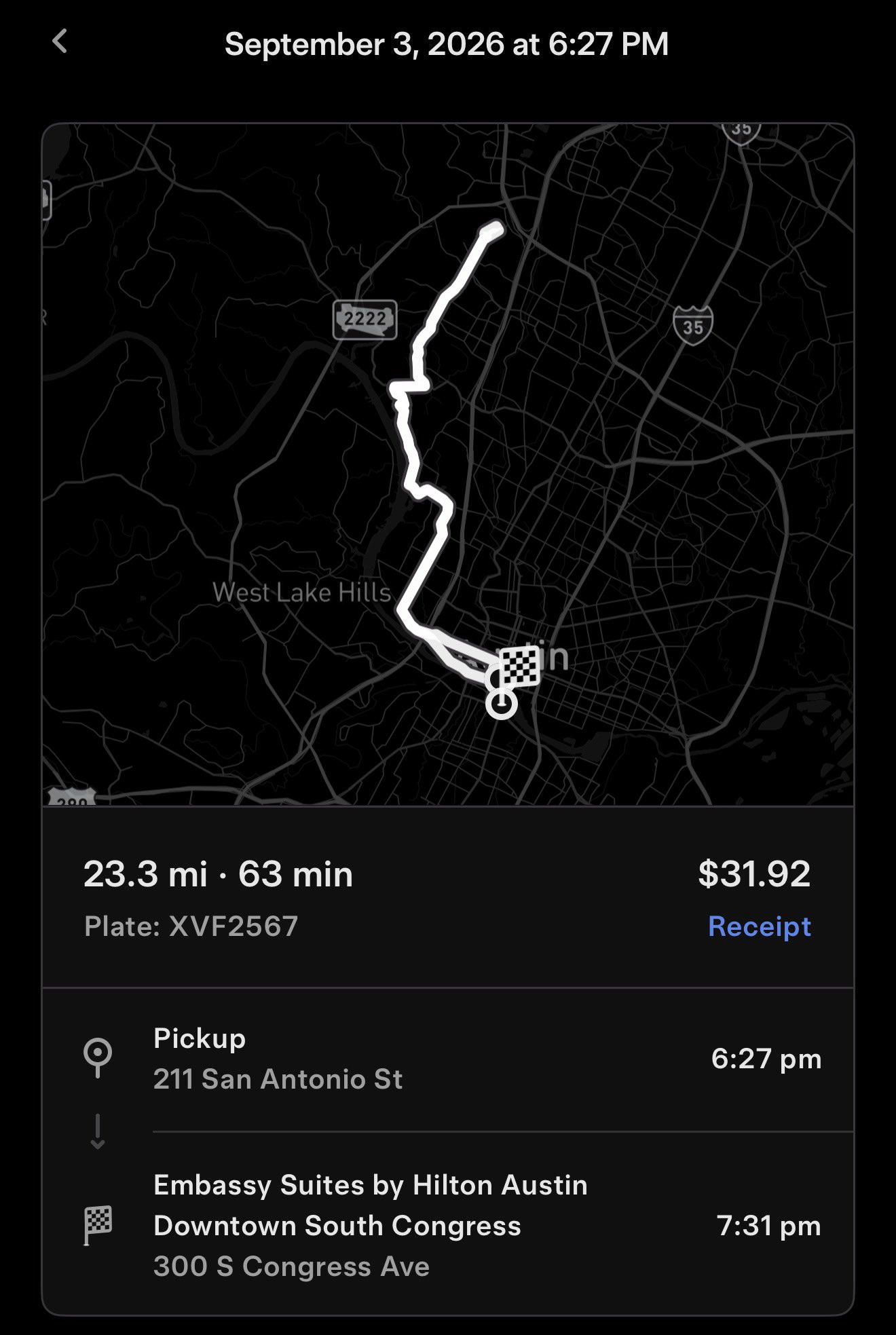
By 6:27 PM, I was already inside a Cybercab beginning my first ride.
I chose to bring my father, Gary, as my plus-one. My dad suffers from a rare terminal blood cancer that eventually caused a tumor large enough to affect and shut down both of his optic nerves. He is now completely blind later in life and has lost much of the independence he once had.
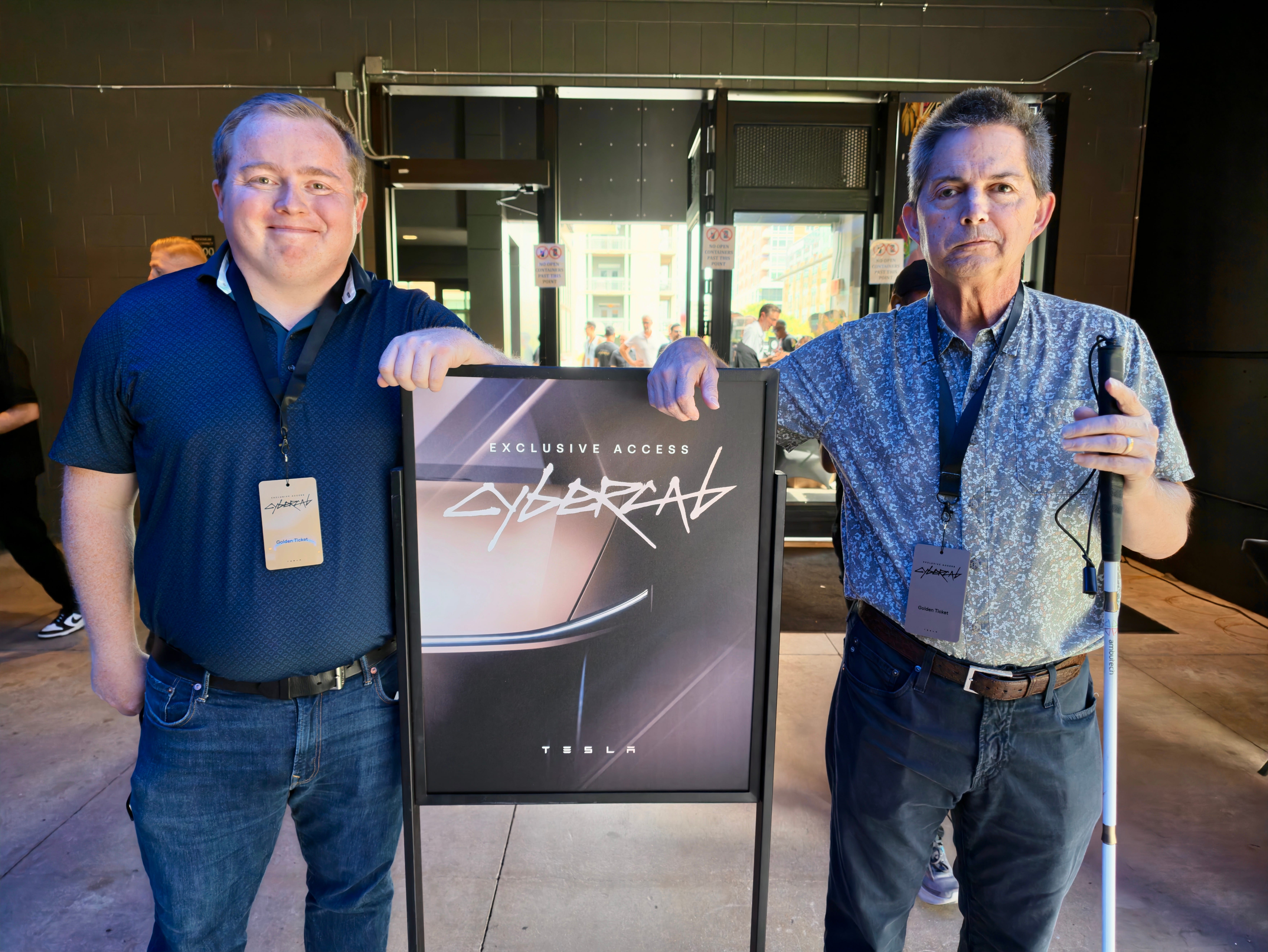
That is one of the biggest reasons the Cybercab means so much to me personally. A vehicle like this could genuinely change his world and restore a level of independence that is simply not available to him today. I hope he lives long enough to see the day when he can purchase one and use it where he lives in the Seattle and Tacoma area of Washington State.
My first Cybercab ride lasted approximately 63 minutes. We essentially traveled from downtown Austin to the northern edge of the available geofence before returning to our hotel downtown.
It was a great test because the route included a little bit of everything. We experienced city traffic, roads with speeds of around 50 mph, multiple tight hairpin-style turns near Lake Austin, residential streets, and a wide variety of normal Austin driving situations.
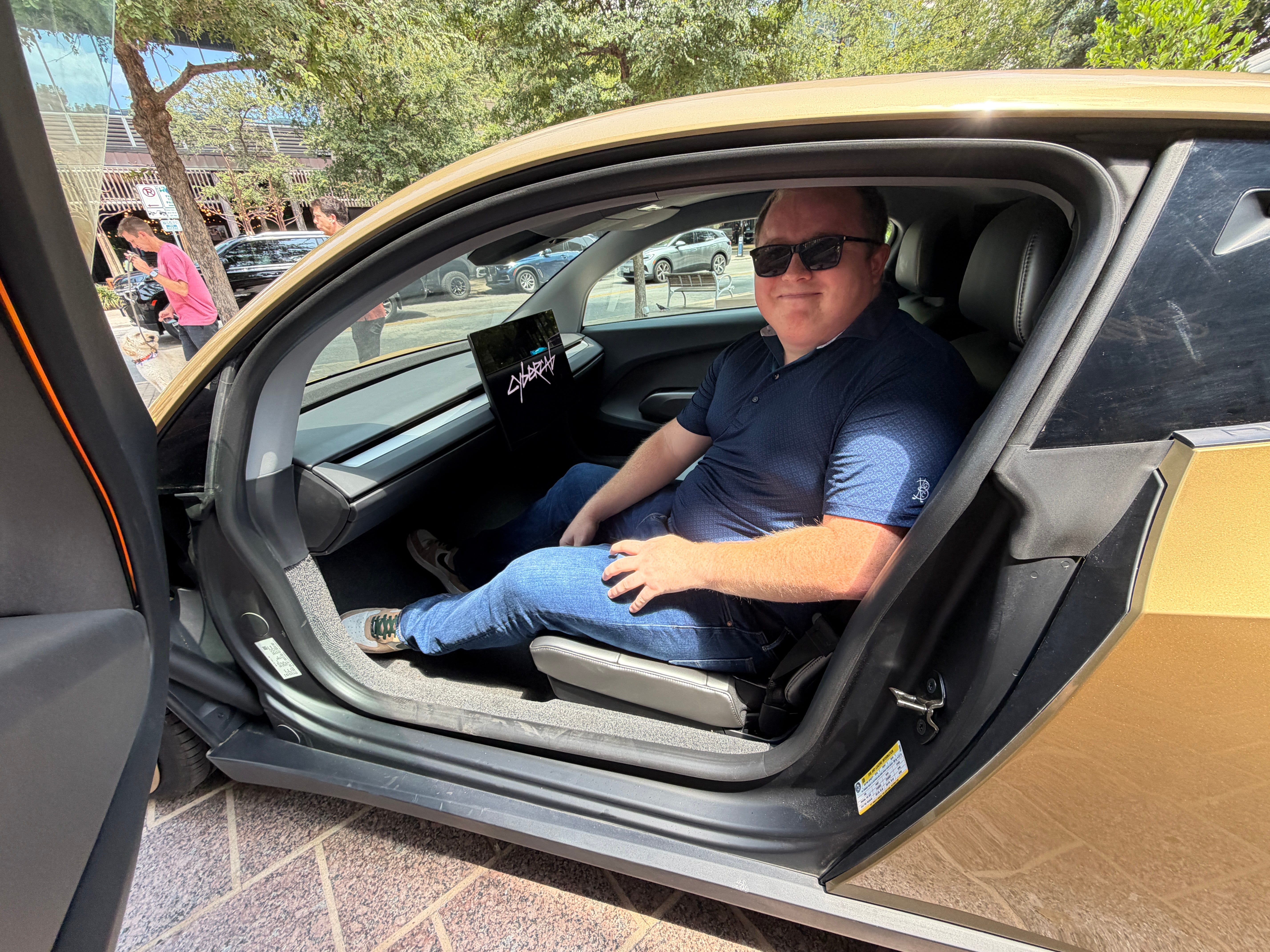
The Tesla Cybercab is extremely comfortable and a genuinely pleasant place to spend time.
During the presentation, Tesla described it as a “second living room.” After spending more than an hour inside one, I think that is actually a pretty accurate description.
A Model Y is slightly quieter and offers a few traditional comfort advantages, including heated and cooled seats and additional sound-insulating glass. Even with those advantages, I would personally choose to ride in the Cybercab 100 percent of the time over Model Y.
The automatic opening and closing doors are incredibly convenient. The amount of legroom is impressive, the central display is enormous with excellent resolution, and the seats have a much more relaxed lounge-style feeling than a traditional car.
Overall, I think the Cybercab provides a better passenger experience, even without considering the novelty of riding in a beautiful, purpose-built autonomous robotaxi.
There was no available Starlink connection during any of my rides. That feature simply does not appear to be ready yet.
You can currently watch YouTube or Netflix inside the Cybercab, and you can listen to music through services such as Spotify and Apple Music. Your preferences can sync through your Tesla or Robotaxi account from vehicle to vehicle.
For my first song inside the Cybercab, I thought it was fitting to play “Made in America” by Kanye West and Jay-Z as this Tesla is produced at the nearby Giga Texas Factory.
The sound system also pleasantly surprised me. I would not say it is quite at the level of the Model Y sound system, but it is still very good and easily earns a passing grade.
Seat adjustment in the Cybercab is fairly simple. You can move the seats forward or backward and adjust the recline angle. One interesting design choice is that both seats are connected, so when one seat moves forward or backward, both seats move together.
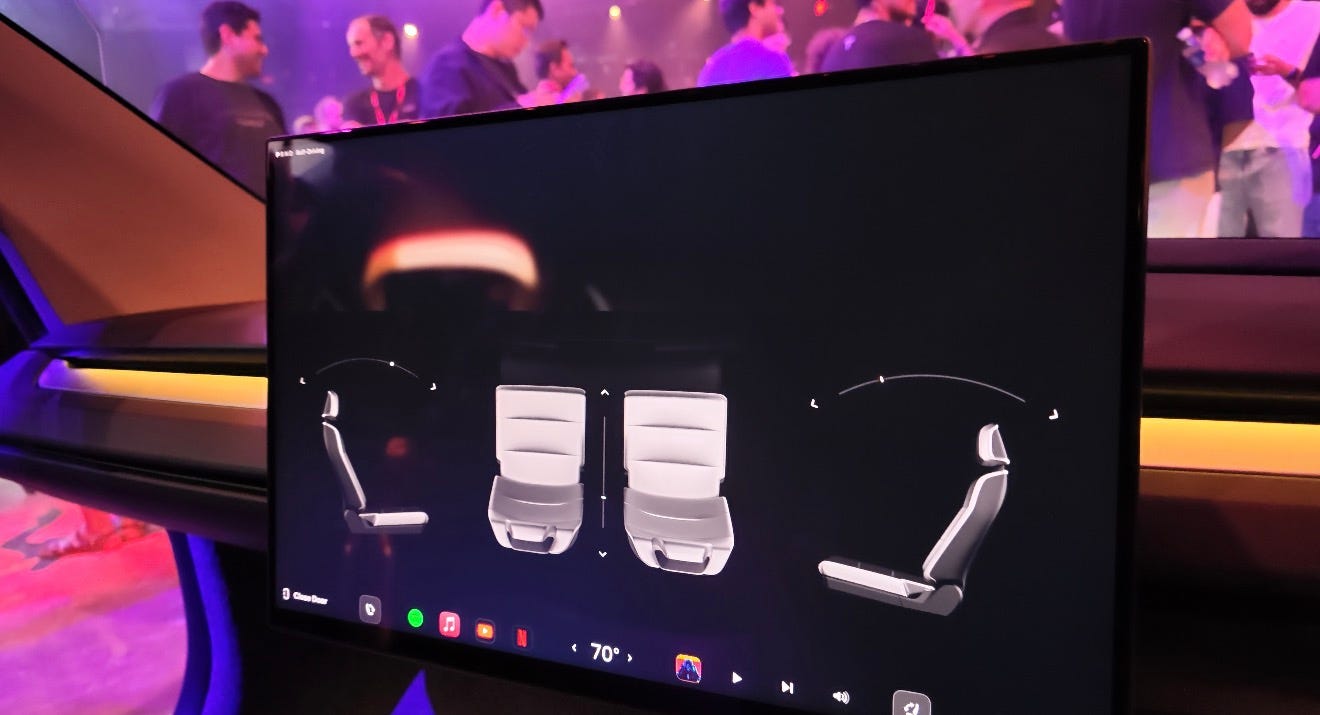
There is an enormous amount of legroom. Even someone approaching seven feet tall should have plenty of space. I would compare the amount of room available to what you might expect from domestic first-class airline seating.
The rear cargo area uses a large hatchback-style opening and has more than enough space for a typical airport trip with two passengers and their luggage. There is also plenty of additional room inside the cabin and footwell area for backpacks, purses, and smaller bags.
Grok from SpaceXAI is now available inside Tesla Robotaxis, and you can ask it questions about the vehicle, your trip, or almost anything else.
Grok cannot currently change your destination, but it can provide useful information about the ride, including your location, remaining distance, and other trip details.
It was especially helpful for my dad. Because he cannot visually follow the navigation screen or see what is happening outside the vehicle, Grok was able to give him additional information about the trip and his surroundings. It provided more useful information than I expected and showed another way autonomous vehicles could become especially valuable for blind passengers.
After experiencing the Cybercab myself, if the price, availability, and geofence were equal, I would choose a Cybercab every time over a Waymo, Zoox, Avride, or Motional vehicle. While I’ve yet to ride in a Waymo Ojai, I believe the Cybercab FSD offers the smoothest most human chauffeur like experience to date while also offering the most amenities.
For me, Cybercab is not just interesting because it is autonomous. The entire vehicle has been designed around the passenger experience from the beginning, and after finally spending meaningful time inside one, that difference is very noticeable.
Watch the entire event presentation here:
Watch my first full Cybercab ride here:
Thank you so much for these details! I thought it was to be a single, flat seat for easy robotic cleaning. And I believe it's inductive charging under the front of the vehicle underbody. Is that about right? Any buttons to touch to open & close the butterfly doors? Thanks again!!