

Mobileye CEO To Step Down
Plus, Aurora goes driver out again, and Li Auto's agentic car deep dive

This is the Ride AI newsletter: The most comprehensive weekly digest of news and intelligence at the intersection of technology and transportation.
Early Access for Ride AI 2027 Now Available.
$750 Early Access tickets for Ride AI 2027 are now available until July 31st. Starting tomorrow, pricing climbs month by month toward $1,500 general admission.
If you’re considering joining us next April at SF JAZZ, please apply for early access today. Tickets won’t ever be at this price again.
Top Story

Mobileye founder, Amnon Shashua, is stepping down. He has told the company’s board he plans to step down as CEO once a successor is found, ending a 27-year run building the company from an Israeli startup into the industry’s biggest ADAS supplier. The board has offered him the chairman role once a new CEO is in place, and he’ll stay on as a director in the meantime, shifting his focus to longer-term bets like humanoid robotics. Shashua took Mobileye public twice, first in 2014 in what was then the largest Israeli IPO ever, then again in 2022 after Intel’s 2017 acquisition of the company; Intel still owns about 77% of it.
The transition landed alongside Mobileye’s Q2 earnings. A revenue of $508 million, roughly flat year over year, alongside a weak third-quarter forecast that sent shares down as much as 15%, their worst single-day drop since August 2024, raises questions regarding the reasons behind the CEO transition. However, Mobileye still raised its full-year revenue outlook and its adjusted operating income guidance, helped by an Israeli R&D tax incentive enacted this quarter.
Mobileye has also signed Stellantis as its newest automaker customer for Cloud-Enhanced ADAS, with select future Stellantis vehicles expected to get hands-free, eyes-on driving and lane keeping on unmarked roads starting in 2027. The system leans on Mobileye’s REM crowdsourced mapping, which now covers more than 95% of public roads in the US and Europe using data from over 8 million vehicles that logged 34 billion miles last year. Five of the world’s ten largest automakers now contribute to REM, and the Stellantis deal follows a separate Surround ADAS win with a different top-ten automaker announced back in January.
It’s an odd week for both stories to land together for sure. The founder steps back just as the underlying ADAS business lands a marquee customer. Adding to that, Mobileye’s newer robotaxi and robotics bets start to take shape, with MOIA’s Mobileye Drive shuttles having just begun public testing in Hamburg. Whoever succeeds Shashua inherits a company betting on all three at once, in an increasingly tough and competitive AV tech climate.
Domestic News
Waymo expects negotiations over its Washington, D.C. robotaxi bill to continue through the summer, with a 200-vehicle cap on robotaxi operators the biggest sticking point. Councilmember Charles Allen held a 10-hour hearing on the bill last week, and Waymo’s head of public policy in the east, Matt Walsh, says the company doesn’t want a cap that limits how well it can serve the District. Waymo is fine with the bill’s proposed 15-cents-per-mile fee funding transit and worker retraining, but labor unions are still pushing the council to kill the bill outright, with a possible vote in the fall.
The latest on Uber v. Waymo: Uber has also been lobbying New Jersey lawmakers to require human drivers handle at least 85% of rides during the state’s planned three-year autonomous vehicle pilot, on top of a national push for mandatory hybrid networks that mix robotaxis with human drivers on the same app. The rule would force Waymo and other robotaxi services like Tesla’s Robotaxi to route rides through Uber-like platforms instead of their own apps, stacking on top of a separate New Jersey proposal that would effectively ban Tesla’s camera-only Robotaxi unless it adds lidar or radar. The push is further straining Uber’s existing robotaxi partnerships. Waymo has informed Uber it plans to launch independently in Austin and Atlanta once its contract allows, in January 2028.
A new IIHS study has found Waymo’s driverless vehicles crash 68% less often than human drivers per mile driven, though the researchers say the current system for tracking self-driving safety isn’t good enough to monitor a large-scale rollout. The gap varied by city: crashes were 76% lower in Phoenix, 71% lower in Los Angeles, and 35% lower in San Francisco, but 4% higher in Austin, where the sample size was small. Waymo’s cars were also involved in 85% fewer single-vehicle crashes and 81% fewer injury crashes.
IIHS had to clean up years of NHTSA crash reports to make the comparison fair, since human drivers only have to report crashes to police that cause an injury or real property damage, while self-driving companies have historically had to log even minor scrapes. After filtering for crashes a person would typically report, researchers compared 50 million driverless Waymo miles against 222 billion human miles logged in the same cities. “These are encouraging signs for the future of driverless vehicles,” said IIHS’s Eric Teoh, “but now we need to get the data collection system right.”
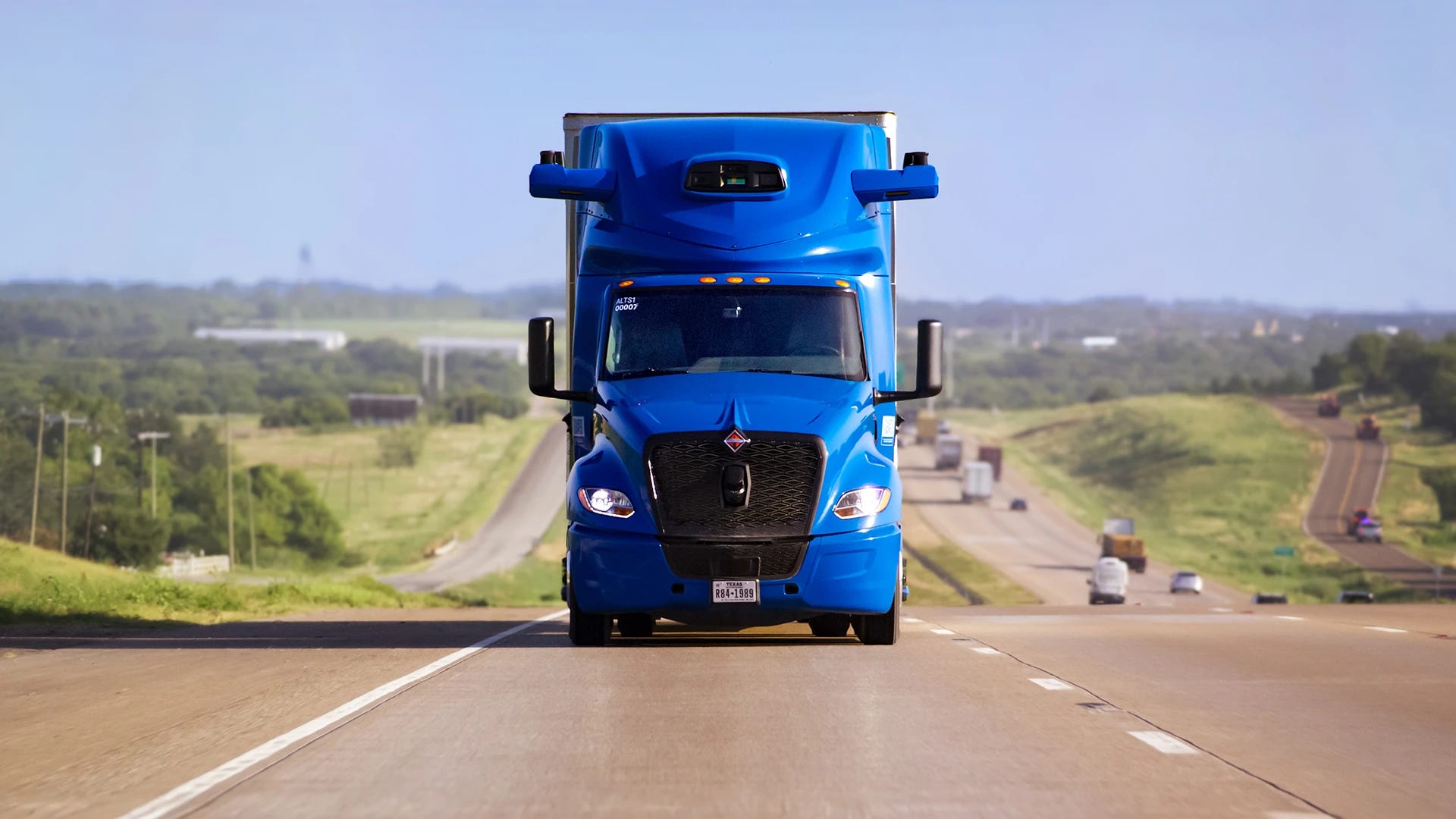
Aurora has started running its second-generation driverless trucks with a completely empty driver’s seat. The new trucks are built on the International LT Series and expands across its 10 driverless routes through the Sun Belt. A roadside-assistance team member sometimes rides in the back seat to gather feedback, but Aurora says that person isn’t there to drive or supervise.
After previously removing the safety driver, Aurora was asked to put them back into its first generation driverless hardware by PACCAR, Aurora’s hardware partner and the parent company of Peterbilt, whose trucks Aurora built its Driver hardware on. The company has once again closed its safety case, the evidence-based bar it uses to confirm a truck can run without anyone behind the wheel, on the second-generation Aurora Driver, before pulling the safety driver, the same standard it used for its first driverless launch.
Cross-border carrier Value Truck has signed on as the first customer for Aurora’s new driverless trucks, deploying them on the Dallas-Laredo and Fort Worth-Phoenix routes. Laredo is the busiest land port in the Western Hemisphere, handling roughly 40% of all freight moving between the US and Mexico, and nearshoring has been pushing more freight through it than drivers can keep up with. Aurora still owns and operates the trucks itself under what it calls a Transportation as a Service model. Letting customers buy and run their own Aurora-equipped trucks is planned for next year.
A Silicon Chauffeur
In our new age of “agentic this” and “autonomous that”, I’d like to go through the announcement video for the Li Auto L9 Livis, Li Auto’s newest car model, and just highlight what’s possible in terms of agentic vehicle capabilities that more or less turn your car into an unsupervised, semi-autonomous robot. I’m embedding the video here, but it’s in Chinese, so read on below to see what was demonstrated (in English).
Livis is short for “Lixiang Very Intelligent System” (Lixiang is Li Auto’s Chinese name, and also a play on the Chinese phrase “lixiang”, which means “ideal”). The company frames Livis as a “silicon-based companion” that’s supposed to live in your cabin and your phone, and grow with you over time. That branding is doing a lot of work, but the capabilities underneath it are honestly pretty cool, and go quite a bit further than what’s available in privately owned vehicles in the US today.
The centerpiece is what Li Auto calls a “driver agent,” a VLA (Vision Language Action model)-enabled chauffeur that comes free with the car and is on call 24 hours a day. It drives, it parks, it responds to conversations internal and external to the vehicle, and reads gestures. In one demo, someone standing outside the car waves and says “come to me,” and the car pulls itself out of its spot and drives over to the person on its own, all without having to touch the phone app or a remote. In another demo, the owner leaves the car to park itself, and while it’s attempting to, gets stopped by a security guard tapping the car’s window. The car asks (via external speaker) where it’s allowed to park, the guard points, and the car proceeds to park where the guard pointed.
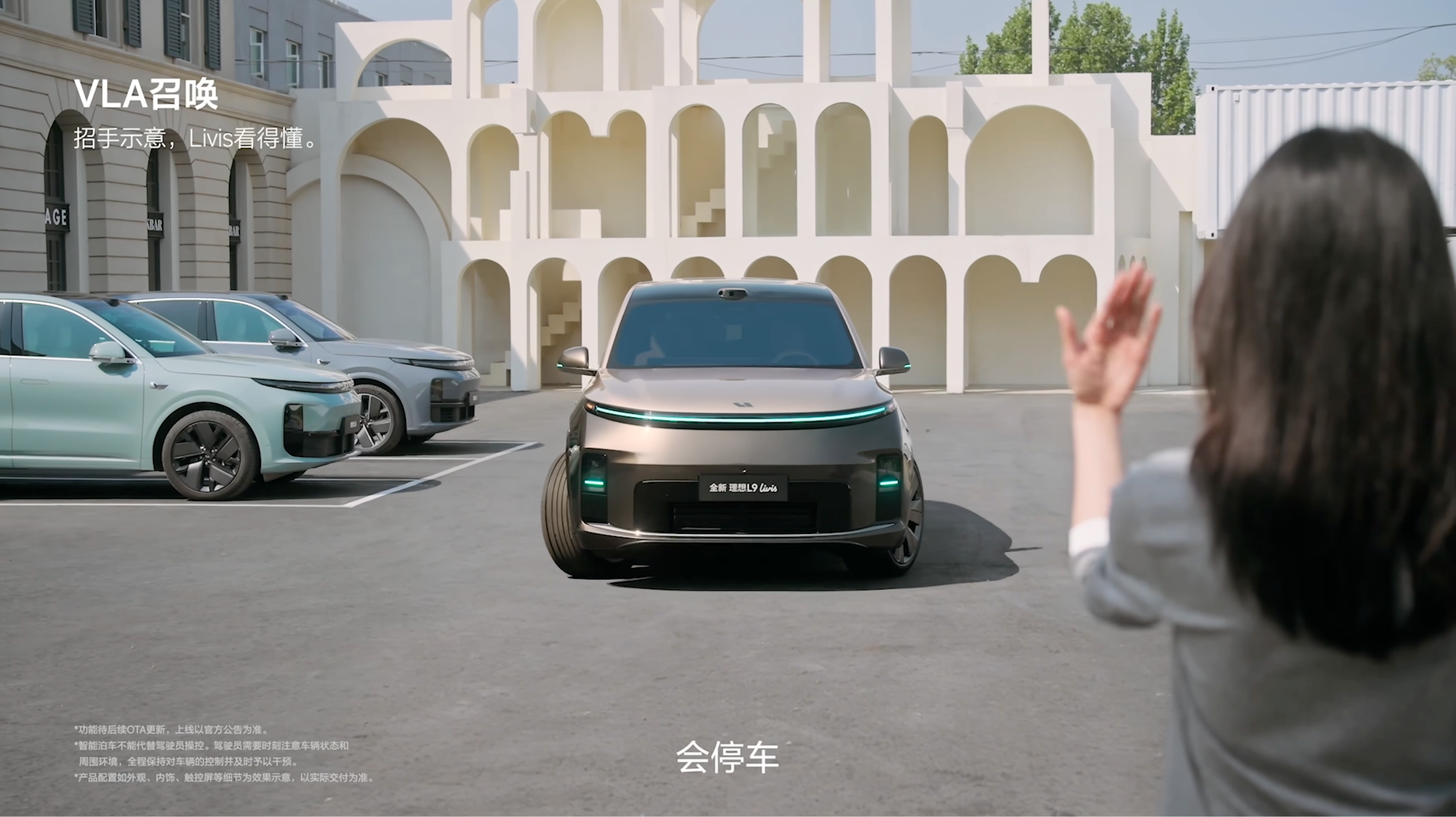
Li Auto says the system understands “subtext,” not just the surface level commands, so should do well with relatively complex commands. It also opens and closes its own doors every time you or your family gets in, a job Li Auto loves to point out used to require hiring an actual chauffeur.
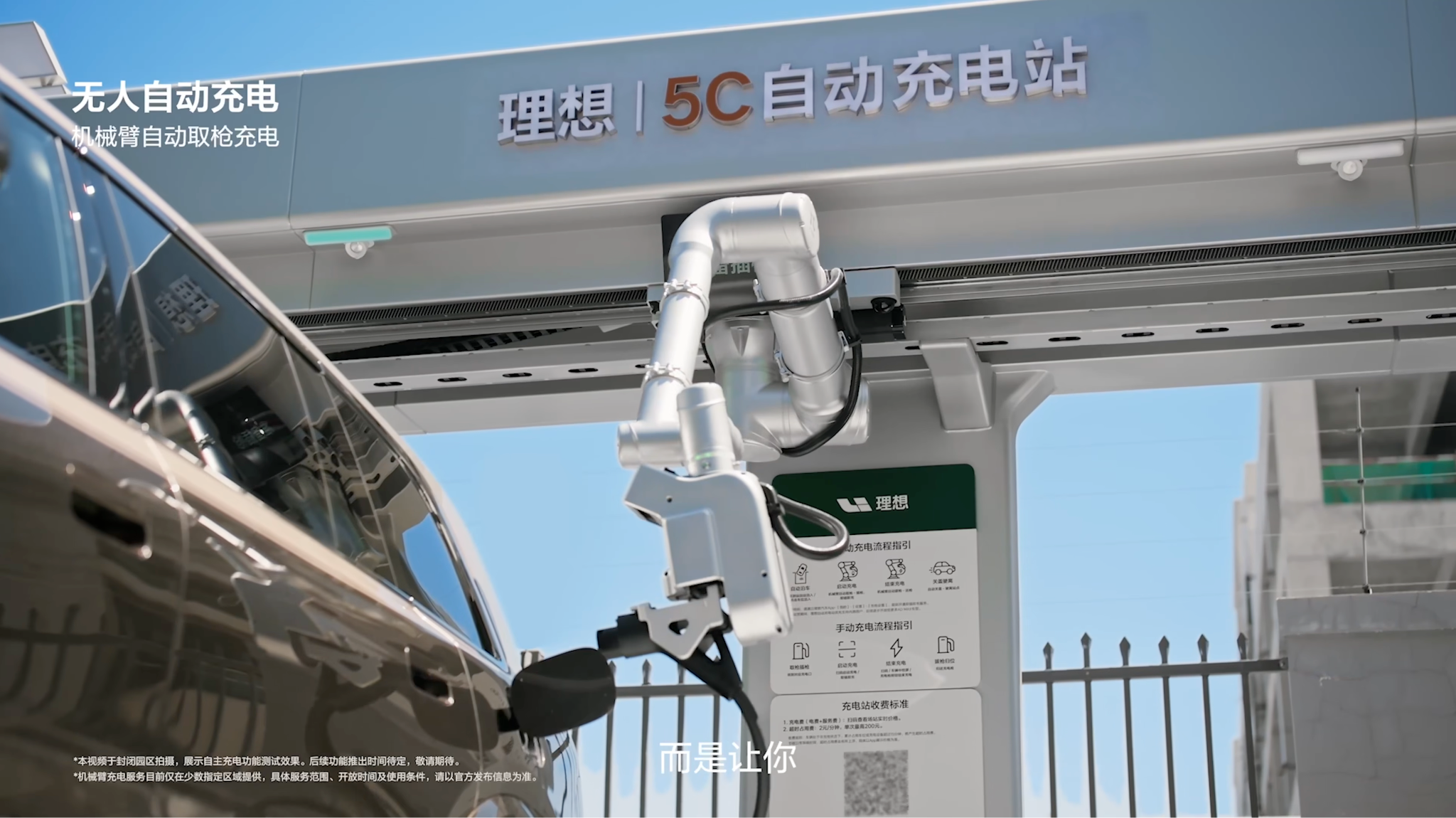
Livis can also take care of its own charging. In the demo, the car announces a charging spot is ready and drives itself over, at which point an autonomous robot arm plugs the car in and starts charging. This all happens without the owner doing anything.
There are a few more party tricks, like Livis being able to lift one wheel off the ground by itself, like a robot raising a foot, to swap its own flat tire. Not really an autonomous feature per-se, but still very cool and potentially handy in a pinch. Li Auto doesn’t include a spare tire in the trunk by default, however. Instead you rent a spare-tire rack from a service center in cities like Chengdu, Lhasa, or Urumqi and return it when you’re done.
The driving itself runs on Li Auto’s new Mach VLA model, paired with a perception system called 3D ViT that fuses lidar geometry with camera data and pushes forward detection out to 300 meters, 50% farther than before (though still not to the western standard 1,000 meters for L4 highway driving). In demo footage, the car swerves around road construction on its own, slows down preemptively after spotting a tire blowout on the car ahead, and yields to a car backing out of a space “like a veteran driver,” in the company’s words. All of it runs on a chip Li Auto designed in-house, the Mach M100, which the company says is three times faster than the “industry benchmark chip” it compared itself to, with an architecture paper accepted at ISCA 2026, a top computer-architecture conference. Two of the chips ride in the L9 Livis for a combined 2,560 TOPS, and Li Auto says there’s headroom left over reserved for future large language models, more agents, and embodied intelligence beyond driving.
Something worth keeping in mind, however, is that Livis has not shipped yet. There has been no independent testing, and the Livis starts at 559,800 yuan, or roughly $79,000 USD, so on the expensive side. But if all the features work as advertised, it’s a huge leap forward for “agentic” robotics, even though it’s not necessarily in the humanoid form we expected. It just all looked so cool to me, I couldn’t resist writing about it.
I’ll be in China in October, so tell me what you want to see. Agentic cars? Delivery robot dogs? Let me know in the comments below!
International News
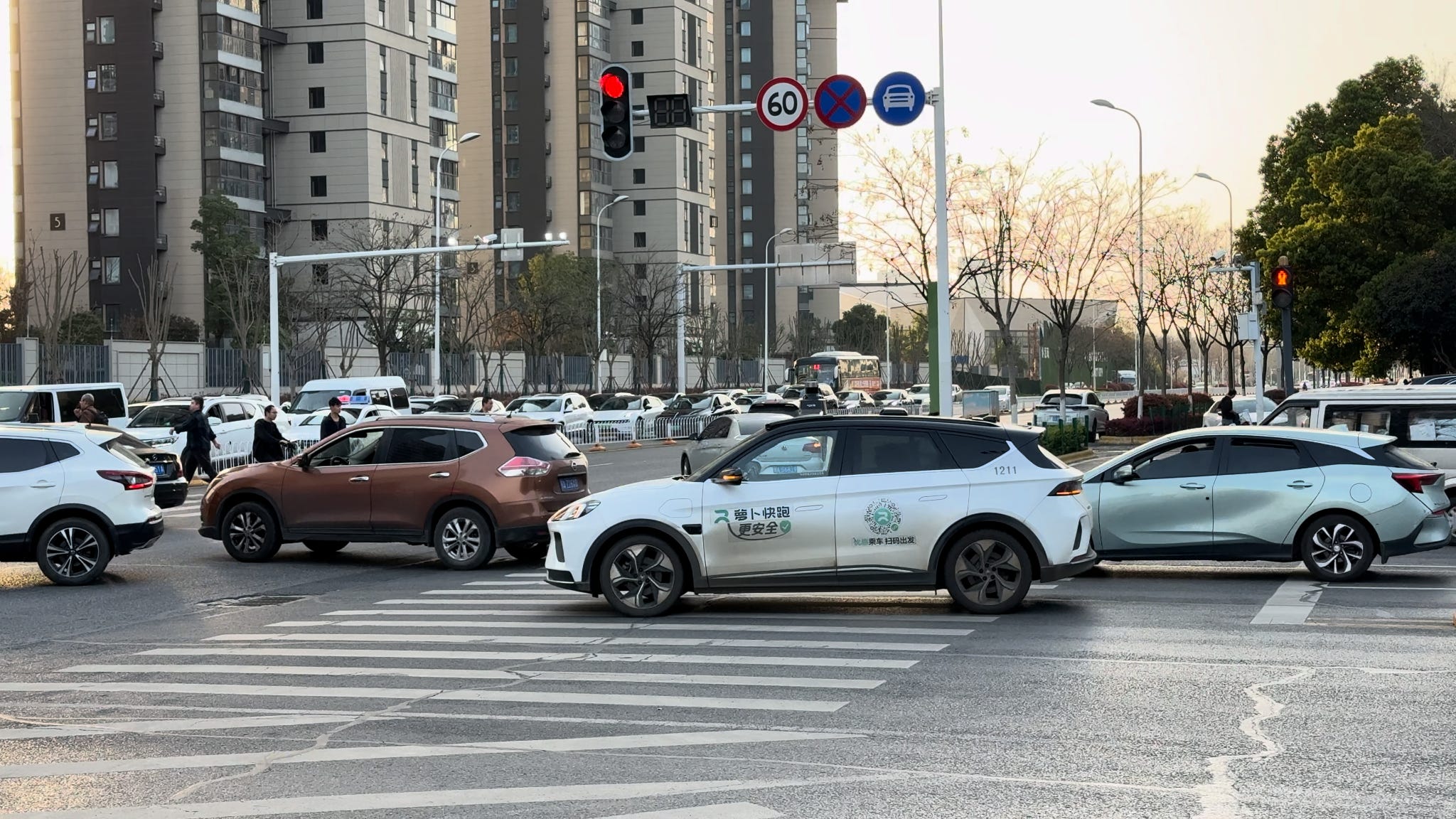
China has resumed issuing robotaxi licenses after a months-long freeze that followed a mass outage of Baidu’s Apollo Go robotaxis in Wuhan back in April. The resumption is rolling out gradually city by city after an industry-wide safety review wrapped up in June. Momenta picked up one of the first new permits, adding Shenzhen to its existing trial cities of Shanghai, Suzhou, and Wuxi. There are also signs Baidu’s own robotaxis are creeping back onto Wuhan’s streets, with some residents posting videos of Apollo Go cars running again, a few still with a safety driver on board.
Geely’s ride-hailing arm CaoCao has launched driver-out robotaxi testing on public roads in Hangzhou’s Binjiang District, the next step after becoming the first company approved for safety-driver-free testing in the city back in April. The roughly 100 vehicles in the test fleet only get dispatched when a rider requests a pickup from a fixed station, and every car stays connected to a remote safety platform that can monitor and intervene if something goes wrong, seemingly taking after Baidu’s “connected all the time” strategy. That current fleet still runs on a retrofitted version of CaoCao’s Cao Cao 60, the customized ride-hailing MPV it built with Geely for the 2023 Hangzhou Asian Games, not the purpose-built Eva Cab robotaxi (no steering wheel, four seats facing each other) that Geely unveiled in April and plans to mass produce starting in 2027.
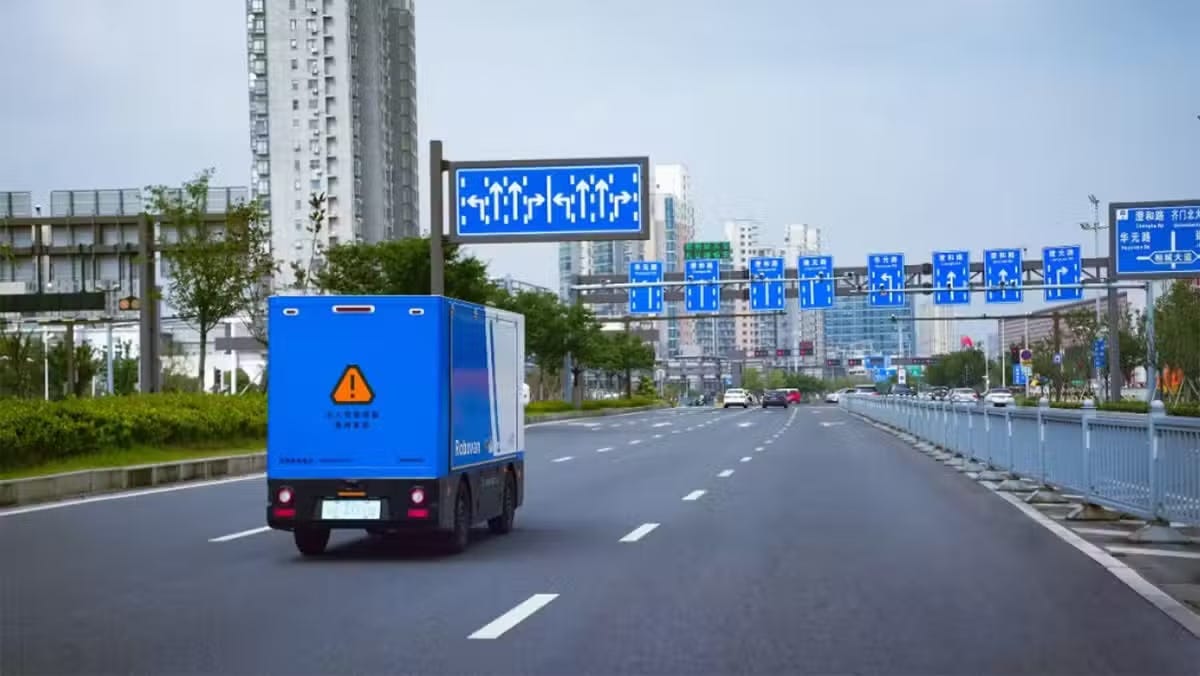
Momenta has confirmed it’s entering the robovan business, with autonomous delivery vans already running express and overnight routes in Suzhou for the past several months. The vans run on Momenta’s in-house R7 world model and skip high-definition maps entirely, the same approach the company already uses in its passenger-car software. Momenta is spreading its technology across more use cases (passenger cars, robovans, robotrucks, and robotaxis, all on the same underlying model) partly to justify R&D spending that ate up more than three-quarters of its revenue last year. It is entering a crowded field, however. Cainiao-backed Zelos and Neolix already control close to 90% of China’s driverless delivery market between them, and WeRide rolled out its own robovan, the W5, last year. There are other competitors such as Rhino, all vying for the largest market share.
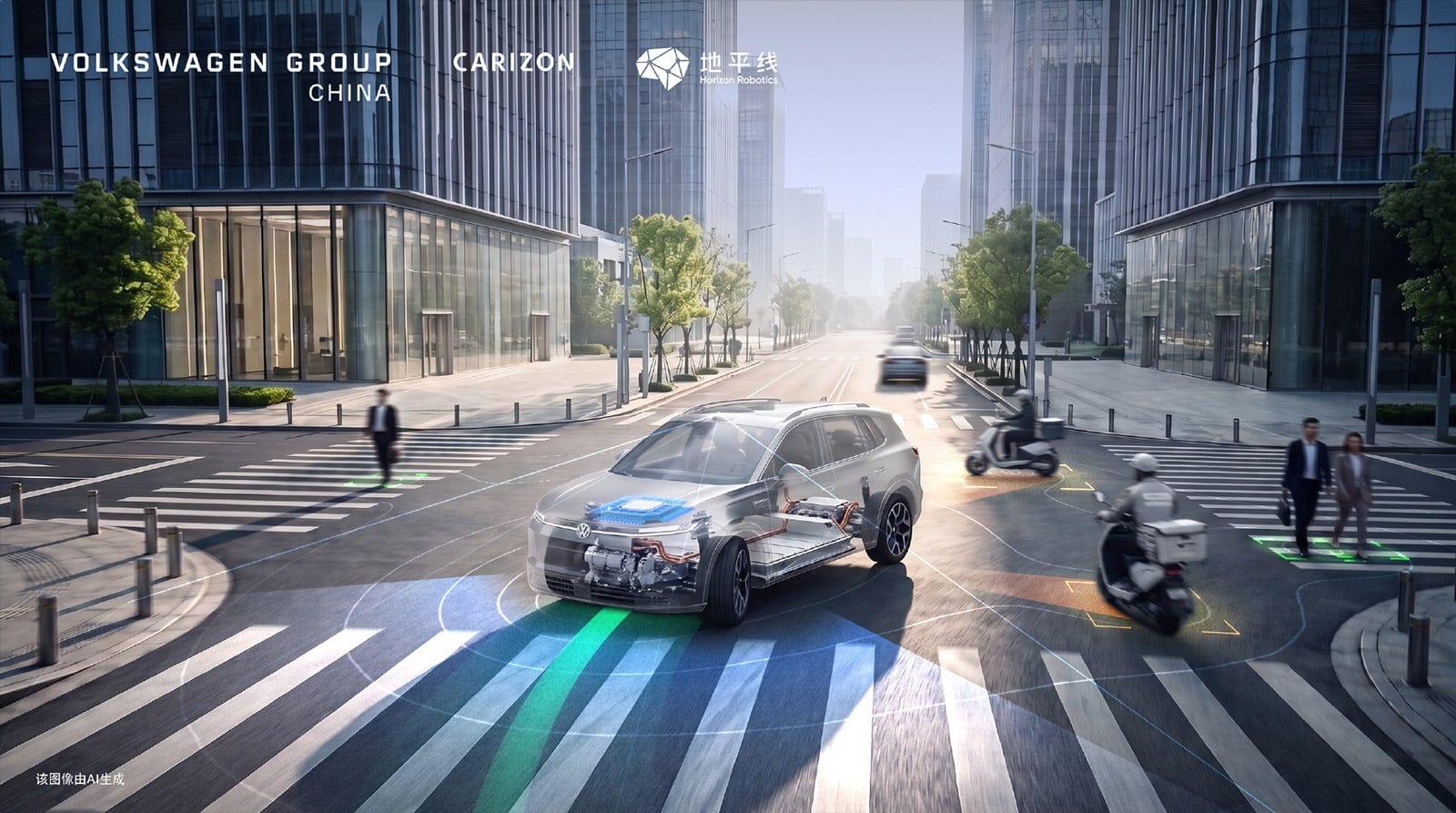
Volkswagen plans to start delivering L3 autonomous driving capability in China in the second half of 2027, deepening its joint venture with Horizon Robotics to get there. The joint venture, called Carizon, will get white-box access to Horizon’s AI foundation model, pairing it with a chip and world-model data platform still in development to support VW’s push toward L3 and eventually L4. Carizon’s current driver-assist software is already in mass production and adding urban navigation-assisted driving; it’ll ship on seven new VW models in China this quarter, with a wider rollout next year built on VW’s first locally developed vehicle architecture. VW joins a growing list of global automakers leaning on Chinese partners for advanced driving software, alongside Stellantis (running robotaxi trials in Europe with Pony AI) and Mercedes-Benz (running Momenta-powered robotaxis in Abu Dhabi).
BYD may be about to show off its first humanoid robot in public, after one of its retail showrooms posted a teaser poster hinting at an early-August reveal. BYD executive Stella Li said last month she wants two or three robots staffed in every BYD store within a year or two, greeting customers and demoing cars. BYD isn’t the only Chinese auto maker branching out into robotics. Xpeng is targeting mass production of its Iron humanoid by the end of this year.
Alright, that’s it from me… until next week. If you enjoy this newsletter, share it with your friend, colleague, or boss. Thank you for reading; Sophia out!