

It's (almost) Cybercab Time.
Plus, another July 4th, another Waymo fire, and are EV batteries really the limiting factor anymore?

This is the Ride AI newsletter: The most comprehensive weekly digest of news and intelligence at the intersection of technology and transportation.
Early Access for Ride AI 2027 Now Available.
$750 Early Access tickets for Ride AI 2027 are now available until July 31st. Pricing will climb month by month toward $1,500 general admission.
If you’re considering joining us next April at SF JAZZ, please apply for early access today. Tickets won’t ever be at this price again.
Top Story
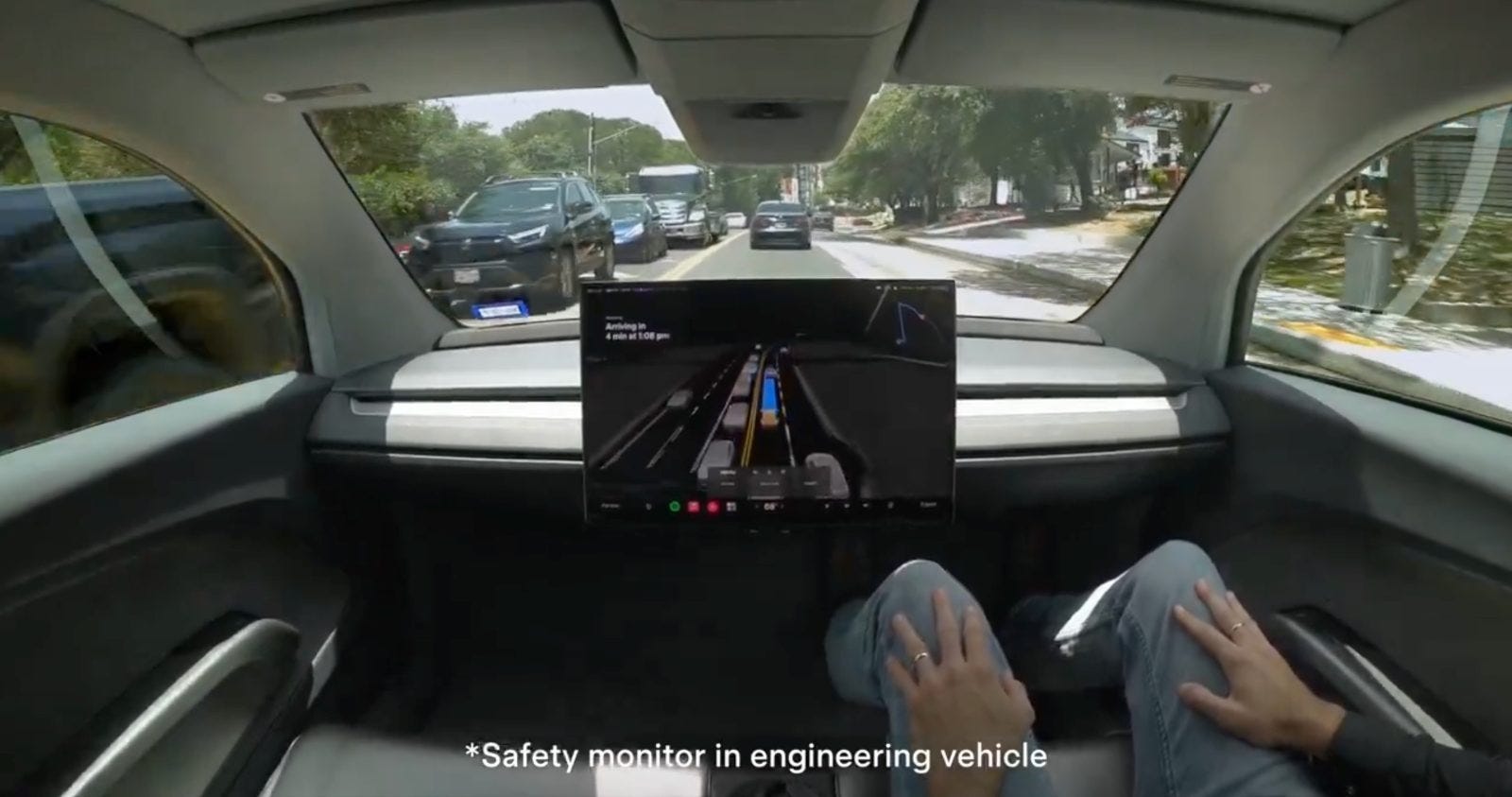
Tesla has begun engineering tests of its first production Cybercab on public roads in Austin, driving with no steering wheel to hold and only a “safety monitor” riding shotgun. The two-seat, pedal-and-wheel-free robotaxi rolled off the line at Gigafactory Texas in February and started production in April. This marks the first time a supposed “customer-spec” unit has been validated outside the factory.
That validation work is happening alongside a broader push to scale the Robotaxi program. Tesla also expanded unsupervised robotaxi service to Miami, launching driverless from day one across a roughly 14 square mile geofence covering West Miami, Doral, and Coral Gables (Model Ys for now; Cybercabs join once volume production ramps). Tesla has also published first responder documentation for the Cybercab, adding rescue sheets and emergency-response guides alongside the existing Model Y materials, indicating a push for broader regulatory approval. The more exciting part of this push, however, will be the eventual requirement for Tesla to release safety statistics, a move the company has broadly avoided since 2018.
Tesla has also released FSD (Supervised) v14 Lite for Hardware 3 vehicles, the first major update those cars have gotten in over a year. The build distills the driving intelligence from Hardware 4’s v14 model into HW3’s weaker camera and compute setup, using the same reinforcement-learning and offline-training pipeline, something Musk himself previously said HW3 wasn’t capable of running. It adds parking, unparking, and reversing, plus customizable Arrival Options and always-on Speed Profiles.
Early access owners are largely positive. Reports describe it as a “massive leap” over v12.6.4 and “way better” in day-to-day driving smoothness, per early impressions compiled by Electrek. It’s still a driver-assistance feature you have to supervise, but bringing HW4-level behavior to four-year-old hardware is a bigger software achievement than the incremental version bump suggests. Time will tell if this distilled version of FSD is able to benchmark as close to V14 as Tesla claims.
Domestic News
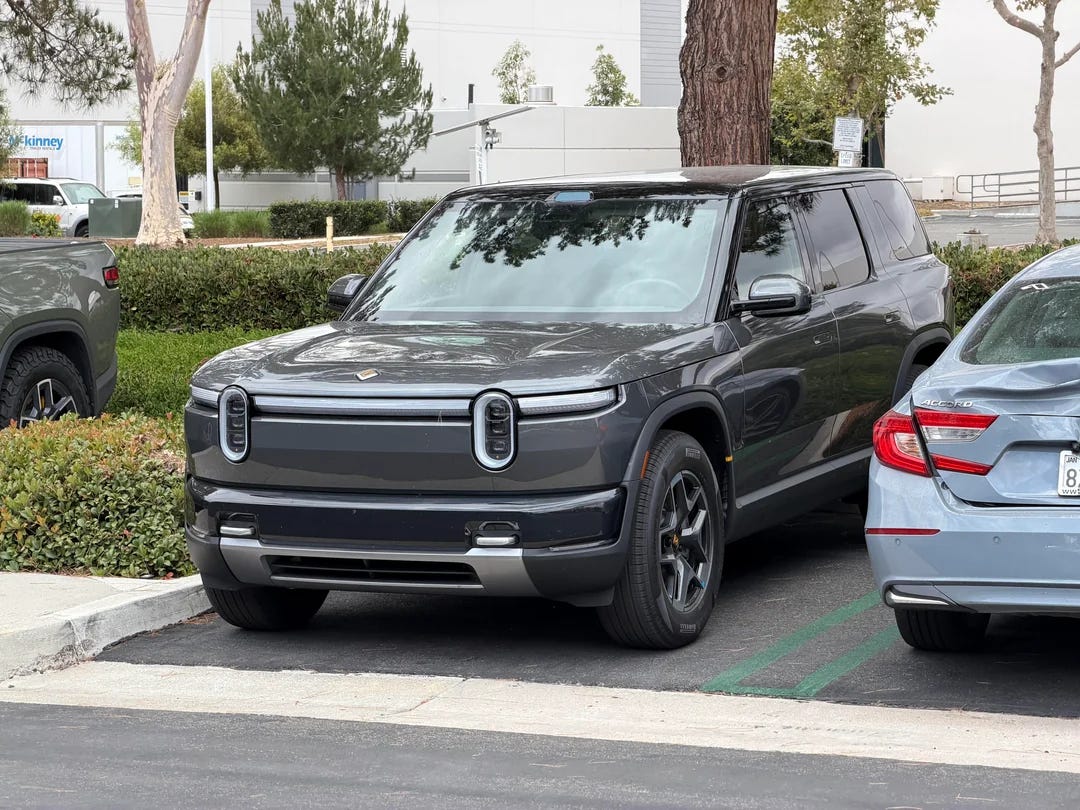
Rivian’s R2 has been spotted wearing a lidar sensor near the company’s Irvine, California headquarters, the clearest look yet at hardware Rivian plans to add to the SUV later this year. R2 shipments started June 9 without lidar; Rivian said at its AI & Autonomy Day last December that the sensor would arrive “late 2026” as part of the Autonomy+ hardware suite. What’s notable is the packaging is that rather than the raised “taxi bump” housing common on cars like the Volvo EX90, the R2’s lidar window sits flush within the roofline. Clearly an industrial designer at Rivian fought hard to get engineering to implement the sensor this way.
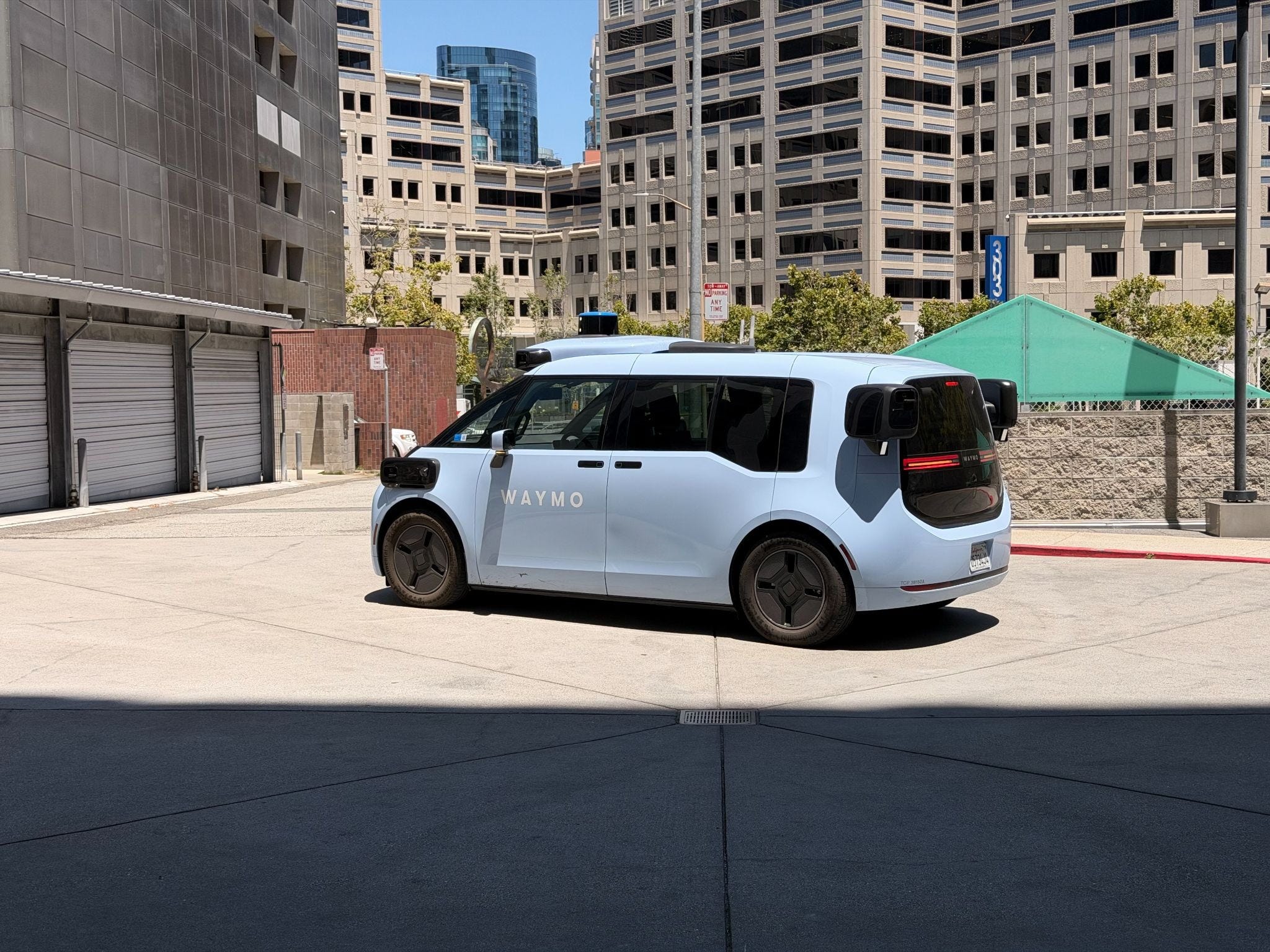
An unoccupied Waymo caught fire in San Francisco on the Fourth of July after driving over a lit firework in the street, one of several robotaxi mishaps during a chaotic holiday night marked by fog, gridlock, and citywide fireworks. No one was inside, no injuries were reported, and Waymo coordinated with SF Fire to remove the vehicle. Elsewhere in the city, strings of Waymos got stuck behind a disabled vehicle in heavy 4th of July traffic, echoing the congestion problems Waymo saw during December’s PG&E outage. Beyond pre-emptively geofencing off the area, fireworks should probably be added to the set-of-things-to-not-drive-over dataset.
Battery Life
Recently, I saw this WSJ article about a study that found EV batteries are lasting far longer than the industry expected, with real-world packs still holding 83% to 95% of their original capacity after 150,000 to 400,000 miles. One five-year-old Tesla Model 3 in the data set has logged 247,000 miles and recently made a 260-mile UK road trip without stopping to charge. Only about one in 12 EVs built between 2011 and 2016 has needed a battery replacement, and newer packs are degrading even slower thanks to better cell chemistry, battery-management software, and thermal regulation.
However, that data is mostly drawn from personal cars, which average 12,000 to 15,000 miles a year. What if we apply these stats to fleet vehicles?
Robotaxis rack up mileage at a completely different pace. Waymo doesn’t publish exact fleet counts regularly, its own manufacturing blog put its commercial fleet at “over 1,500 vehicles” in mid-2025 with 2,000-plus more Jaguar I-PACEs on order. But outside estimates now put the total fleet somewhere around 3,000 to 3,500 vehicles heading through this year. In its most recent safety update, Waymo said it’s driving “over 4 million miles a week.” Divided across a roughly 3,000-vehicle fleet, that works out to something like 60,000 to 70,000 miles per vehicle a year, close to five times what a typical personal car covers. At that clip, a Waymo vehicle would blow past the 150,000-mile mark within two to three years of service, squarely inside the range where the Journal’s data says batteries are still holding up fine.
Waymo’s duty cycle is harsher than the average personal car’s (more full-charge cycles, more DC fast charging, more stop-and-go city driving), so the numbers won’t translate one for one. But directionally, it’s a good problem to not have. A lot of robotaxi economics have been built around the assumption that a vehicle’s usable life is capped by hardware obsolescence, sensors and compute going stale, long before the battery gives out. Cruise once targeted a million miles out of its Origin, and Forbes contributor Brad Templeton has argued robotaxis should be planned around roughly a decade of service for that same reason, as in, the tech, not the battery, ages out first. Waymo did recently announce a pack recycling deal with B2U Storage Solutions, but if packs really can go 400,000 miles without much degradation, the battery stops being a meaningful constraint on fleet turnover almost entirely. The real question for Waymo, Tesla, and everyone else becomes how often they want to refresh vehicles for a better Driver or a better chip, not how often they need to swap a dying battery. I’d bet that shifts the fleet-replacement conversation industry-wide, from how long batteries last to how fast the self-driving stack can be upgraded, and that’s a totally different model than anyone was underwriting a few years ago.
International News
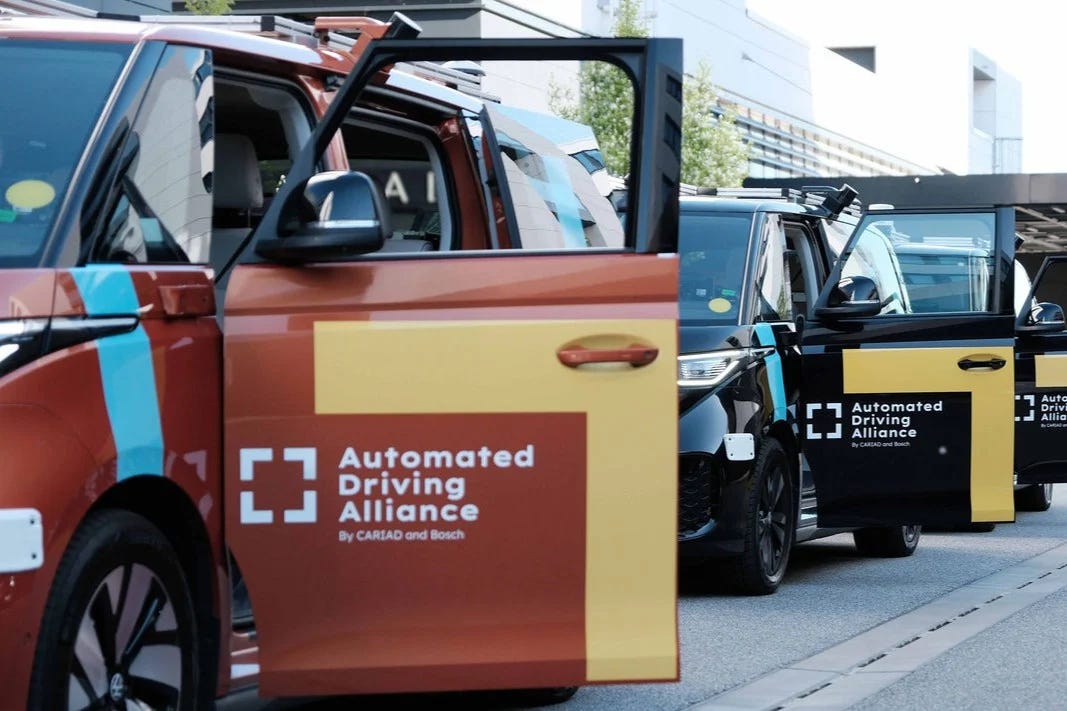
Volkswagen has ended its Automated Driving Alliance with Bosch, cutting short a contract that was set to run through 2029. Cariad, VW’s software unit, says the alliance still delivered a usable AI-based Level 2 hands-free system that both companies keep the rights to, and which VW will put in its 2027 ID.EVERY1 city car. But per Handelsblatt, VW doesn’t think the partnership can get to SAE Level 3 fast enough, and CEO Oliver Blume says the group is doubling down on automated driving regardless.
VW is now shopping for a new partner. Mobileye remains the leading candidate, since VW already uses its tech for highway assist and for the Level 4 ID. Buzz AD headed to US streets through Uber. But insiders also point to Wayve, the British AI-driving startup that raised roughly €1 billion in February from Mercedes, Nissan, Stellantis, Uber, Nvidia, and Microsoft, as a possibility.
Backing Up
A Xiaomi YU7 owner’s self-parking clip has gone viral for… the vehicle’s backup sound
For context, the sound is a remixed version of the tune long used on garbage trucks in China to announce their arrival, paired with the voice from the ever popular blue work trikes saying a warning that translates to roughly “careful, car backing up,” as it reverses into a spot. One commenter joked that the car throws a party every time it parks itself.
Writing for a Western audience, it’s hard for me to describe how incredibly China-coded this is. If you’ve browsed Chinese social media at all, you might know that it’s a completely different world versus Western social media. The same goes for the real world, and this backup sound is a perfect example.
Alright, that’s it from me… until next week. If you enjoy this newsletter, share it with your friend, colleague, or boss. Thank you for reading; Sophia out!