


This is the Ride AI newsletter: The most comprehensive weekly digest of news and intelligence at the intersection of technology and transportation.
Deep Diving the Chinese AV Industry
I recently had the immense pleasure of continuing my Ride AI panel and doing something I’ve always wanted to do: a deep dive with Dr. Leo Wang, CFO of Pony.ai, one of China’s foremost robotaxi companies, about the state of Chinese AVs, Chinese government regulation, and how a Chinese company such as Pony thinks about bringing their services to a global market. Turns out, it’s not really as straightforward as you might think. Give the episode a listen and let me know what you think. (heads up: it’s a long one. I wasn’t kidding about the deep dive)
Top Story
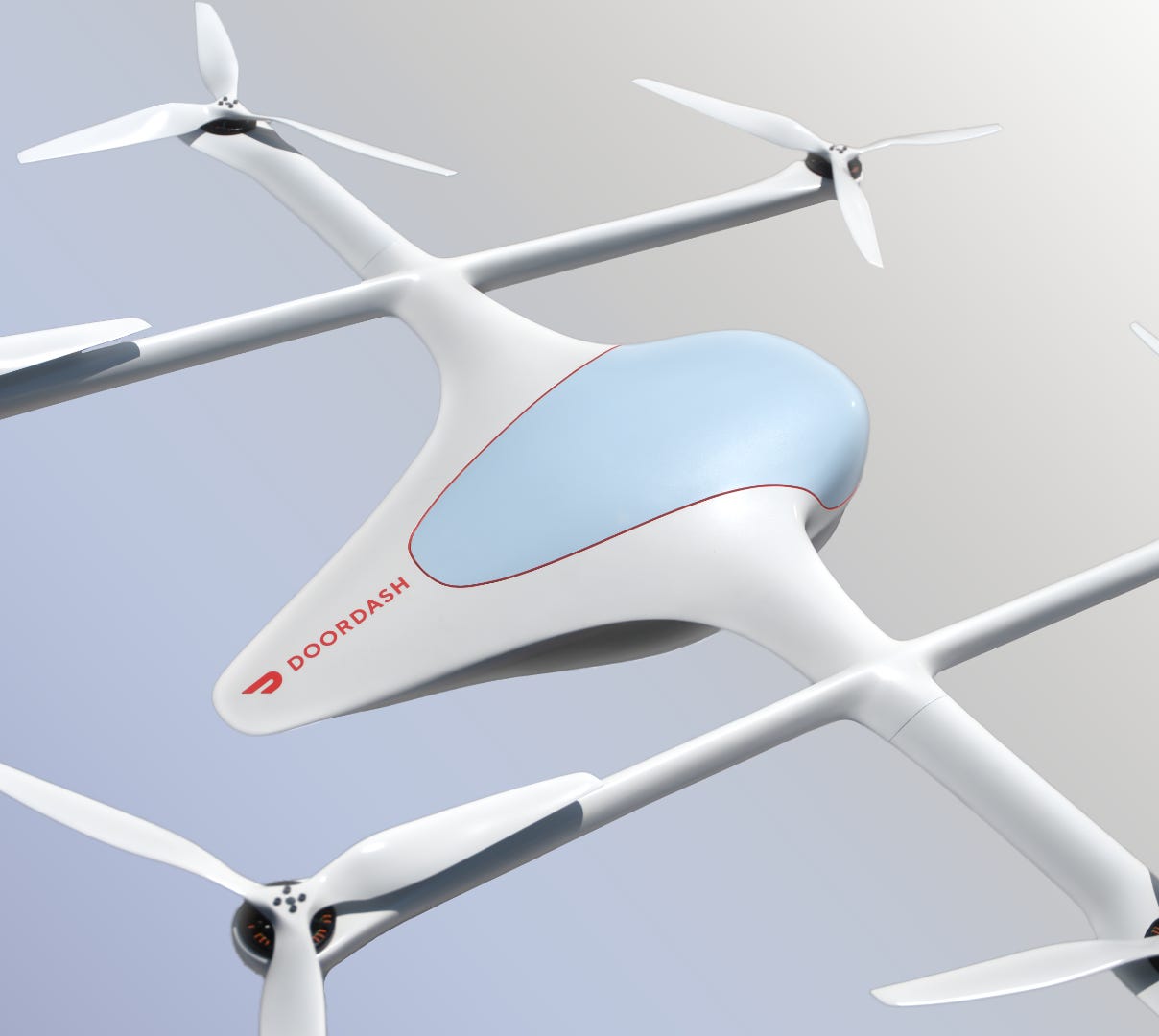
DoorDash has unveiled its own delivery drone, a six-propeller aircraft that will start pilot deliveries in Northern California with Chipotle, Popeyes, and local restaurant Momo N Curry. DoorDash says about 80% of its typical restaurant orders are light and small enough for the drone to carry, and that early tests have averaged under five minutes from the restaurant to the customer’s door.
DoorDash Labs, the same team behind the Dot sidewalk robot that I took a look at last year, built the aircraft. DoorDash said the company started with the ground side (loading systems, kitchen handoffs, and packaging) and sized everything around items ordered, weight, and travel distance. Restaurants get a range of loading options meant to fit into how they already work. The aircraft picks up and drops off orders by winch (a la Wing), and its slow-spinning propellers keep cruising noise to roughly that of a passing car.
DoorDash got its FAA Part 135 air carrier certification in July, though hasn’t shared a payload figure, delivery range, or start date for the pilot yet.
The drone was announced at DoorDash’s Dash Forward event alongside a few new ordering features, including ordering by text message, and an MCP connector that lets companies place office orders through ChatGPT, Claude, or other AI agents they build themselves. I suppose this is the natural evolution of acquiring corporate slop bowls...
Domestic News
California will fine robotaxi companies when their vehicles block first responders, under a new law, SB 1246, that Governor Gavin Newsom has signed. Penalties run up to $10,000 per vehicle when a robotaxi obstructs police or firefighters for more than 30 minutes during an emergency. The law takes effect in July 2028.
Companies will also have to send local incident technicians to crashes and obstructions, and notify cities about the location and status of their vehicles during system-wide failures. Remote drivers must also now be based in the US and hold a US driver’s license, although this rule only covers people who directly drive a vehicle from afar, something only Tesla does. Remote assistance, where staff send guidance while the car stays in control isn’t covered, for example, Waymo’s remote assistance workers in the Philippines. The California DMV will set the details, including required response times, at a later date.
In Minneapolis, Mayor Jacob Frey has vetoed an ordinance that would’ve required a human safety monitor in the driver’s seat of every autonomous vehicle in the city, with immediate access to the steering, brakes, and accelerator. The ordinance would’ve been the first of its kind in a US city, and would completely defeat the purpose of an autonomous vehicle. Waymo has been testing in Minneapolis with human drivers for about a year and isn’t taking riders there yet.
Tesla has extended its Austin service hours to 11 p.m., one hour later than before, and now has 169 Cybercabs registered in the city, up from 58 two weeks earlier according to Texas DMV data. The reason it isn’t running later, per Elon Musk, is that the cars still have trouble spotting pets and other animals on the road in the dark. If only there was a sensor-type that was able to detect objects that are not visible in the dark…
The company is still targeting 24/7 service as early as this month with FSD v15.
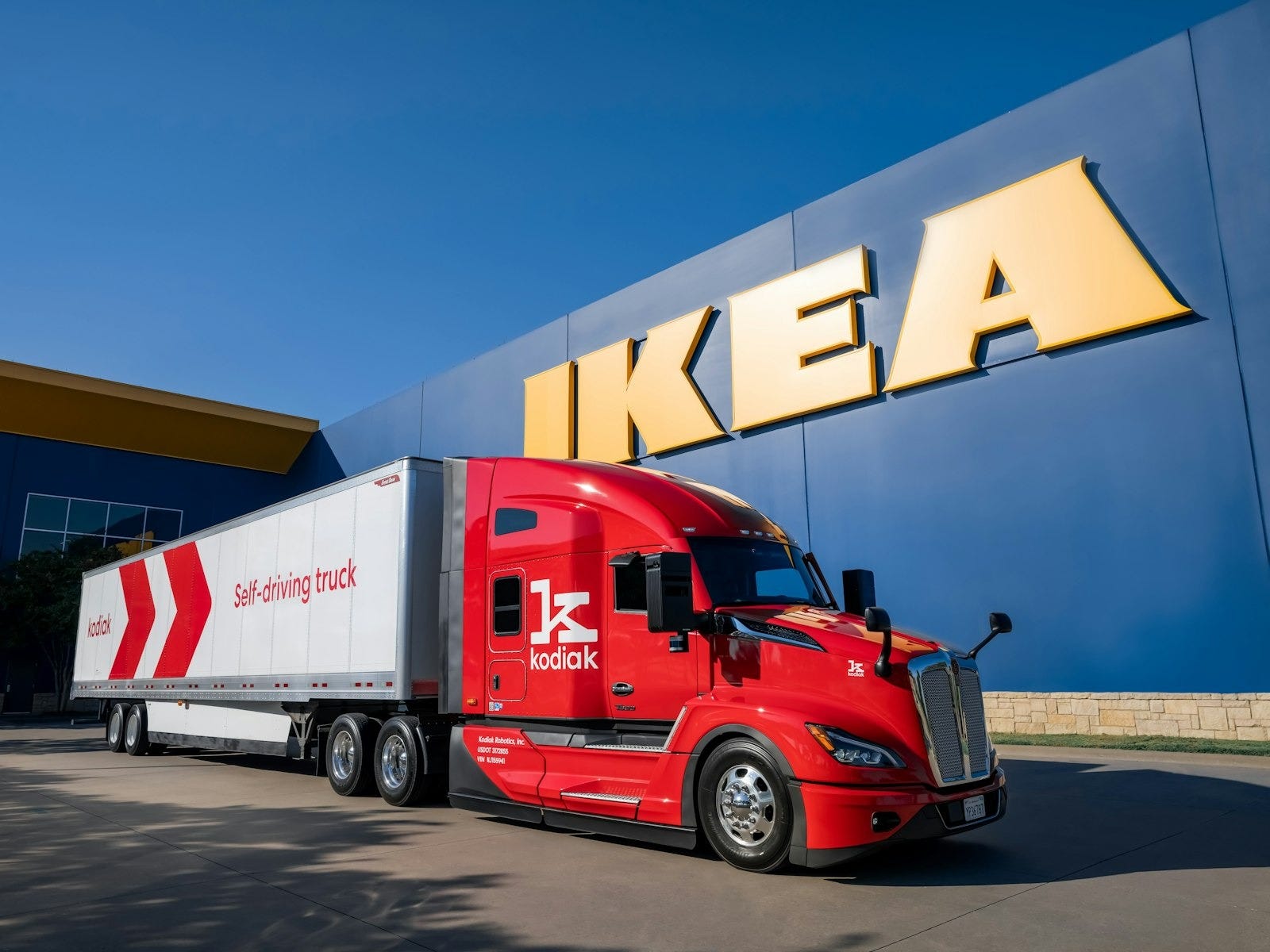
Kodiak has named IKEA as its driverless launch customer, and will haul the retailer’s freight driverlessly later this year on the 219-mile Dallas to Houston lane I covered last week. That leg is part of a 292-mile route between IKEA’s distribution center in Baytown and its store in Frisco. Kodiak has delivered more than 1,300 loads and logged over 750,000 autonomous miles for IKEA over four years with a safety observer on board.
There may be a bit of trouble on the horizon though, as the federal waiver that lets autonomous trucks use cab-mounted warning beacons in place of reflective triangles, which need a human to set them out, expires on October 9. FMCSA has reissued it every three months since October 2025 and its terms say it will be again, but a cargo van operator is asking a federal appeals court to block it and any successor. About 45 driverless trucks from Aurora and Kodiak run under the waiver today. Aurora has put in a request for a five-year exemption, but it is still pending.
Rivian’s lidar-equipped R2 won’t reach customers until 2027, with employees getting the first vehicles carrying lidar and the in-house RAP1 autonomy computer before the end of this year. Rivian had previously pointed to late 2026 for the hardware, but it’s now clear that was very optimistic. The company says point-to-point driving doesn’t need lidar though, and will come to the Gen 2 vehicles already on the road. The company also now says that lidar now costs only a few hundred dollars to add to its vehicles.
On its robotaxi deal with Uber, Rivian still expects the second $250 million tranche in the fourth quarter and is targeting late 2028 for the service, though the 10,000-vehicle order is not yet locked.
Zoox has started testing in Denver, running a small, manually driven fleet for a few months to train on winter conditions like heavy rain and snow. The company says that no passenger service is planned as of yet.
Waymo and Lyft will open an 80,000-square-foot robotaxi depot in Nashville on October 12, run by Lyft's Flexdrive fleet management arm out of a former post office near the airport. Waymo says the site will let it add hundreds of vehicles to its Nashville fleet.
International News
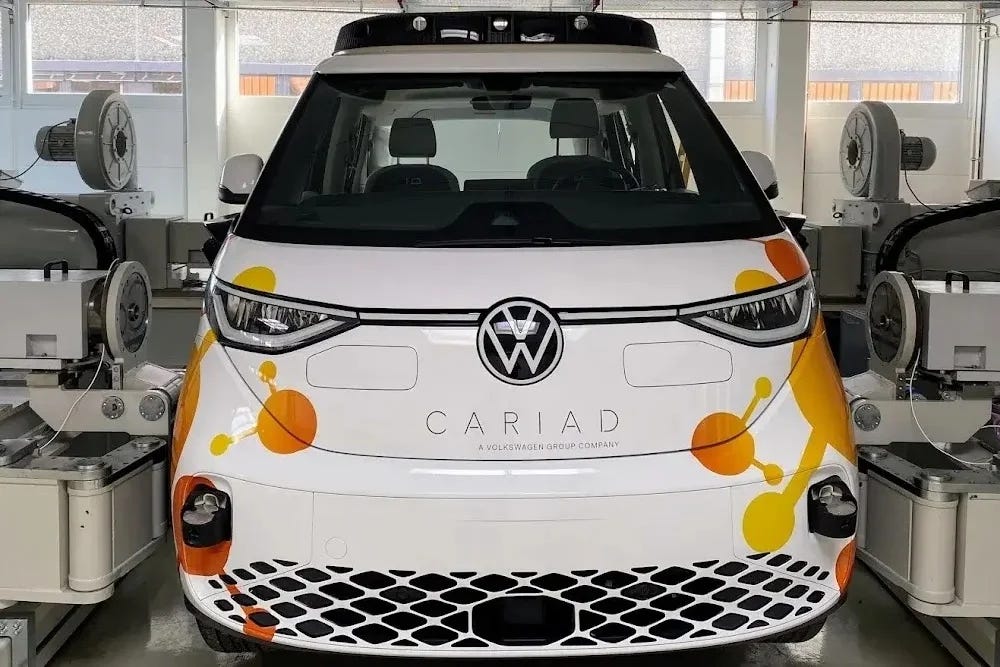
Volkswagen has reportedly picked Wayve as its automated driving partner, choosing the British startup over Nvidia and others after testing several systems against each other in a southern German city a few weeks ago, according to German publication Der Spiegel. No final contract has been signed, and VW, Cariad, and Wayve have all declined to comment.
Under the plan, Wayve would supply the AI software and Cariad (VW’s software unit) would integrate it into the group’s existing sensors, compute, and software. Nvidia had reportedly offered a complete system, which could’ve made much of Cariad’s roughly 1,200-person autonomous driving division redundant. Nvidia isn’t necessarily out completely though, since it is a Wayve investor and supplies compute for Wayve’s projects. VW seemingly also hasn’t settled on hardware.
This could be a big month for Wayve if the deal closes. VW would be Wayve’s fourth automaker after Nissan, Stellantis, and Mercedes, which was last week’s top story. Stellantis is showing off its Wayve integration this week, with hands-free demo rides in a Fiat 500e and a Maserati Grecale at an event in Turin from October 7 to 9.
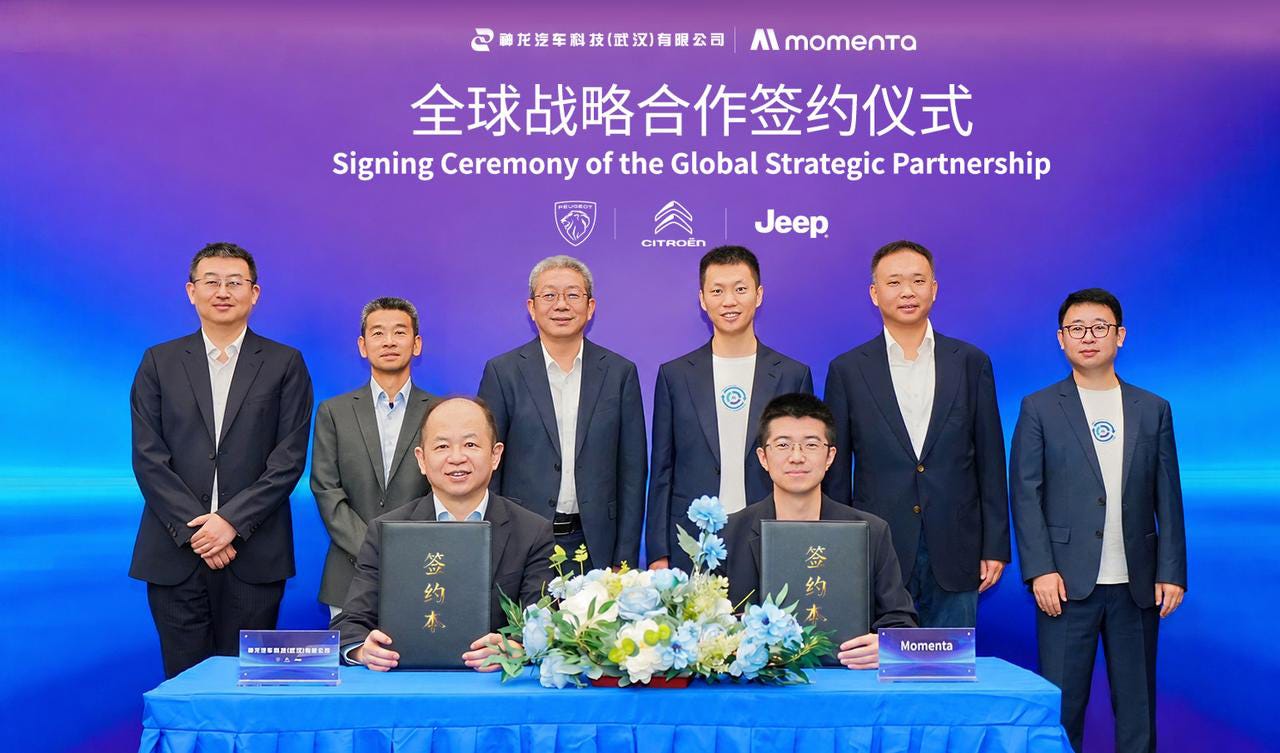
Momenta will supply driver assistance systems for upcoming Peugeot and Jeep models, under a global deal with Dongfeng Stellantis Automotive Technology (DSAT), a Wuhan-based venture set up by Dongfeng, Stellantis, and other partners. The systems will run on Momenta’s R7 World Model and launch in China first, followed by Europe and other markets. No further details have been given around launch dates, model names, or automation level.
This tie-up gives Stellantis two driving stacks split by region, with Momenta covering China and Europe through DSAT and Wayve slated for North America.
About 40 Waymo vehicles have been spotted at a depot outside Munich, more than a year ahead of the company’s planned launch there by the end of 2027. Photos and video from the site in Aschheim show more than 30 Jaguar I-Paces. Parked among them were at least four BMW 5 Series Touring wagons carrying roof boxes and four 5 Series sedans, which has set off speculation that Waymo is evaluating a BMW platform for Germany. Waymo hasn’t said anything about BMW, however, so they could just as easily be support vehicles.
Croatia has become the eighth European country to approve Tesla’s FSD Supervised, and the third in September after Slovenia and Czechia. The EU’s Technical Committee on Motor Vehicles takes up the Dutch approval again on October 6, but as I wrote last week, the agenda only allots 25 minutes of discussion with no vote, so a proper decision isn’t expected before December. Germany, France, Italy, and Spain still haven’t approved it, and Tesla says it’s working with Irish authorities on an approval there.
Pony.ai and WeRide are likely to keep posting operating losses through 2028, according to a new analyst report, because their fleet utilization in China lags Waymo’s rate of more than 58%. The report says profitability for both depends on domestic fleet density reaching critical mass, which neither is expected to hit before the latter half of the decade. It also notes that Waymo’s own utilization stayed flat as its fleet grew and only jumped once trips got longer, although this could also be a result of the company’s lack of vehicle inventory as it works out kinks with the Ojai.
I talked through the Chinese robotaxi economy with Pony’s CFO Leo Wang on last week’s podcast episode, so if you want the company’s side of this, give it a listen.
Get a Room
Researchers from academia and industry met in Sweden last month for a workshop called Love in Traffic, an event where researchers discussed an issue that inevitably comes up when publicly accessible driverless vehicles get mentioned: How to design robotaxis so riders stop having sex in them.
According to the researchers present, there are two main offenders: Content creators who see a robotaxi as a cheap studio with good lighting, and tourists who get carried away. The bottom line is that with no other human present, riders assume far more privacy than there really is, and forget about the monitoring systems in the vehicle.
Proposed designs include see-through seats, removal of any areas to hide, reminders that the cabin is monitored, and a proactive in-cabin AI assistant that tells you to knock it off. I’m doubtful, however, as all these design elements are already present, except the proactive AI assistant. Beyond that, it hasn’t even been proven that people actually have sex in robotaxis. There have certainly been stories in tabloids interviewing people who claim to have done it, but none of the stories have actually been confirmed.
I couldn’t think of a more uncomfortable experience than copulation in a moving vehicle with trigger-happy passenger seatbelt detection.
Alright, that’s it from me… until next week. If you enjoy this newsletter, share it with your friend, colleague, or boss. Thank you for reading, Sophia out!