


Today’s Ride AI newsletter is another on the ground report from Ride AI columnist David Moss, recapping his latest trip to China. You’ll be seeing more of David around here as our “man on the ground” covering major happenings in the space, starting next week with Tesla’s Roadster unveiling.

Last month, I got an invitation that I could not turn down. Nio invited me to China to experience the new second generation Onvo L60, with a particular focus on its redesigned L2+ assisted driving system.
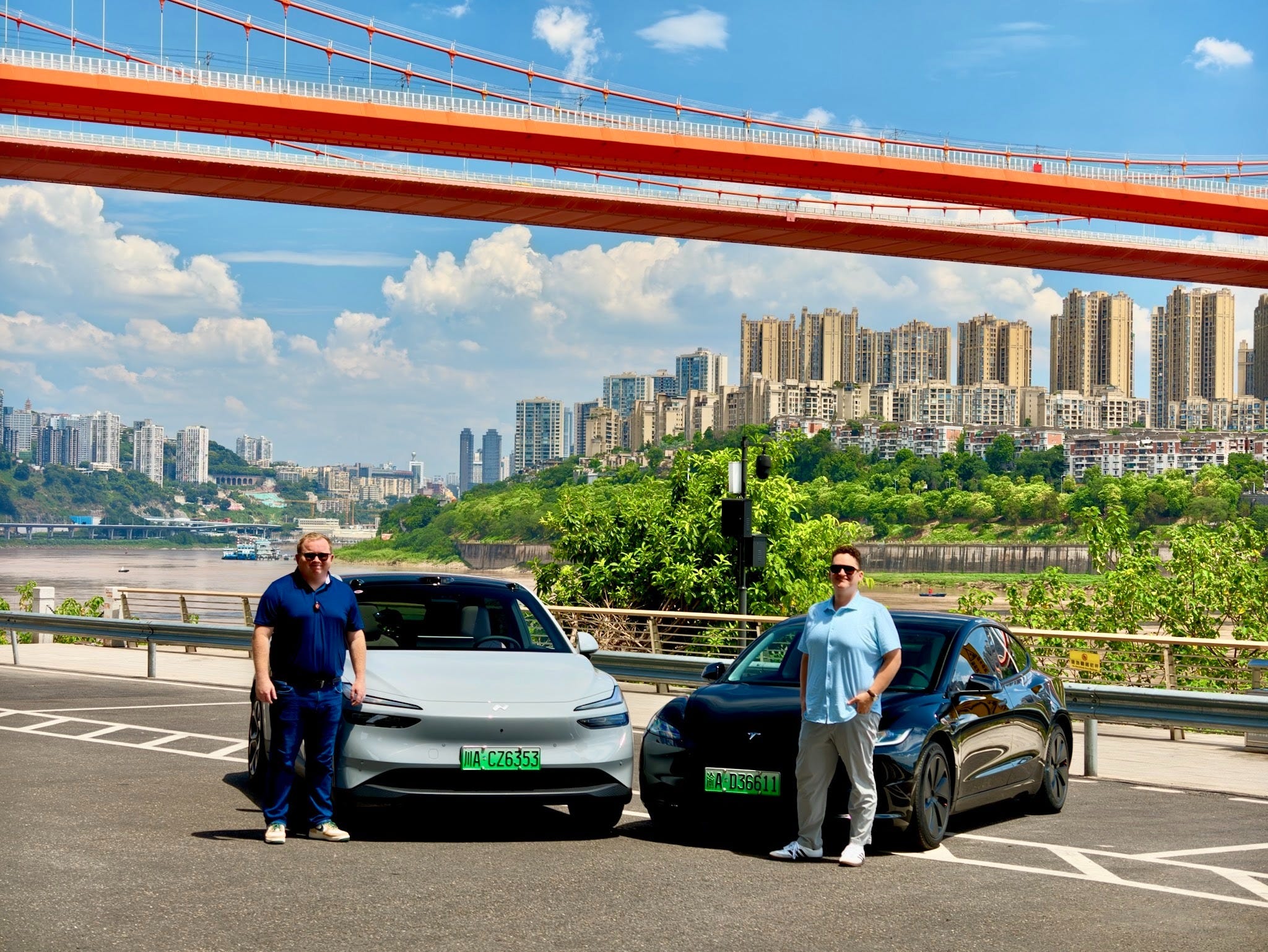
I went into the trip expecting to learn about one car. I came home thinking about an entire country.
Ultimately, this is not really a review of the Onvo L60, which you can find on my Youtube channel here. It is about what I saw happening around it. Electric vehicles, charging infrastructure, assisted driving, battery swapping, consumer technology, and an automotive market that sometimes felt like I had jumped several years into the future.
China gave me a very different perspective on where the electric and autonomous vehicle race is heading. And it started immediately after I arrived, essentially from the moment I attempted to write my name in Mandarin for Chinese driver’s license.

EVs Were Everywhere
The first thing that hit me was simply the number of electric vehicles on the road.
In the United States, fully electric vehicles still represent a relatively small percentage (around 6% in 2026) of new vehicle sales. Walking around Chongqing, the contrast was impossible to miss. EVs were everywhere. But even more surprising was the sheer number of brands.
I have followed cars closely for almost my entire life. I was the kid who knew the models, trims, engines, and weird cars nobody else cared about. China made me feel like a beginner again.
I constantly saw vehicles from brands I had never heard of before. And these were not boring economy cars! Some looked like concept vehicles that had somehow escaped an auto show and ended up in traffic.
Cars like the AVATR 12 looked like something you would expect to find parked inside Tony Stark’s garage. Sleek lighting, dramatic bodywork, massive screens, unusual interiors, and even digital camera based side mirrors instead of traditional mirrors.
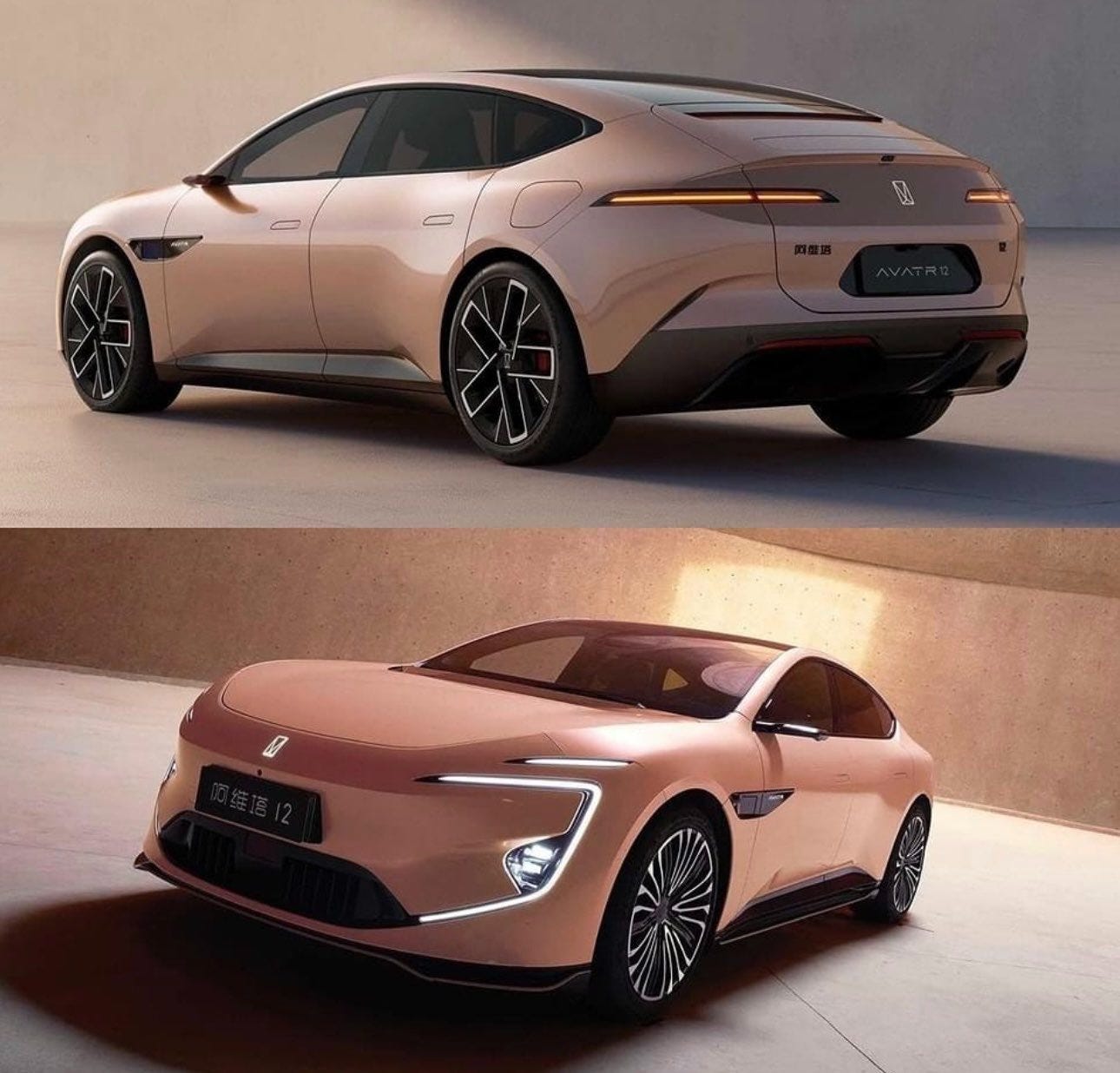
The fascinating part was that none of this seemed particularly unusual there. It was just traffic.
Charging at One Megawatt
Then there was charging. In the United States, a 250 or 400 kilowatt charger still feels extremely fast. China is already pushing beyond that. BYD’s Flash Charging technology can deliver more than 1,000 kilowatts of power. One megawatt.
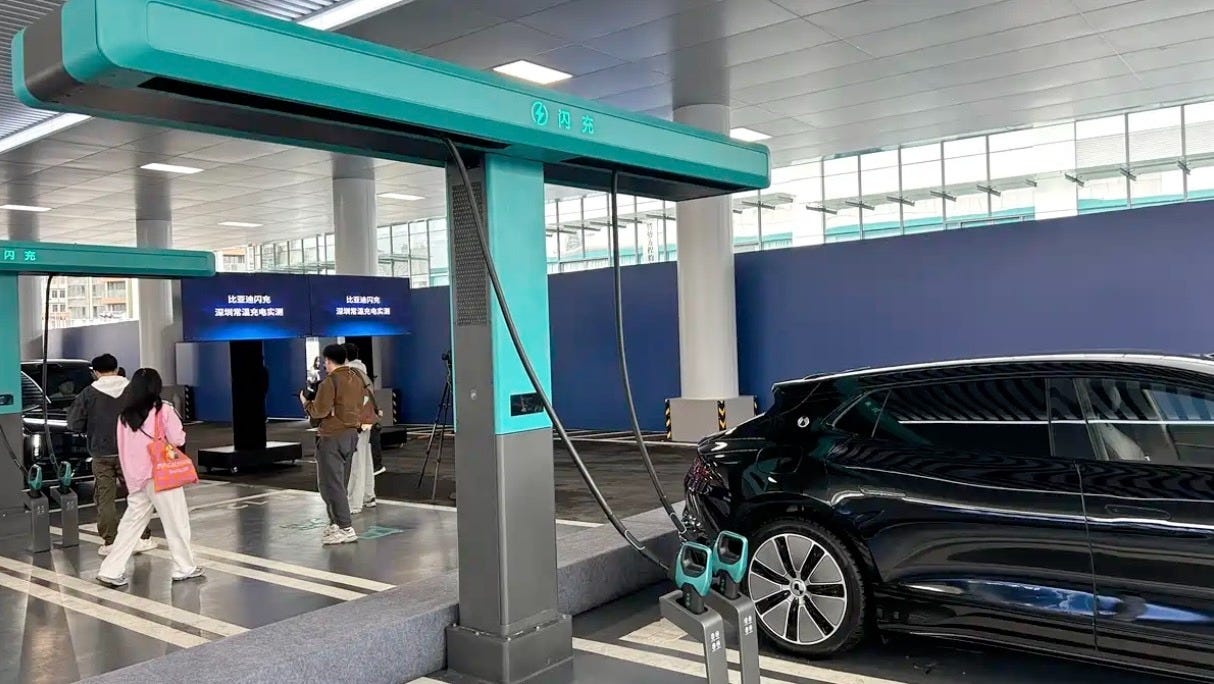
For comparison, some of the fastest chargers becoming common in the United States are systems such as the Alpitronic HYC400, which can deliver up to 400 kilowatts and is being deployed by networks and companies including Ionna and others. China is already looking beyond that number.
Seeing the charging infrastructure in person made me realize how quickly expectations around EV charging could change.People often talk about charging an EV as if it will always involve sitting at a charger for 30 or 40 minutes. But what happens when charging begins approaching the experience of stopping for gasoline?
Then I Watched a Car Change Its Own Battery
One of the most memorable experiences of the trip had nothing to do with charging at all. Nio has spent years developing battery swapping technology, and I finally got to experience it firsthand.
The concept is simple–instead of plugging the vehicle in and waiting for the battery to charge, you replace the entire battery.You can arrive with a nearly empty battery and leave a few minutes later with one that is more than 90 percent charged.The entire process took roughly three minutes. But the coolest part was watching how automated the experience had become.
Our Onvo L60 approached the battery swap station and handled the process itself. The vehicle pulled into the station, positioned itself, parked, completed the battery swap, and then drove itself back out.
I basically watched the car refuel itself. This is one of those technologies that sounds strange until you experience it…….then suddenly it makes a lot of sense.
You can watch my full battery swap video here to get a better feel for how this works.
Assisted Driving Is Becoming Normal
The biggest reason I traveled to China was autonomy and assisted driving.That might also be where the difference between the Chinese and American automotive markets felt the most dramatic.
In the United States, Tesla FSD Supervised remains the most prominent example of a consumer vehicle attempting broad point to point assisted driving. Rivian is also preparing to expand its own capabilities later this year. In China, advanced assisted driving systems are appearing across a much wider range of brands.
Companies including Li Auto, XPeng, Nio, and vehicles using technology from companies such as Momenta are all competing aggressively in this space. You can actually see when some of these systems were operating–certain vehicles use light blue or cyan exterior indicator lights that illuminate when an assisted driving system is active.
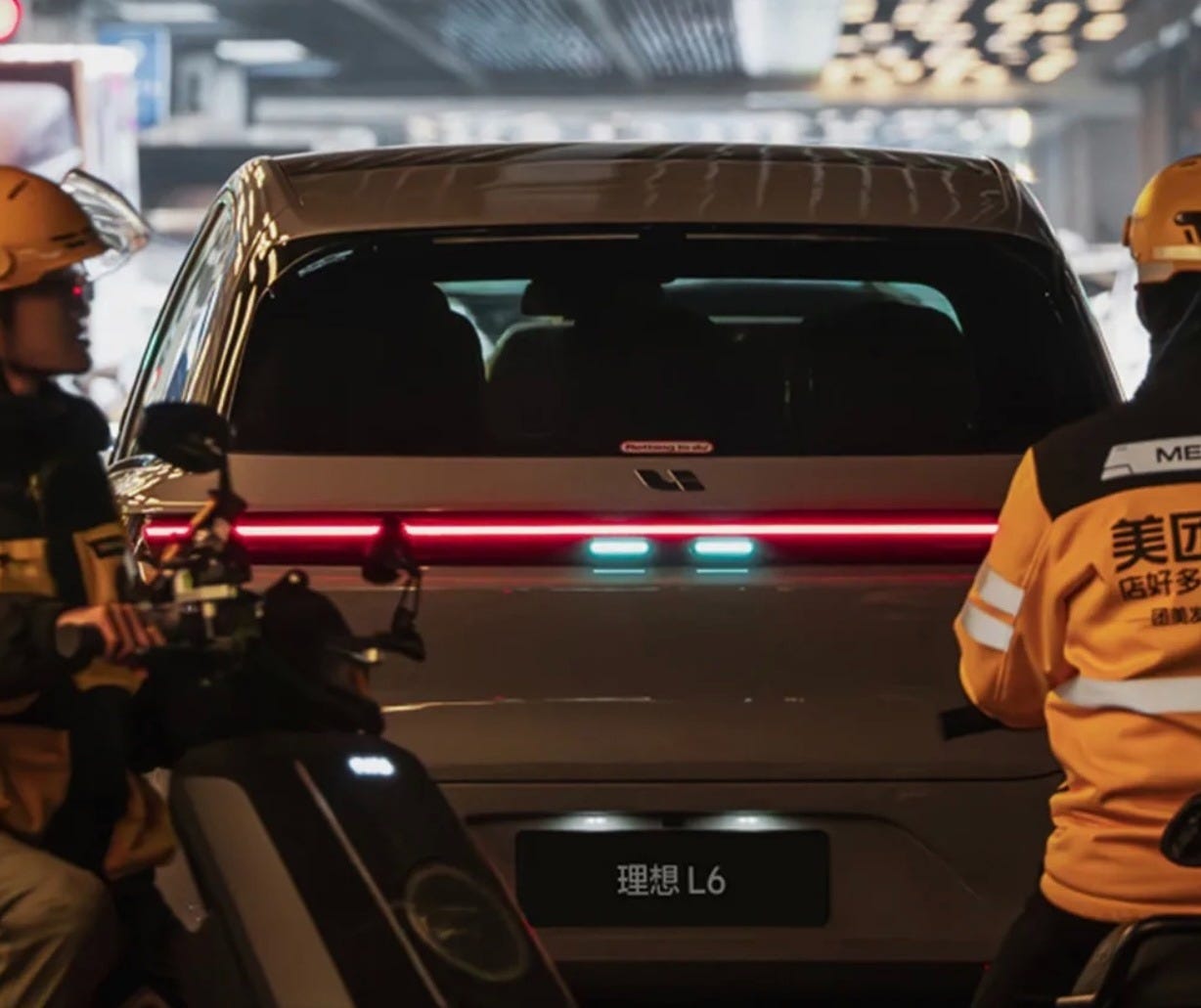
Once I realized what these lights meant, I started noticing them everywhere.It created this fascinating visual reminder that assisted driving was not some theoretical future technology being demonstrated at a trade show.These systems were operating around me in normal traffic at massive scale.
I would look over and see the cyan light glowing on another vehicle and immediately know that an advanced driving system was active.For someone who spends most of his time covering autonomy, that was incredibly cool to see.
The Cars Were Only Part of It
What surprised me most about China was that the futuristic feeling did not disappear when I stepped out of the car. One afternoon after lunch, I walked around a shopping mall and found myself surrounded by consumer technology that felt just as ambitious. There were phones with enormous camera systems and accessories that looked more like professional photography equipment.
Devices like the Vivo X300 Ultra could use external telephoto lens accessories that dramatically extend the phone’s camera capabilities.I saw futuristic concepts such as Honor’s Robot Phone, which integrates a motorized camera system.Then there was Huawei’s MateBook Fold.
Imagine an 18 inch folding screen that transforms into a laptop, complete with a virtual keyboard. It was the kind of product I would normally expect to see behind glass at CES.Instead, I was standing in a mall looking at it like another consumer electronics product.
That became a recurring theme throughout the trip.

Technology that feels experimental in the United States often felt much closer to normal life in China.
I Left Wanting to Come Back
I did not expect to enjoy China as much as I did.I went because I wanted to understand the Onvo L60 and see what was happening with assisted driving.I left fascinated by the entire ecosystem.
The cars.
The charging infrastructure.
Battery swapping.
Assisted driving.
Consumer electronics.
The speed at which companies seem willing to experiment.
Most importantly, I left feeling like I had barely scratched the surface.Before the end of the year, I am planning to return. This time I want to explore Shanghai and Beijing and go much deeper into China’s autonomous vehicle industry, including robotaxi operators such as Baidu Apollo Go and WeRide. If anyone on the ground in China is reading and would like to connect when I’m in town
There is a global race happening right now around electric vehicles, autonomy, charging, and transportation technology. After seeing China firsthand, I am convinced that anyone trying to understand where that race is going needs to pay very close attention to what is happening there.
I know I will be.
@DavidMoss on 𝕏
@DavidMossAI on Instagram, TikTok, & YouTube
I loved this article and it made me a bit sad as America is falling behind in technology. I knew about the Avatr (Huawei is part of the build team and there's YouTube videos about it) and the phones with lens accessories. I would love to visit there one day and am working to make it happen. Looking forward to seeing your next trip.
I was recently in China visiting suppliers, lots of neat technology that is important for cost and performance that consumers never see. NIO is interesting but jun 2026 financials were still in the red, 12m sales topped 400k units but higher sales are driven by the inexpensive firefly and Onvo brands. Exports to Europe peaked in 2023, only 575 jan-aug this year. Dynamic CEO, less than dynamic sales with 2 bailouts so far.