


Today’s Ride AI newsletter is another special report from David Moss, chronicling a week in Austin exclusively commuting by Cybercab. It’s an action packed read that doesn’t skimp on the details so I’ll let him get right to it.

My Tesla Model 3 was sitting in the hotel parking lot. For once, I was going to leave it there.
A postponed Tesla Roadster event had opened up time in my schedule, and I wanted to try something different: make Tesla’s Cybercab my everyday transportation in Austin, TX. Not just take a few rides and share first impressions, but use it to go shopping, meet friends, run errands, and get things done.
The rule was straightforward: Cybercab or walk. No Uber, Lyft, Waymo, scooters, or rental bikes etc to fill the gaps.
Initially, I considered staying in a hotel downtown, where short rides and walkable destinations would make the experiment relatively easy. Instead, I booked a hotel near the northwestern edge of the ODD area, by the Domain Mall. It was less pedestrian friendly and farther from many of the places I wanted to visit.
I wanted to see the whole experience: availability, waiting, walking, pricing, pickups, and what happened when a trip did not go as expected. With Austin City Limits bringing extra crowds into town, I thought there would be plenty to observe.
Here’s how the week unfolded.
Day 1: A great ride in the rain but an expensive Target run
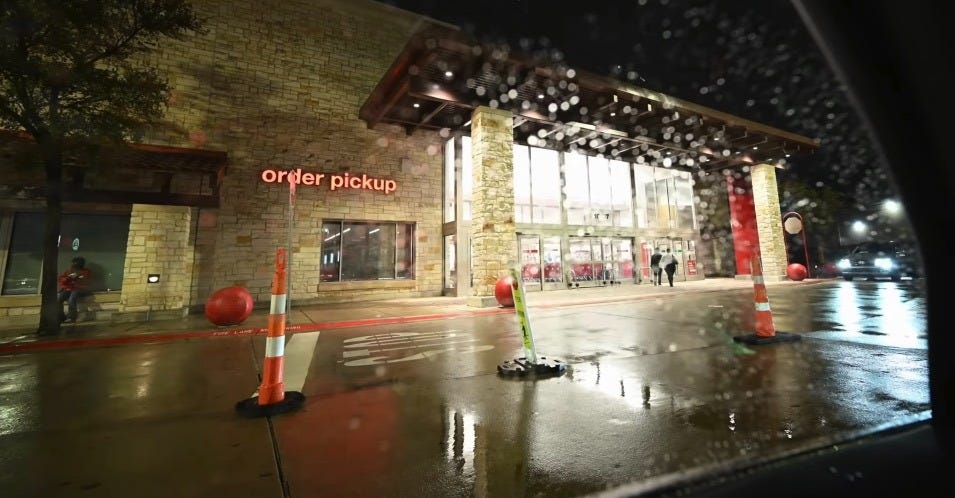
The first outing was about as ordinary as it gets. I needed supplies from Target to last me the week in the hotel room.
It was already around 8:30 p.m., and the service was closing at 10 that night, so there was a little time pressure. The app showed a Cybercab about seven minutes away, compared with 22 minutes for a Model Y. I booked the Cybercab.
By the time it arrived, rain was absolutely dumping down.
The ride itself was one of the strongest parts of the evening. From the passenger seat, it felt smooth, comfortable, and confident in the heavy rain. I could repeatedly hear the camera-cleaning system working as we made the short trip.
Inside, I was playing with YouTube and enjoying the cabin. It already felt more like sitting in another lounge chair than taking a conventional ride.
At Target, though, the practical questions started. I bought less than I had originally imagined. That was not because the trunk was full it barely had anything in it. I was thinking about carrying everything while filming and unloading without treating a shared vehicle like my own car, which I could leave parked while making multiple trips upstairs. (As soon as you walk away out of BT range Cybercab closes the doors & trunk.)
The return booking showed about 13 minutes. The ride home was easy, and I tested the trunk and used Grok to adjust the temperature.Then came the recap: roughly $29 for Target and back.
That is an expensive way to run one small errand. I acknowledged that owning a car also comes with payments, insurance, and other costs, but my first night reaction was clear: enjoyable rides did not automatically make this an affordable replacement for my car.
Day 2: Downtown started to change my mind
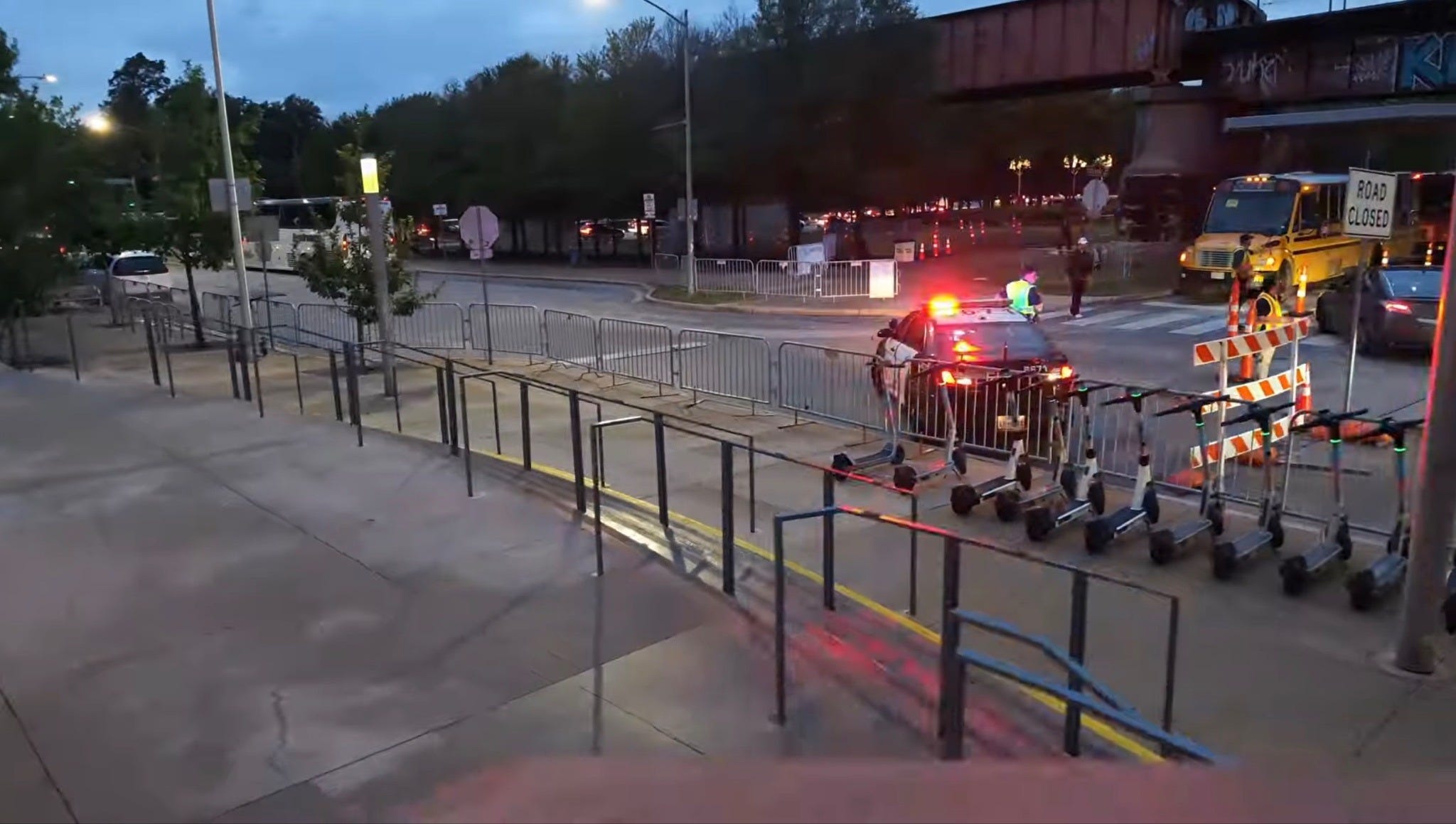
Day 2 was another late start, but this time I headed downtown toward the Austin City Limits shuttle operation.
I was not attending the festival. I wanted to see what reaching that area looked like as a robotaxi passenger.
Along the way, the Cybercab slowed for a family of deer. Later, I watched it respond to a pedestrian and to another vehicle pulling out in front of us. Those were individual moments, not a comprehensive safety assessment, but I liked what I experienced.
The drop off also taught me something. At first, walking toward the shuttle area, I thought the car had left me farther away than necessary. Then I saw the road closures. What had initially seemed inconvenient made much more sense: the drop off was well positioned for the access available.
I walked around Seaholm and eventually went to Veracruz at the LINE hotel for dinner.Downtown was busy. Around 7:40 p.m., I checked the app and saw a three minute Cybercab wait estimate. When I actually booked my return later, I could not select the hotel entrance I wanted, but a nearby pickup about a block away was available in about four minutes.
Yes, I had to walk across the intersection. Yes, I complained about that a little.Then I got in, relaxed, and genuinely fell asleep.
By the time we approached the hotel, my mood had shifted considerably from the first night. I had gone downtown, explored, eaten dinner, and returned without finding a parking garage or driving through traffic.What I particularly enjoyed was having the passenger space to myself, without a human driver.
The cost still mattered. But now I was experiencing the appeal, too.
Day 3: The price started changing my plans
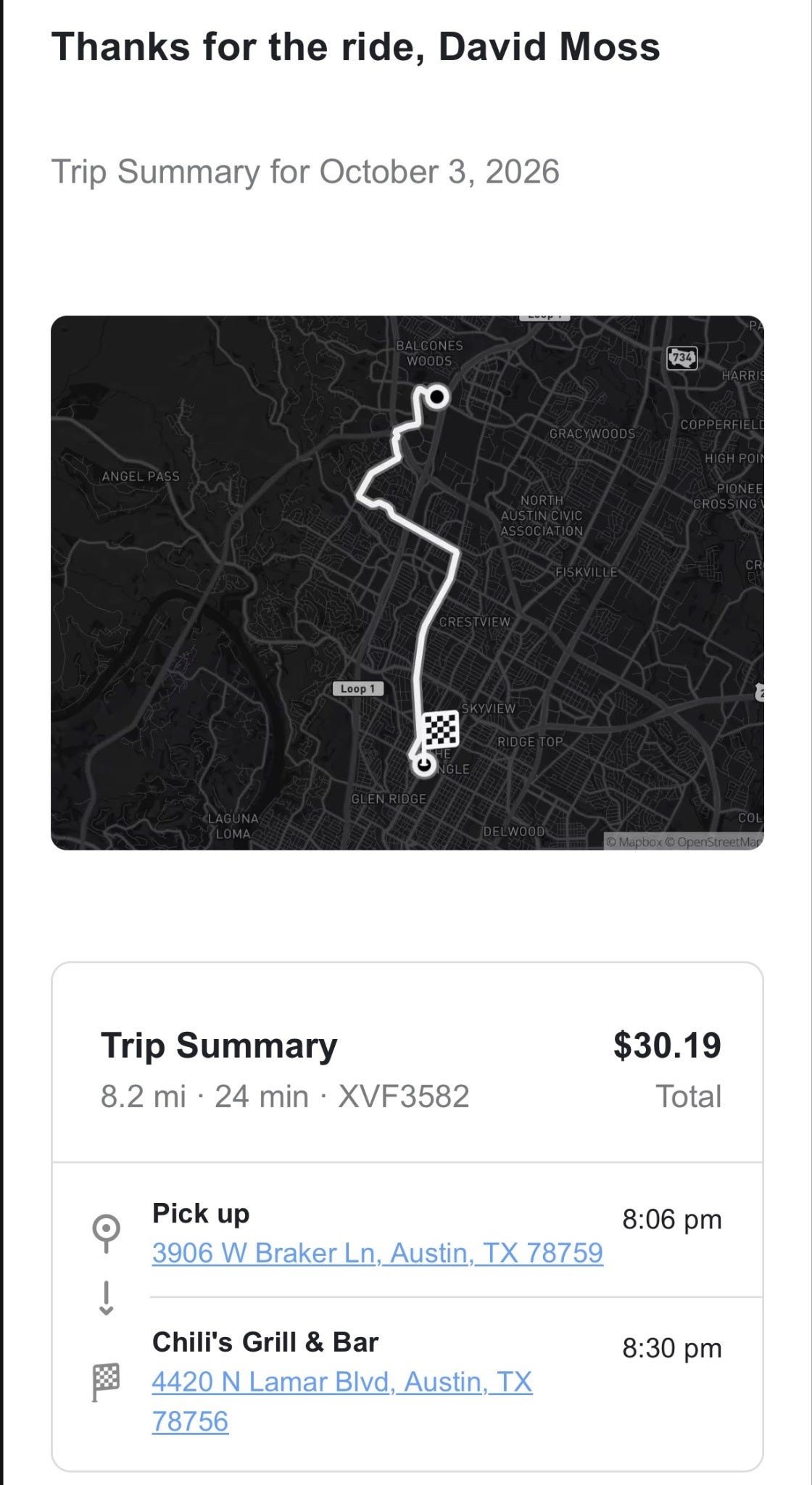
By Day 3, evening service had been extended to 11 p.m., and I wanted to try the additional hour. I met my friend Joey at Chili’s, then headed downtown to meet other friends. Between stops, I watched more YouTube on the screen. I kept coming back to the same description: Cybercab feels like a second living room to me.
That said, the weakest part of the evening was getting into and out of that living room.
I entered the JW Marriott as a destination, expecting something like a front door entrance drop off. Instead, I ended up around the block again just like the night before with the Line. It was not a terrible walk, but it was not where I had expected to arrive.
Later, near the State Capitol, the Cybercab stopped for pickup in a position I did not like, despite what looked to me like a better pull over area nearby. It stopped in the middle of the single lane street when there was a huge shoulder off the side available.
These were not catastrophic failures. There were recurring inconveniences in the part of the trip where the passenger and the vehicle actually have to meet.
More importantly, I realized I was changing what I did because of the cost and travel time.
I had considered visiting a Public Tesla Supercharger in the southern part of the service area to film Cybercabs arriving to charge autonomously but be plugged in by a human attendant. The quotes I saw were around $50 each way. The Cybercab travel estimate was also substantially longer than the alternatives I was checking in Apple Maps, including a route avoiding highways. Basically double the time. (No freeway access available yet) I changed plans rather than spending around $100 to get that footage.
I was also putting off video camera shopping errands because visiting separate stores meant paying for more rides.The evening’s three trips for dinner, downtown, and the return to my hotel were roughly $30, $18, and close to $40 in my recap.
I still enjoyed being a passenger. The extra operating hour helped. But I could no longer separate the ride experience from the activities I was choosing not to do.
Day 4: Walking to see what happens between rides
Day 4 began with a pickup mistake that I should have caught.
The Robotaxi app auto selected for the first time a pickup away from the hotel, and I had not checked carefully enough. My Cybercab was waiting at a Shell station which made me walk over past a Burger King & through the hotel complex parking lot.
Getting collected by an electric robotaxi at a gas station was a funny start. Navigating the walk to it was less entertaining.
A local Tesla owners club event I had planned to attend that evening was canceled at the last minute, so I went to the Domain with friends for bowling and food instead. The routing seemed unusually roundabout for the destination, although I was observing it as a visitor, not conducting a controlled route comparison.
I also kept discovering small things I liked about the vehicle. Sliding across the cabin to exit from the opposite side was easy. The identifying RGB lightbar helped me recognize my car. These details become more noticeable after the first ride novelty wears off.
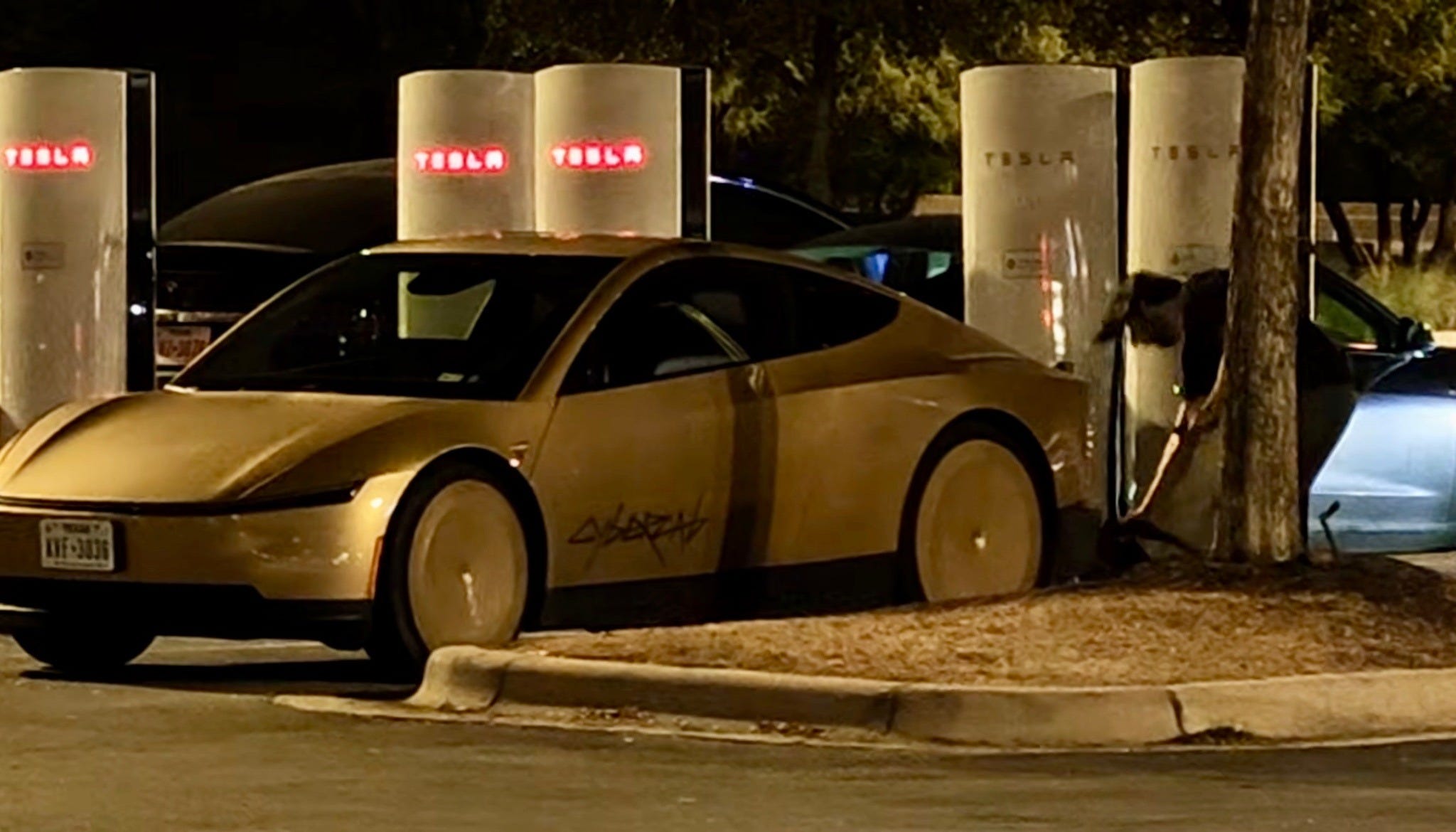
Afterward, I decided to walk roughly 1.25 miles to a nearby Supercharger rather than pay for another short ride of about $20.That walk paid off.
A Cybercab arrived with nobody inside, maneuvered into a charging space, and parked. An attendant eventually came over and plugged it in. I got the footage after all & saved the $100.
It was useful to see a part of the operation that passengers generally miss between bookings.
Before ordering my ride home, I compared prices. The basic Uber and Lyft quotes were around $7-8, while the Cybercab quote was about $19. Those were options for one trip at one moment, not a universal pricing comparison, but the difference was significant.
I took the Cybercab. It arrived in under ten minutes, and the ride home was smooth even in light rain & pitch black darkness. I did have to call support to inform them that one of their windshield wipers was broken.
Another day had included both an enjoyable ride and reasons to look closely at the service surrounding it.
Day 5: My favorite day; & also 14 minutes in a parking lot
I finally got the early start I had been talking about.
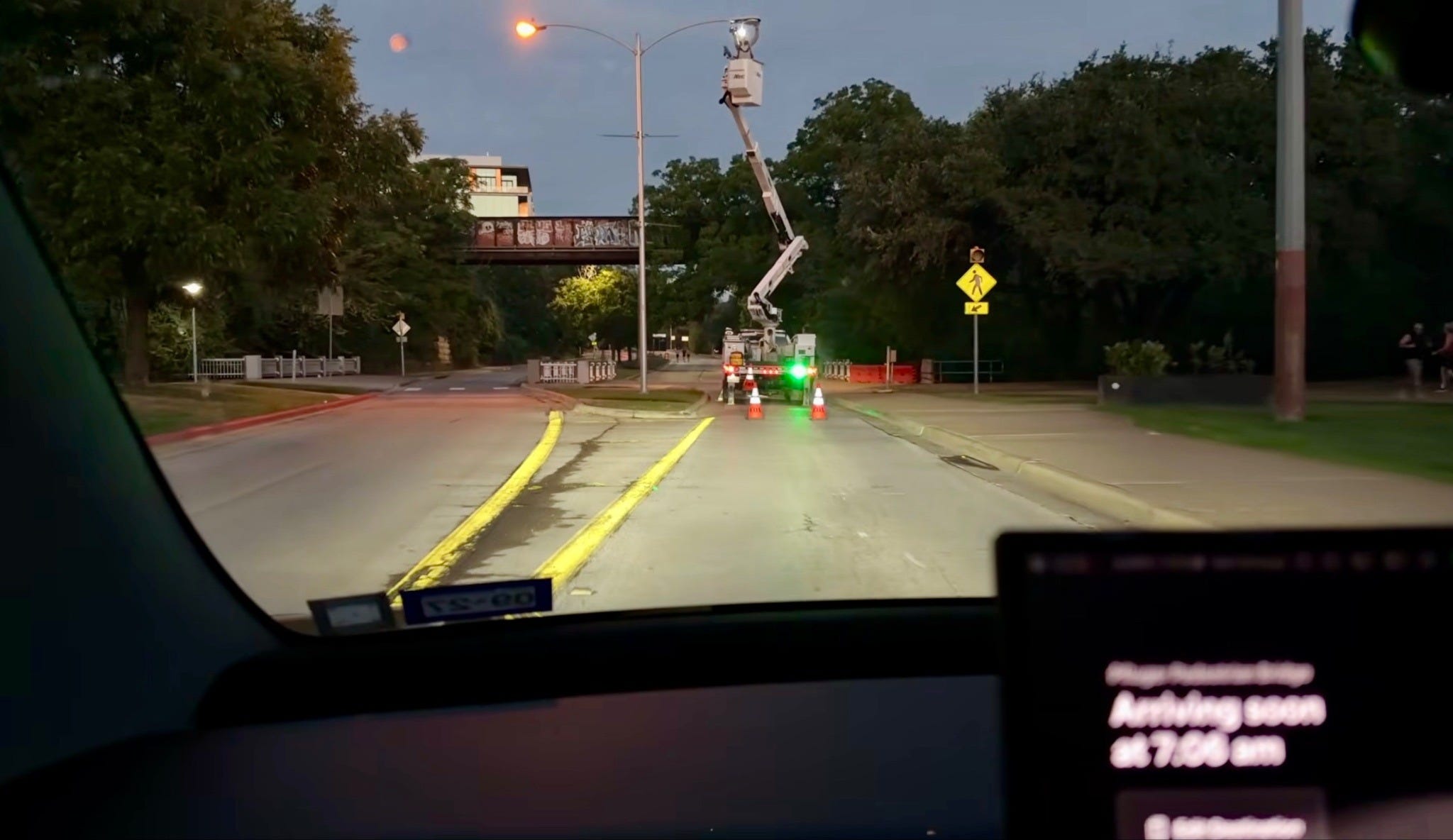
At exactly 6AM when service hours opened, I booked a ride in the app. The pickup estimate was 38 minutes. I believe this is mostly because I was on the opposite side of the Geofence to where Tesla’s depot is located.
Once aboard, I headed downtown toward a famous pedestrian bridge to see the sunrise, & charged my MacBook I had forgotten to charge overnight during the ride with its 2 available 90W USB C ports.
Near the destination, utility workers fixing a broken streetlamp were blocking the single lane road completely. The Cybercab repeatedly tried to navigate the situation, looping around and returning to the obstruction. It was honestly the best it could have done because we were so close to the destination this road was its only option. Eventually, workers removed the cones and moved their vehicle. Support came on the line as we were getting through, and I reached the destination.This took about 8.5min in total.
I said afterward that I had felt safe, but there had been some hoops to jump through. The utility work created the obstruction; the repeated attempts were part of how the service handled it.
The morning then became exactly the sort of outing I had hoped for.
I visited the pedestrian bridge, walked to Whataburger for breakfast, walked some more across the Congress Avenue bridge, and settled into Alfred Coffee at the LINE to edit video and catch up on emails.
Later, I got a Cybercab in about three minutes. I still had to walk over to Congress for the pickup, but availability was very different from the early morning wait, and the fares I was seeing were lower as demand had shifted post ACL festival weekend 1.
Then came a camera store errand that made the whole arrangement feel genuinely practical.
I got dropped off, walked a couple hundred feet into the store, bought the microphone and lens accessory I wanted, ordered another Cybercab, and got into it. This took just 11 minutes for that entire sequence—not an 11-minute wait, but the walk, shopping, booking, and boarding combined.
I was getting things done without spending the whole day arranging transportation. On camera, I called it my favorite day so far. It was the first time in my life I saw the potential future of the world of how we see vehicle ownership.
Later, another camera-store stop produced a very different experience. I had gotten dust on my camera sensor & headed to get it cleaned. Once that was over I walked nearby to grab lunch & this is where the biggest issue of the week arose.
After getting picked up, the Cybercab repeatedly circled a parking lot while trying to leave through an area affected by construction. An issue message appeared on the screen, and support came on the line.
Someone at the site moved a vehicle that was in the way to try to help & were honestly very understanding of the situation. Support remained involved, and we eventually got back onto the road.
I recorded the delay as 14 minutes to get out of the lot. 7 minutes circling the lot & 7 minutes stopped with Support trying to figure out how to reroute the vehicle. Afterward, the normal media screen was still unavailable & I was stuck not being able to watch YouTube etc.
That was becoming the defining feature of the experiment: I could be having a genuinely great time while still documenting things that needed improvement.
Day 6: Extra time feels different when someone is waiting
I booked at 6 a.m. again. This time, the app initially said it would let me know when I was paired with a vehicle. Matching took about five minutes, and I was getting into the Cybercab around 6:45. Another very long wait time when service is at its least demand.
Then I complicated the morning myself: I had forgotten my wallet and sunglasses. I had plenty of time to remember them while waiting. That one was on me.
My attempt to make the trip work as a multistop outing did not succeed, and the next car took roughly another 19 minutes to arrive. (You are able currently make as many stops/changes as you’d like in a Tesla Robotaxi up until the vehicle has been reserved for another rider after you.)
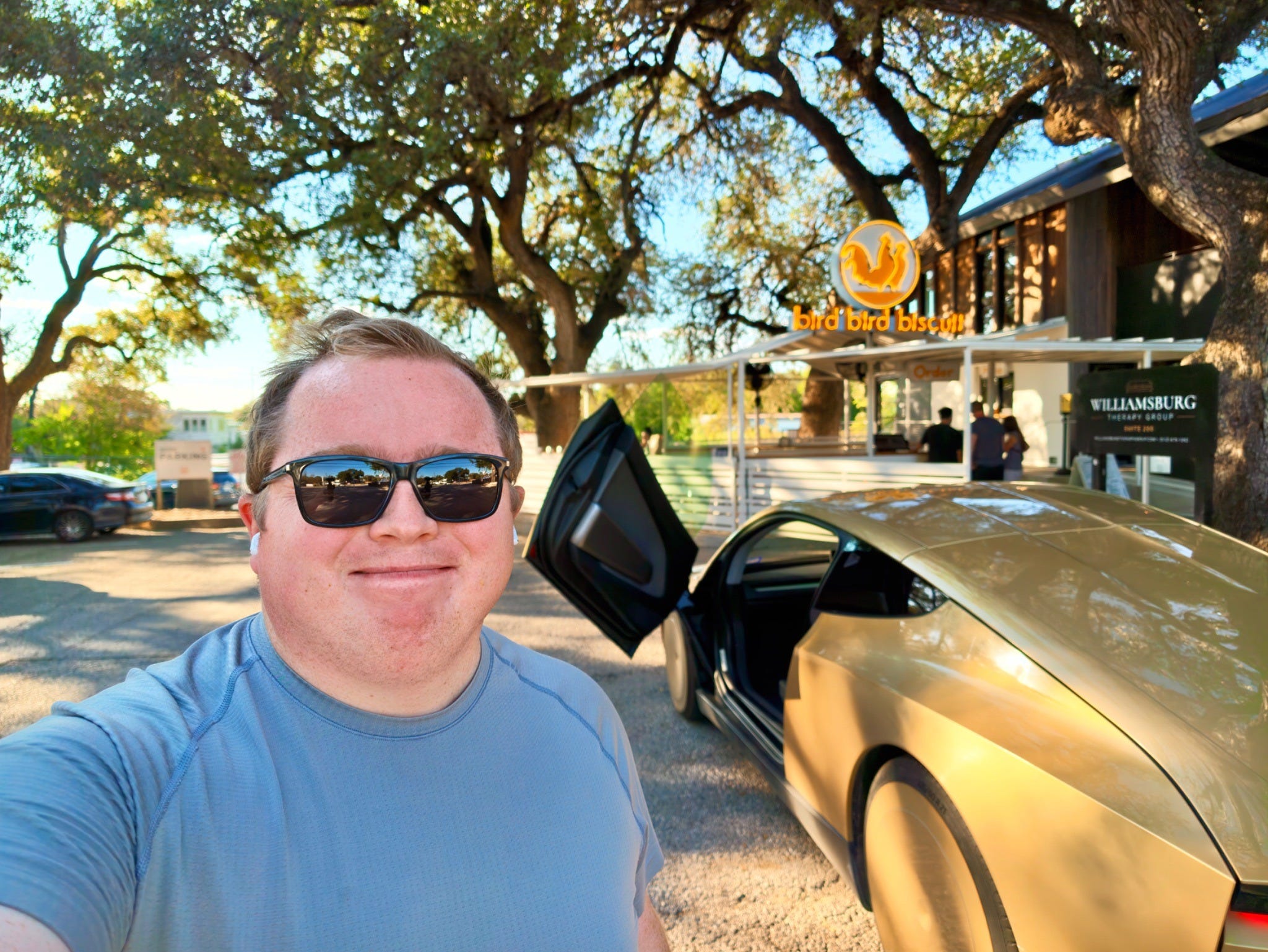
Once the day got going, though, it was a good example of ordinary errands fitting together. I went to Merit Coffee on South Lamar, walked to Bird Bird Biscuit for breakfast, then headed to AAA for an international driving permit before my Europe trip later this month.
A Sport Clips happened to be in the same parking lot as AAA, so I also got a haircut without booking another ride which was a nice plus.
There were imperfect moments. A delivery vehicle had narrowed the road near the coffee shop, and the Cybercab was very slow making the turn into the small entrance. It completed the maneuver, but held up traffic along the way. I would put the blame overall though on the delivery vehicle.
On another trip later that day, I compared my Cybercab estimate of about 51 minutes with an Apple Maps estimate showing around 30 minutes, even with highways avoided toggled on. Strange routing choices maybe? I’m not sure what to make of it.
At that point though, I did not particularly mind.
I could watch a movie, listen to music, or relax without monitoring the road. I thought to myself that this car was more comfortable than hanging out in my hotel room. Additional travel time did not feel like an inconvenience.
Dinner was different.At 4:45 p.m., I booked a ride to meet my friend Alan at Neighborhood Sushi. The pickup estimate was around 15 minutes, and I initially expected to arrive around 5:50.
Then the arrival estimate drifted to approximately 6:12–6:13. I was now looking at close to an hour and a half between booking and expected arrival, and being about half an hour late.
I hate being late more than anything in this world. Booking a Lyft or Uber at 4:45 that takes the freeway would have gotten me plenty early to dinner.
I told myself though that I should have booked sooner, but that did not make the changing arrival time less frustrating. I did again fall asleep in the Cybercab on this ride & truly have no idea what caused me to arrive so late. My friend thought there must have been increased downtown traffic as Tuesday’s is a big day for hybrid workers to come to the office.
Earlier, extra time in a comfortable car had been easy to accept. With a friend waiting at a restaurant, it mattered much more.
We eventually had sushi and went for dessert. The evening also brought a separate filming wrinkle: I had to awkwardly decline Alan’s offer of a free ride home because of the challenge. I luckily got the same Cybercab after taking ride back to Sushi for Alan to get his car & was back on my way in under 5 minutes.
Day 7: Showing Austin to a Korean television crew—and reaching the limit
My final day was definitely an unusual one. It began at Waterloo Park, near the Capitol, with a KBS television crew meeting me from South Korea.They had come to learn more about autonomous vehicles. In their words, Austin was the “Robotaxi capital of the world.”
After spending the week documenting my own experience, I was now helping them understand it from the beginning. On camera, I demonstrated how to book a ride. We booked a Cybercab to the Tesla showroom at the Domain, and during the trip I walked them through the passenger features: Grok, Netflix, seat adjustments, and more.
From there, I used Cybercab to collect my camera gear from the hotel and then head to the Autonomy Summit, a conference that had representatives from Zoox, Kodiak, AVride & more there. I was there as a member of the media & when he got free interviewed Sergei Kirillov of AV Ride. That made the last day more than an errand run or personal night out on the town. Cybercab was carrying me between multiple career commitments.
Then it was time to depart Austin.The airport was not a destination I could reach using Cybercab on this trip. At the beginning of the series, I had discussed an airport-shuttle hotel as a possible workaround. That was not the approach I ultimately took.
Instead, I rode Cybercab back to where my Model 3 was parked, then drove my own car to the airport garage. That marked the end of the experiment.
It was an important ending to include. I had built a week around the service, but the airport transfer still required a different transportation choice. Next up was Los Angeles, where I planned to spend about 12 hours experiencing Waymo, before continuing to cover the Paris Auto Show.
For now, my Austin week was complete.
What stayed with me
On the first night, I questioned the value of spending roughly $29 to visit Target. By the middle of the week, I was describing the cabin as a second living room. The juxtaposition of these reactions is exactly the point.
I enjoyed the privacy, comfort, entertainment, and freedom from driving and parking. I also changed plans because of fares, waited a long time for early morning pickups, encountered awkward pickup locations, and sat through multiple situations that required remote support.
My experience depended heavily on what I needed that day. A longer ride could be pleasant when I had time to spare and frustrating when someone was waiting for me. Walking to a nearby destination could become part of the adventure; an expensive extra trip could mean not going at all.
I had deliberately chosen a hotel inside the service area and organized my week around this experiment. That is not the same as showing that Cybercab could replace a car for every person or every routine. But it was much more revealing than a single first ride.
The question was no longer just whether I enjoyed riding in a Cybercab. It was what happened when I tried to live around one. For a week in Austin, I got to experience both the appeal and the compromises, one day at a time.
Given the opportunity, I would do it again in a heartbeat.
@DavidMoss on 𝕏
@DavidMossAI on Instagram, TikTok, & YouTube
I'm a fan of Ride AI and of David Moss's thorough and conscientious reporting in the past but this is AI-generated text. I'm sure David Moss vouches for it and vetted it but I'd much rather read his words in his voice.
Also, what's the thinking behind turning off Substack's "Scan for AI text" feature for Ride AI? In my experience, blogs/newsletters that do that disingenuously pretend the detector is too unreliable (the sensitivity and specificity are both >99%) while lying through their teeth that their prose is human-written. Not that Ride AI would do that, to be clear. I'm just saying you should absolutely turn that feature back on and own whatever AI assistance you're using.